
Tire Types & Tread Patterns
Tractor Tire Types Explained: R1 vs R2 vs R3 vs R4
Tractor tire types are named by tread code: R-1 is the standard farm lug, R-1W has lugs about 20% deeper, R-2 is the very deep rice-and-cane lug, R-3 is a shallow turf tread and R-4 is the industrial tread for loaders. Pick the code for your ground first, then the size.

Tractor tire types come down to a code: R-1, R-1W, R-2, R-3 or R-4. Pick the right one and the lugs grip. Pick the wrong one and you get a very expensive trench, or a very expensive lawn that looks like a plowed field. (The tread isn’t picky. It just has strong opinions about dirt.)
Here is the short answer. The code on the sidewall says what the tread was built for: R-1 for farm fields, R-1W for wet ground and long hours, R-2 for rice and cane, R-3 for turf and R-4 for loader and industrial work. Choose the code for the ground you work most, then choose the size and construction.
Here is how the five compare.
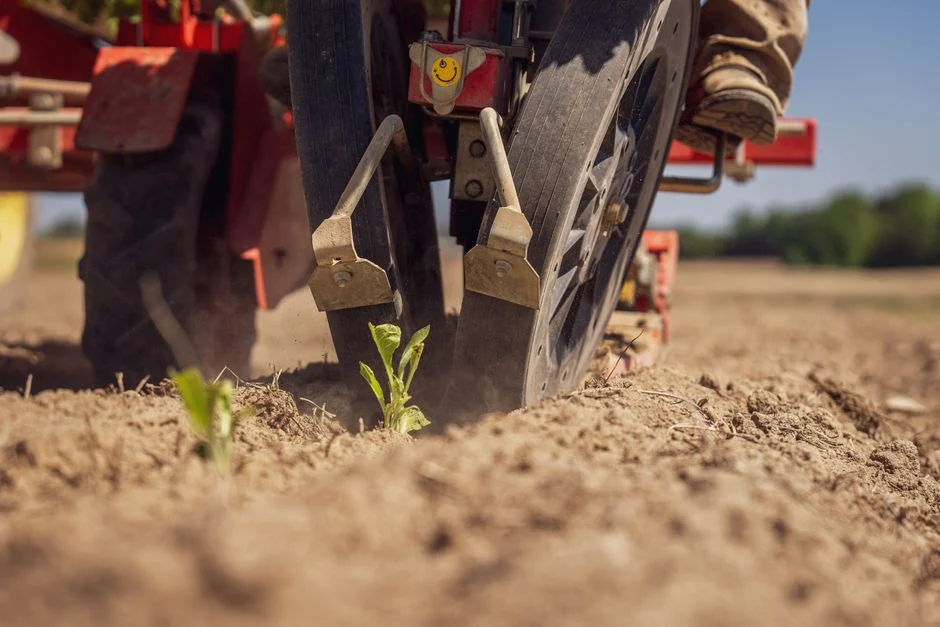
The R code tells you what the lugs were built to do
The tread code is molded into the sidewall next to the size, for example 18.4-38 R-1 or 520/85R38 R-1W. The letter and number name the tread pattern. The classes are defined in the Association of Equipment Manufacturers’ agricultural tire classification sheet. For a closer look at the farm tread, see our R1 tractor tires guide.
| Code | Name | Lugs | Best for |
|---|---|---|---|
| R-1 | Agricultural | Standard bar lugs | General field work, tillage and hauling on farm soil |
| R-1W | Agricultural, wet | About 20% deeper than R-1 | Wet or heavy soil, and longer tread life on high-hour tractors |
| R-2 | Rice and cane | About double the depth of R-1 | Flooded paddies, cane fields and very soft ground |
| R-3 | Turf | Shallow, about half the depth of R-1 | Lawns, sports turf, golf courses and grounds care |
| R-4 | Industrial | About 70% of R-1 depth | Loaders, backhoes and yard work on hard surfaces and dirt |
The code comes first because it decides what you feel every day: grip, ride, fuel burn and how long the lugs last. A tread built for the wrong job loses on all four. (A lawn tire in a rice paddy is a very short story.)
Lug depth is the quickest way to tell the codes apart. Treat these figures as rules of thumb, because makers describe them a little differently. R-1W runs about 20% deeper than R-1, R-2 about double, R-4 about 70% of R-1 and R-3 about half. Nokian, Yokohama OHT and CEAT all publish figures in this range.
The code is only one third of the tire. Size and construction are the other two, and our tractor tire size guide and radial vs bias-ply guide cover those.
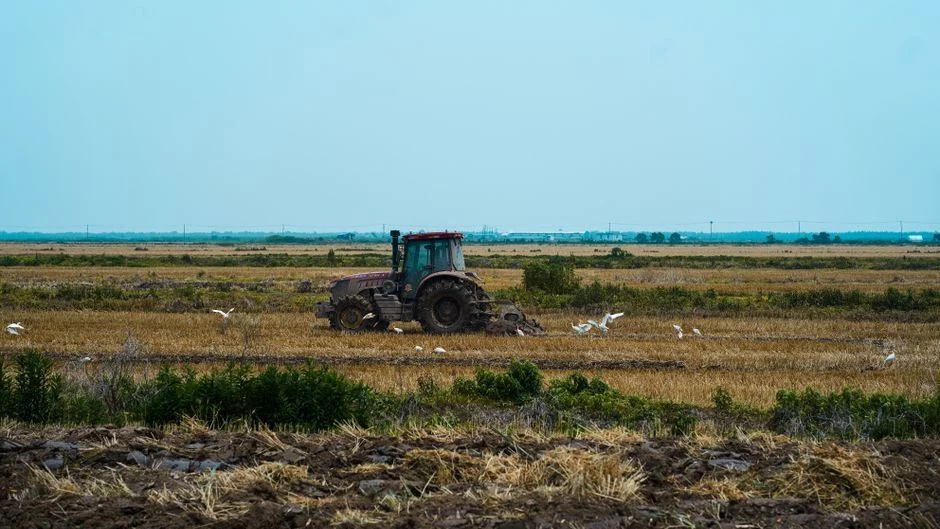
R-1 is the standard farm tread
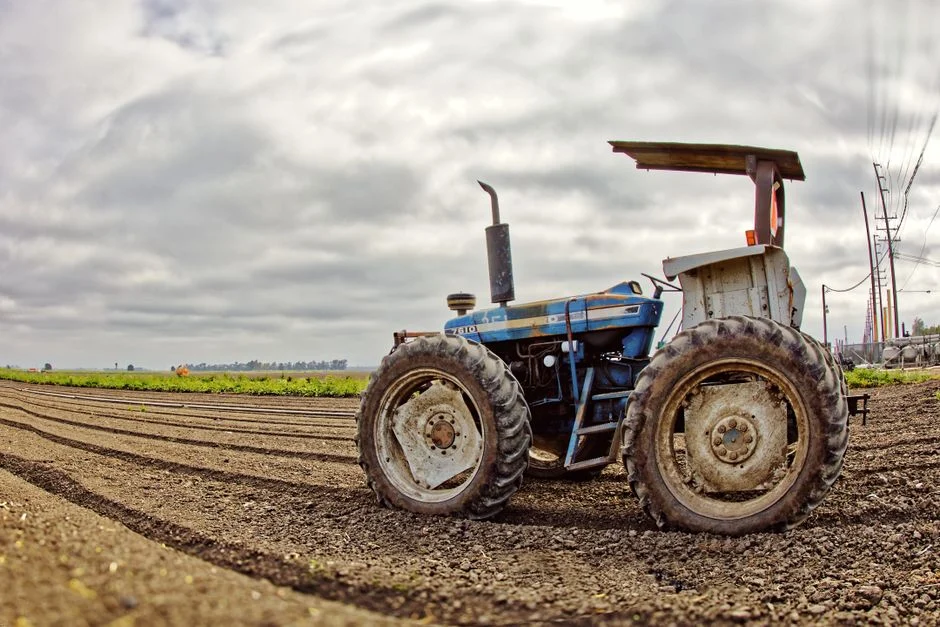
R-1 is what most people picture when they hear “tractor tire”: tall bar lugs set at an angle with open space between them. The angle pushes soil out of the gaps as the tire turns, so the lugs keep biting instead of packing up with mud. Yokohama OHT puts the lug angle at 23 to 45 degrees, and some makers curve the lug to blend two angles. It is the default rear tread for field tractors and the most common tread in our tractor tire list, on sizes such as 18.4-38 and 16.9-28.
The trade-off is manners. Pine Plains Tractor notes that R-1 lugs mark lawns and give a rough ride on pavement. They were built for dirt, and they act like it.
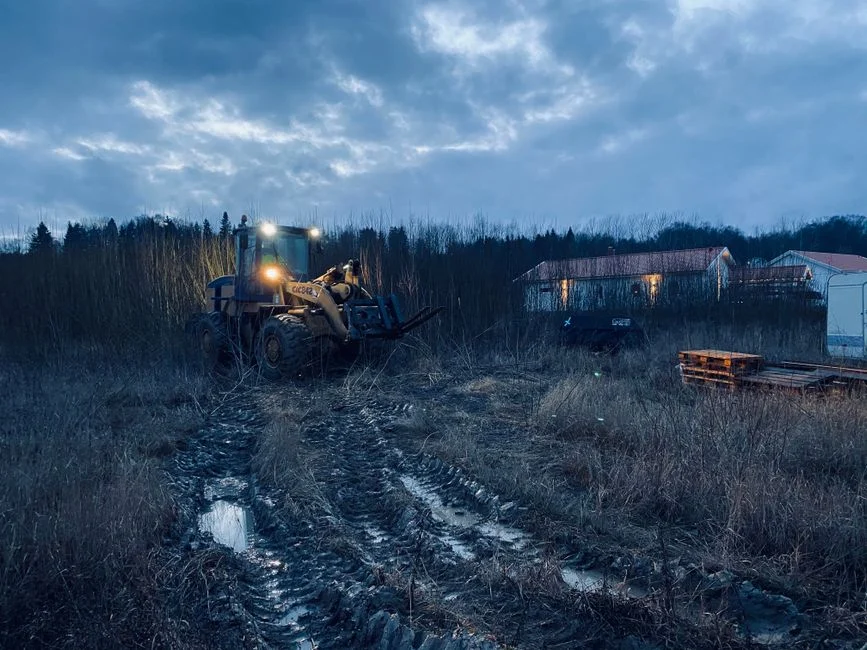
R-1W adds deeper lugs for wet ground and long hours
R-1W uses the same pattern as R-1 with lugs about 20% deeper. The extra depth grips better in wet, heavy soil and leaves more rubber to wear through, which suits tractors that log a lot of field hours. Most modern radial rear sizes, such as 520/85R38 and 710/70R42, come in R-1W.
On a smaller tractor used mainly for light work, standard R-1 is usually enough. Our R1 vs R1W guide has the full comparison.
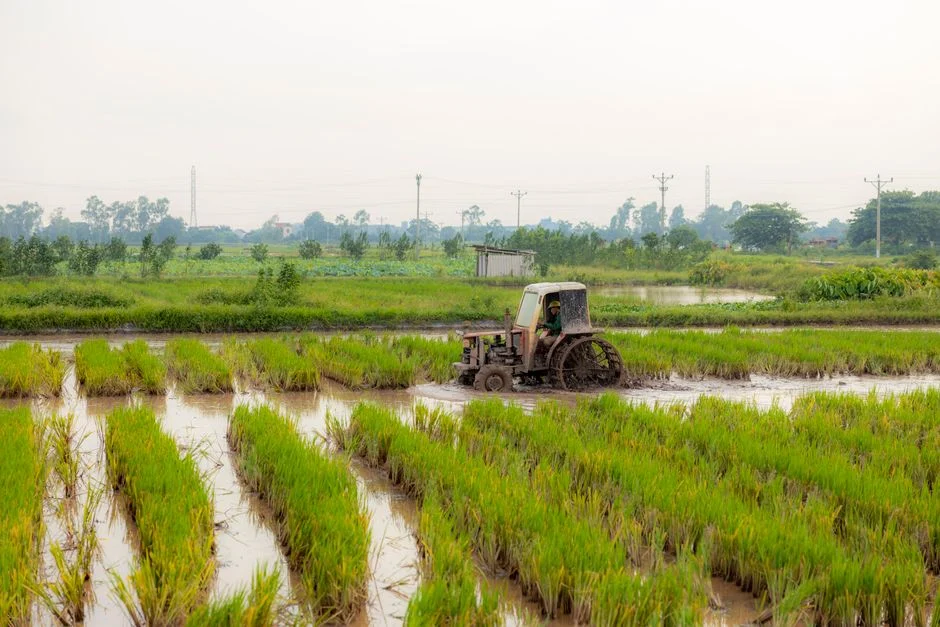
R-2 is a specialist for rice, cane and saturated soil
R-2 lugs are about twice as deep as R-1, built for flooded paddies, sugar cane and ground that stays saturated for much of the season. Outside those conditions they wear quickly and ride roughly. If your tractor has never seen a paddy, you almost certainly don’t need R-2. If it has, ask us for the size.
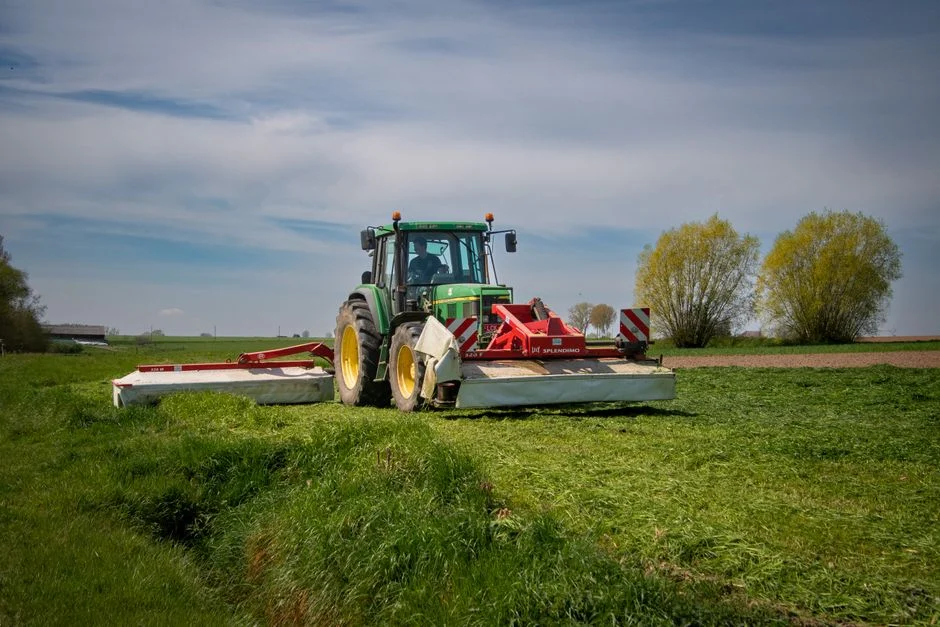
R-3 turf tread protects grass
R-3 turns the priority around, from traction to protecting the surface. The tread is shallow and closely spaced, and the tire is usually wide, so the weight spreads out and the tire doesn’t tear grass on turns. The catch, per Hobby Farms, is that turf tread struggles in mud and snow because the shallow pattern clogs. Garden tractor sizes such as 23×8.50-12 commonly use R-3.
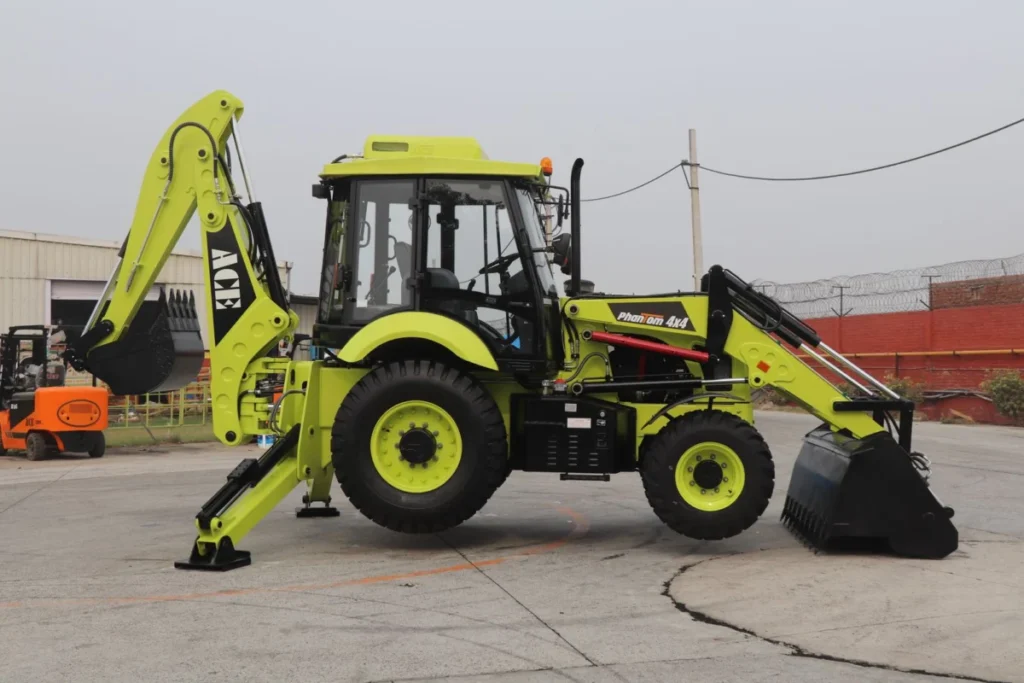
R-4 industrial tread carries loaders and hard-surface work
R-4 sits between R-1 and R-3 (our R4 tractor tires guide goes deeper). The lugs are shorter and closer together than R-1, which gives a stable footprint on concrete, gravel and packed ground while still gripping in dirt. It is the usual tread for tractor loaders, backhoes and yard tractors. That mix is why many compact chore tractors ship on R-4. Pine Plains points out the flip side: R-4 packs with sticky mud and marks soft lawns. Our industrial tires page lists R-4 sizes such as 16.9-28 and 12.5/80-18.
Hybrid treads blend the codes for mixed jobs
Some makers sell hybrid treads that mix farm lugs with turf or industrial features. They are aimed at compact tractors that mow, load and haul in the same day. One is sold as R-14, which Pine Plains describes as a crossover of farm, turf and industrial ideas. Hybrids have no single standard, so performance varies by tire. Read the maker’s description for the exact model and check its lug depth against the rules of thumb above. Our R14 tractor tires guide covers the hybrid in full.
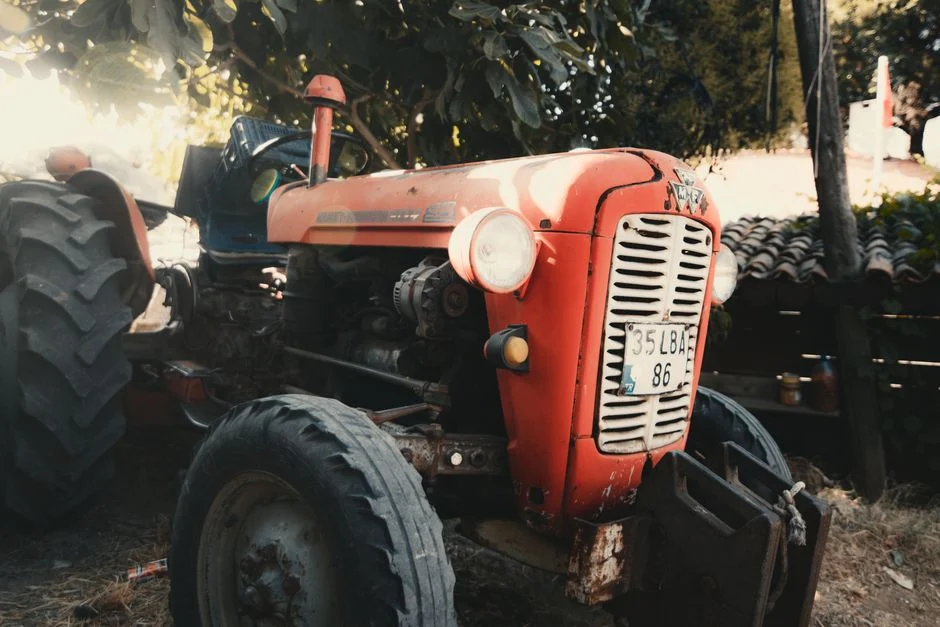
Front and implement tires use F and I codes
Front tires on two-wheel-drive tractors and tires on towed implements have their own codes:
- F-1: single rib front tire.
- F-2: multi-rib front tire (commonly three ribs), the usual front for two-wheel-drive tractors, for example 11L-15 F-2.
- F-3: industrial front tire.
- I-1: shallow rib implement tire for free-rolling wheels on wagons, planters and trailers.
- I-3: bar-type traction implement tire, common on flotation sizes.
Front-wheel-assist (MFWD) tractors drive the front axle, so their fronts are R-1 or R-1W lug tires matched to the rears, not ribbed F-codes. More on that in IF vs VF tires.
You can spot the tread code from the lugs if the sidewall is gone
Old tires lose their markings, but the lugs stay readable. Here is a rule-of-thumb guide to what you are looking at.
| What you see | Likely code |
|---|---|
| Tall bar lugs set at an angle, with open gaps between them | R-1 |
| The same pattern with noticeably taller lugs | R-1W |
| Lugs about twice as tall as a standard R-1 | R-2 |
| Shallow, closely spaced blocks with no big bars | R-3 |
| Chunky lugs, shorter and closer together than R-1 | R-4 |
| Straight ribs running around the tire | F-1 or F-2 on a front, I-1 on an implement |
Worn tires fool the eye. A half-worn R-1W can pass for a new R-1. Trust the molded code first, and measure the lug height with a ruler if you have to guess. Still stuck? Send us a photo of the tread and the sidewall.
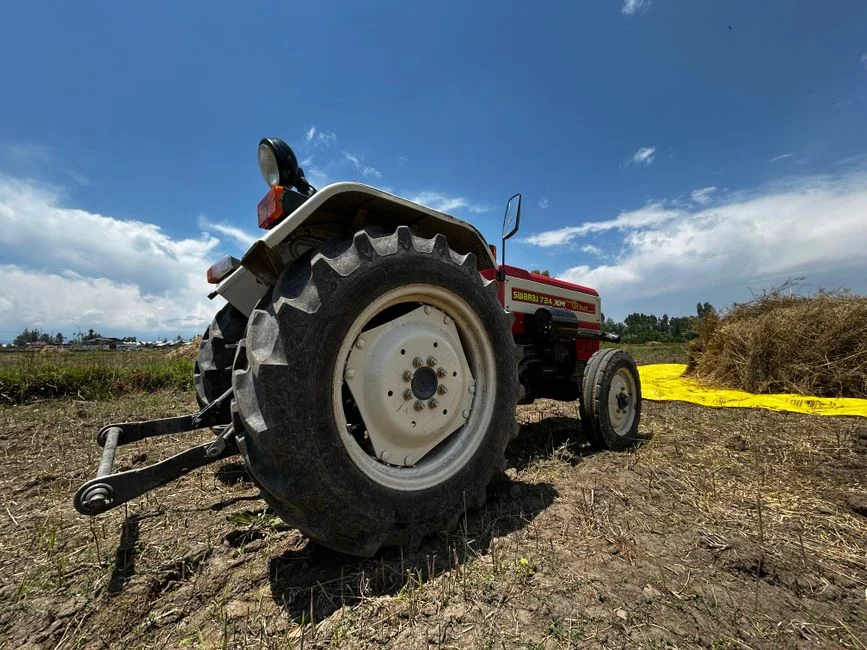
How to choose the right tread for your ground
| Your main job | Choose |
|---|---|
| Field work, tillage, hauling on farm ground | R-1 |
| Wet, heavy soil, or a high-hour tractor | R-1W |
| Flooded rice or cane | R-2 |
| Mowing and grounds care | R-3 |
| Loader, backhoe or yard work on hard surfaces | R-4 |
Before you pick a code, answer these four questions:
- What ground do you work most? Soft or wet soil, firm field, gravel, concrete or grass.
- How far do you drive on roads? Lugs wear faster on pavement, so count the road miles (km).
- Does the surface need protecting? Lawns and sports turf do not forgive deep lugs.
- How heavy is the load? A loader bucket or a heavy implement leans on the tire’s load rating as much as on its tread.
Two rules keep it simple. Keep the same tread on both sides of an axle so the tractor pulls straight and the tires wear evenly. And buy for the ground you work most, not the one you work twice a year. If you split your time, our tread type picker narrows it down, and the tire size chart shows what fits.
Tread also moves the price. Deep R-1W, R-2 and industrial R-4 treads use more rubber than a standard R-1, as we explain in how much a tractor tire costs.
Here is what we list under each tread code
Our tire listings cover 69 models. This is how the ones with a recorded tread code break down, so you can see what is available before you ask.
| Code | Models | Sizes | What the list covers |
|---|---|---|---|
| R-1 | 17 | 42 | 15 bias and 2 radial models. Bias sizes run from 11.2-24 to 28L-26. |
| R-1W | 14 | 10 | All radial, from 320/85R24 to 710/70R42. |
| R-2 | 0 | 0 | Not listed. Send us your size and we’ll source it. |
| R-3 | 0 | 2 | No R-3 code on file. We list one turf tire, the Carlisle Turf Saver, in 20×8.00-10 and 23×8.50-12. |
| R-4 | 1 | 5 | The Ascenso SSB 331 skid steer tire, in sizes such as 10-16.5 and 12-16.5. |
| F-2 | 9 | 7 | Front tires from 5.00-15 to 10.00-16, plus 11L-15. |
| I-1 | 8 | 13 | Implement tires from 5.00-15 to 21.5L-16.1. |
The counts come from our live listings and change as we add models. A zero does not mean we can’t get it. Send us the size and tread code and we’ll quote it.
When you don’t need new tires, or a different tread
Here is a sentence a tire supplier isn’t supposed to write: your tread code is probably fine. If the tractor is slipping, check the pressure before the tread. A gauge is cheaper than a quote, and our tractor tire pressure guide shows the numbers. If a tire is leaking from a puncture, get it repaired locally. If your current tread matches your ground and the tire is sound, keep running it.
When you are ready to replace, send us your size and tread code on WhatsApp or request a quote. We’ll quote the tire with shipping to the USA or Europe, delivered in about a week. We will also make a tread joke. It’s a good one. It’s free.
Questions
Is R-1W better than R-1?
R-1W has lugs about 20% deeper, so it grips better in wet soil and lasts longer. For a tractor that does a lot of field hours it is usually worth it. For light work a standard R-1 is enough.
Can I use R-4 tires for field work?
You can, but they will not pull as well as R-1 in loose or wet soil. R-4 is designed for loaders and hard surfaces, and it can pack with sticky mud. If the tractor spends most of its time in the field, choose R-1 or R-1W.
What is the difference between R-3 and R-4?
R-3 is a shallow turf tread made to protect grass. R-4 has taller industrial lugs for traction on dirt and hard surfaces, and it is the usual tread for loaders and backhoes.
Where is the tread code on my tire?
It is molded into the sidewall, usually close to the size, for example 18.4-38 R-1 or 520/85R38 R-1W.
Which tractor tire tread is best in mud?
R-1W is the usual pick for wet, heavy soil because its lugs are about 20% deeper than R-1. R-2 goes deeper still, about double R-1, but it is a specialist tread for rice paddies and cane.
Which tractor tire tread is gentlest on a lawn?
R-3 turf tread. It is shallow, closely spaced and usually wide, so it spreads the weight and does not tear grass. The trade-off is poor grip in mud, and R-1 and R-4 lugs will mark soft lawns.
What does R-2 mean on a tractor tire?
R-2 is a rice-and-cane tread with lugs about twice as deep as R-1, made for flooded paddies and saturated ground. It wears quickly and rides roughly elsewhere.
What is an R-14 tractor tire?
R-14 is a hybrid tread offered on some compact tractors. It is described as a crossover of farm, turf and industrial tread ideas, and performance varies by tire model.
What are the different types of tractor tires?
Tractor tires are grouped by tread code. R-1 and R-1W are for farm fields, R-2 is for rice and cane, R-3 is for turf and R-4 is for industrial work. Front tires use F codes and implement tires use I codes. Within each code, the tire is either bias-ply or radial.
Is R-1 or R-4 better for a compact tractor?
It depends on the surface. R-1 grips better in soil, so it suits fields, gardens and dirt. R-4 handles concrete, gravel and loader work better and is gentler on hard ground. Choose for the surface the tractor works on most.