
Truck tires
Light Truck Tires
We supply new and used light truck (LT) tires for pickups, vans and work trucks, including 3/4-ton and 1-ton trucks that tow and haul. Send us the size from your sidewall and the load range you need, and we will quote the options with shipping.
- New & usedcondition options
- 20brands sourced
- About 1 weekshipping to the USA & Europe
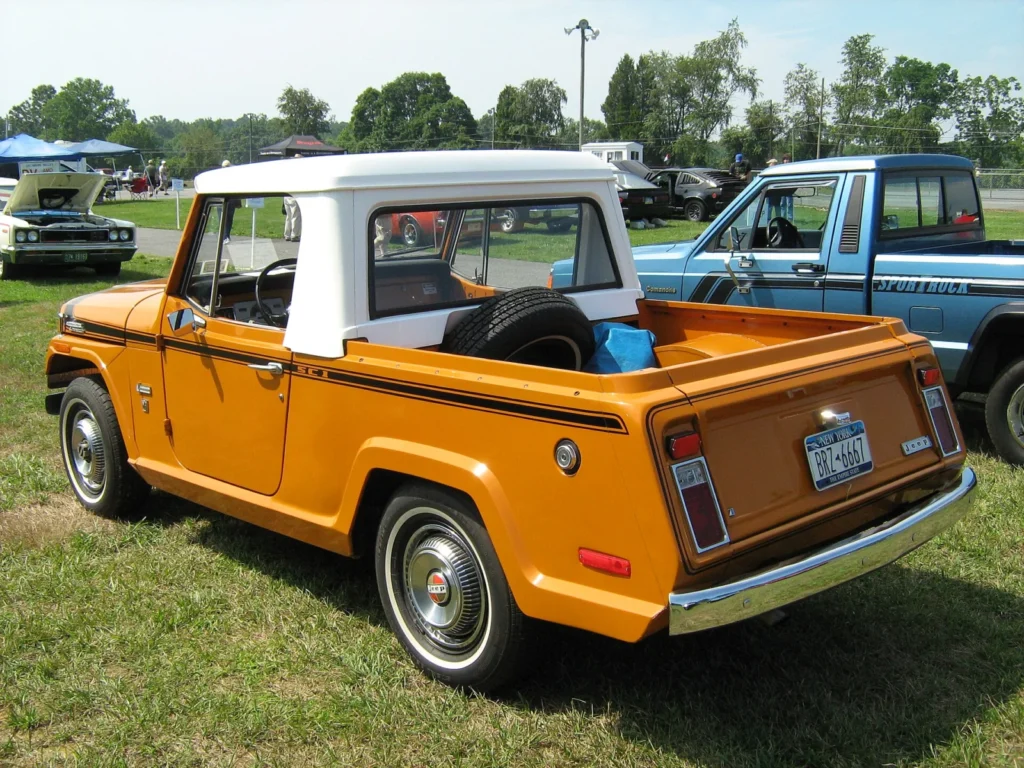

Light truck tires (LT tires) are built for trucks that carry, tow and haul, and the right pair depends on one number: the load range on your door placard. Match that, pick a tread, and the rest is detail. Buying them should not be a heavy lift, though the tires certainly are.
| Your truck | Usual choice | Check first |
|---|---|---|
| Half-ton pickup, mostly road, light loads | Passenger or LT, as the placard says | Load index on the placard |
| Half-ton that tows regularly | LT highway or all-terrain, load range D or E | Trailer weight against tire capacity |
| 3/4-ton or 1-ton pickup, van, work truck | LT, load range E on many heavy-duty trucks | Load range and size on the door placard |
| Heavy commercial hauling | LT load range F, or medium truck tires above that | Axle ratings and wheel size |
What makes a light truck tire different from a passenger tire?
An LT tire has a tougher casing, thicker plies and reinforced sidewalls. It is made to hold more air and more weight. A passenger tire trades that toughness for a quieter, softer ride. Per the Discount Tire LT versus passenger guide, a passenger tire's load rating also drops about 9% when it is fitted to a truck. A tire rated for 1,000 lbs (454 kg) is then good for about 910 lbs (413 kg).
| Feature | LT tire | Passenger tire |
|---|---|---|
| Casing | Thicker plies, reinforced sidewalls | Lighter structure |
| Load rating | Load range letter (C, D, E and up) | Load index, reduced about 9% on a truck |
| Air pressure | Higher, up to 80 psi (5.5 bar) in load range E | Lower, 36 to 42 psi (2.5 to 2.9 bar) maximum |
| Ride | Firmer, louder with aggressive tread | Softer and quieter |
| Fuel use | Usually higher | Usually lower |
| Best for | Towing, hauling, gravel, heavy trucks | Commuting and light loads |
Heavy electric pickups follow the same rule. Choose by the load index on the placard, not by habit.
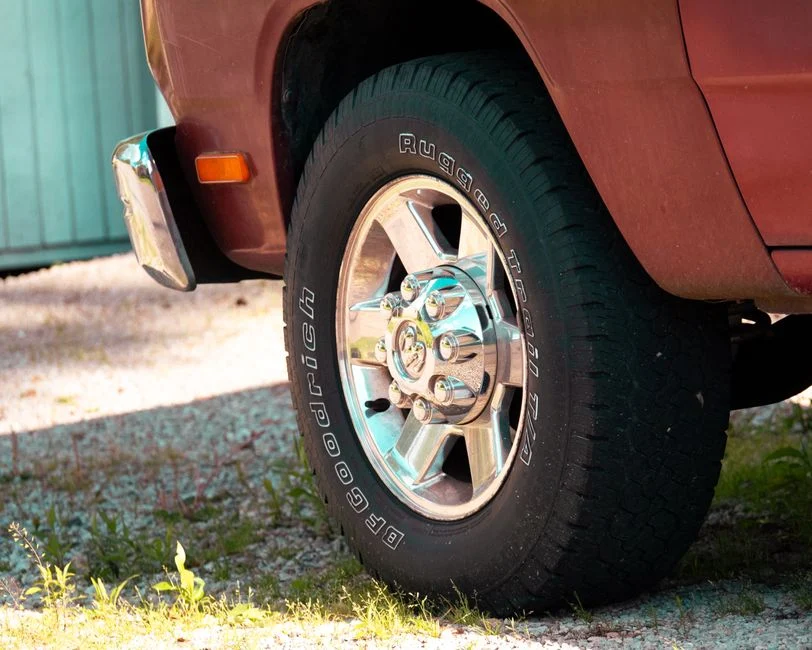
How do you read a light truck tire size?
A typical size looks like LT245/75R16 120/116S Load Range E. Read it left to right.
| Part | Meaning |
|---|---|
| LT | Light truck tire, built for heavier loads and towing. A size starting with P, or with no letter, is a passenger tire. |
| 245 | Section width in millimeters |
| 75 | Aspect ratio: sidewall height is 75% of the width |
| R16 | Radial construction, for a 16-inch wheel |
| 120/116 | Load index for single and dual fitment |
| S | Speed rating |
| Load Range E | Strength of the casing, similar to a 10-ply rating |
Now the maths, which is only multiplication. Sidewall height is width times aspect ratio. Overall diameter is the rim plus two sidewalls.
| Size | Sidewall | Overall diameter |
|---|---|---|
| LT245/75R16 | 245 x 0.75 = 184 mm (7.2 in) | 406 + 368 = 774 mm (30.5 in) |
| LT265/75R16 | 265 x 0.75 = 199 mm (7.8 in) | 406 + 398 = 804 mm (31.7 in) |
| LT265/70R17 | 265 x 0.70 = 186 mm (7.3 in) | 432 + 371 = 803 mm (31.6 in) |
| LT285/75R16 | 285 x 0.75 = 214 mm (8.4 in) | 406 + 428 = 834 mm (32.8 in) |
Moving from LT245/75R16 to LT265/75R16 makes the tire 30 mm (1.2 in) taller, about 3.9%. Your speedometer then reads low: 60 mph (97 km/h) on the dial is really about 62.3 mph (100 km/h). Our tire diameter calculator does this sum for any size.
Flotation sizes such as 33x12.50R15LT give the overall diameter and width directly. That one is 33 in (838 mm) tall and 12.5 in (318 mm) wide, on a 15 in (381 mm) rim. Our size converter and size guide cover the other formats.
What does the load range letter tell you?
The letter is a strength grade, a bit like a tire's biceps. Old catalogs called it ply rating. Today it tells you how much air pressure the casing can take, and air is what carries the load.
| Load range | Ply rating (old term) | Max pressure |
|---|---|---|
| Standard Load (SL) | 4 | 36 psi (2.5 bar) |
| Extra Load (XL) | 4 | 42 psi (2.9 bar) |
| C | 6 | 50 psi (3.4 bar) |
| D | 8 | 65 psi (4.5 bar) |
| E | 10 | 80 psi (5.5 bar) |
| F | 12 | 95 psi (6.6 bar) |
| G | 14 | 110 psi (7.6 bar) |
Figures follow the Discount Tire load range reference. Some ranges also come in a lower-pressure variant, so read the pressure molded on your tire's sidewall.
The load index is the number after the size. It states how much one tire carries at its maximum pressure. An index of 121, for example, means 3,197 lbs (1,450 kg) per tire. The dual number in 120/116 gives the capacity as a single tire and as one of a dual pair. Our load index and speed rating tool decodes both, plus the speed letter.
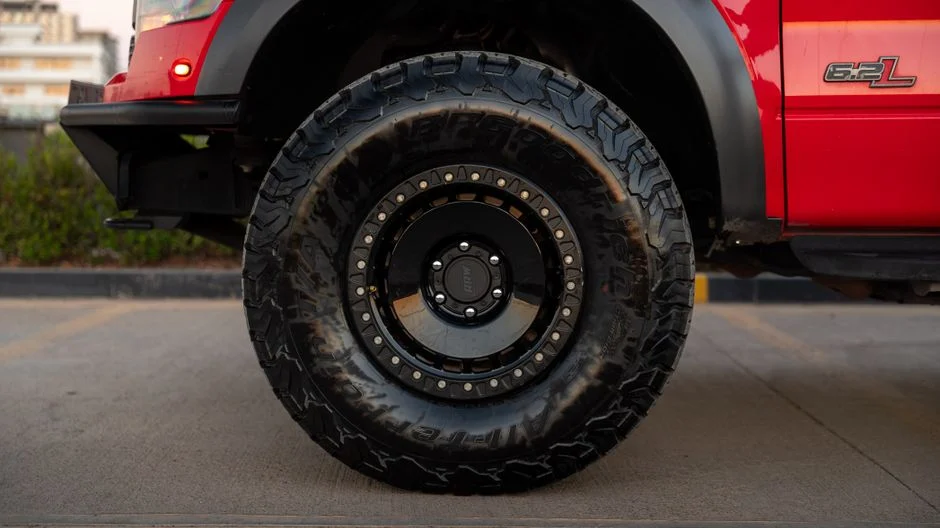
Which tread suits your truck: highway, all-terrain or mud-terrain?
Pick the tread for where the truck spends most days, not for the weekend it spends once a year.
| Tread | Best on | Trade-off |
|---|---|---|
| Highway-terrain | Paved roads and the odd gravel lane | Little bite in deep mud |
| All-terrain | Mixed pavement, gravel and light mud | More road noise than highway tread |
| Mud-terrain | Deep mud, rock and soft ground | Loudest and firmest of the three |
For snow, look for the three-peak mountain snowflake symbol on the sidewall. All-season tires without it are fine for light winters and not much more. If you tow often, the Discount Tire guide points to LT highway or all-terrain tires in load range D or E for stability.

Does a farm or work truck really need LT tires?
If it hauls, tows or lives on gravel, yes. Nine times out of ten the truck that pulls a stock trailer or carries a bale bed is a 3/4-ton or 1-ton, and those are rated for LT tires. Stiffer sidewalls hold up under a hitch. Tougher casings shrug off stubble, rock and the odd fence staple.
On 4WD and AWD trucks, keep all four tires the same size and at similar wear. Mismatched diameters make the drivetrain work harder than it should. Wheel sizes matter too. A tire fits only the rim diameter in its size code, so a 19.5 in (495 mm) code needs a 19.5 in rim and nothing else.
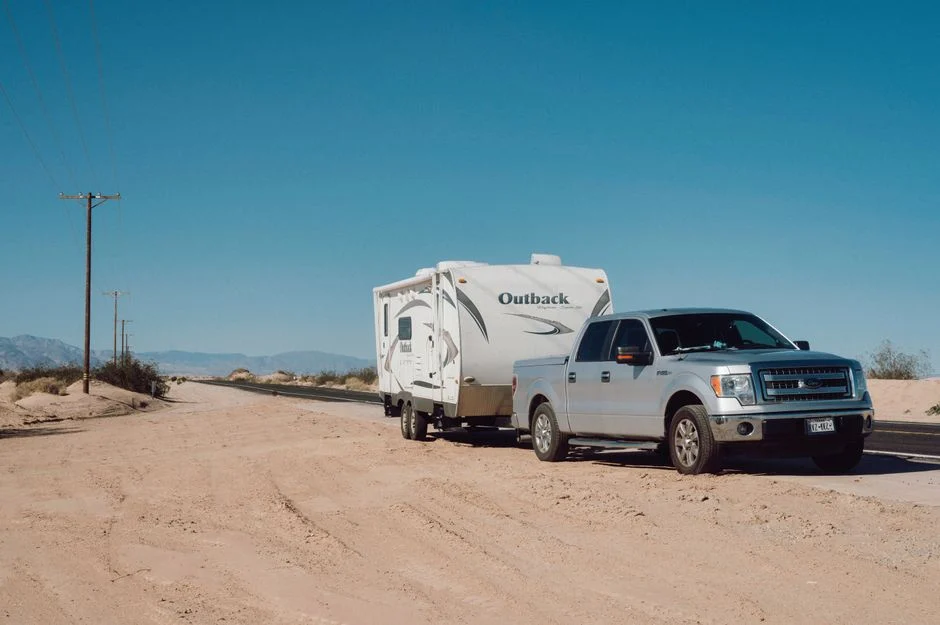
How do you set tire pressure for towing and hauling?
Buy the load range your door placard lists, then set pressure for the load you actually carry. The placard sits on the driver's door edge or post, or in the owner's manual, per NHTSA. Check pressure cold, before you drive. Our tire pressure guide explains the same logic for tractors, and it works for trucks too.
- Loaded and towing: run the pressure the manufacturer's load table gives for that weight.
- Empty truck: do not run maximum pressure. The ride turns harsh and the center tread wears first.
- Dual rear wheels: use the dual capacity number, the second one in 120/116.
- Mixed loads through the week: check pressure each time the load changes.
What does our own catalog say about sizes that fit truck wheels?
Honest answer first: none of our 85 catalog sizes is an LT size. Our listings are farm, implement and loader tires, so LT tires are quoted by size on request. What the catalog does show is how many sizes can physically sit on a truck-sized rim.
| Rim diameter | Sizes in our catalog | Examples |
|---|---|---|
| 15.3 in (389 mm) or smaller | 12 | 5.00-15, 11L-15 |
| 16 to 17.5 in (406 to 445 mm) | 19 | 7.50-16, 10R16.5, 14-17.5 |
| 19.5 to 22.5 in (495 to 572 mm) | 5 | 15-19.5, 560/60R22.5 |
| 24 in (610 mm) or larger | 49 | 18.4-38 |
So 49 of 85 sizes (58%) are far too big for any pickup wheel, and 31 (36%) share a rim diameter with one. Sharing a rim does not make a farm tire an LT tire. A 7.50-16 is a front tractor size, and 10R16.5 is a skid steer size. Tread carefully before you order by rim alone.
Which mistakes cost the most when buying LT tires?
- Dropping a load range. A D on a truck that needs an E can overload the tire when you tow. Going up one step is fine if your loads grew. Going down is not.
- Mixing load ranges on one axle. Pairs should match.
- Copying the size off the old tire. The previous owner may have fitted the wrong one. Check the door placard.
- Changing diameter without checking the speedometer. 3.9% taller means a 2.3 mph (3.7 km/h) error at 60 mph (97 km/h).
- Running full pressure on an empty truck.
- Ignoring tire age. The last four digits of the DOT code give the week and year of manufacture, so 0308 means week 3 of 2008.
How do you keep LT tires working longer?
Short answer: check pressure, check age, check the tread. It is not glamorous. Nobody has ever made a movie about a tire gauge.
| Check | How often | What to look for |
|---|---|---|
| Air pressure, spare included | At least monthly, cold | Match the placard or load table |
| Tread and sidewalls | Each fill-up or trailer hookup | Cuts, bulges, uneven wear |
| Tire age | Yearly, and before buying used | Some makers advise replacement at 6 to 10 years, per NHTSA |
| Wear pattern | At each rotation | Center wear means too much air, edge wear too little |
For used tires, ask us for photos of the actual tire. Our used tire inspection guide shows what to look for, and the radial versus bias-ply guide explains the construction terms you will see.
How can you save money without cutting corners?
- Buy the load range on the placard, not two steps above it just in case.
- Replace in matched pairs or full sets, so wear stays even.
- Keep pressure right. It costs nothing.
- Consider used LT tires in good condition, with photos and a DOT date check.
- Ask for one quote covering tires and shipping to your address. Our tire cost guide shows how we think about price.
When should you not buy LT tires?
Skip them if your pickup is a half-ton that rarely tows and rides empty. Passenger tires are lighter and ride softer there, and your placard may not ask for LT at all. Skip them too if your truck is bigger than the LT range. Class 6 and up needs medium truck tires. If the machine is a tractor or loader, you want tractor tires, not a pickup tire with big dreams. For trailers and implements, see flotation tires.
What should you send us for a quote?
| Send us | Why we ask |
|---|---|
| Full size from the sidewall, with LT and load range | It fixes the exact tire |
| Truck make, model and year | We check it against the placard |
| Towing or hauling, and typical weight | It decides the load range |
| Tread style: highway, all-terrain or mud-terrain | It decides the pattern |
| Quantity, new or used, and shipping address | We quote tires and shipping together |
Shipping takes about 1 week to the USA and Europe, and payment is by Zelle. Ready? Ask for a quote or send a sidewall photo on WhatsApp. We will find the tire. We will probably also make a tread joke. Consider it free. Farm and loader tires live under agricultural tires, construction tires and industrial tires, and the full range of sizes is in the tire size index.
Questions
What does LT mean on a tire?
LT means light truck. LT tires have stronger casings and higher load capacity than passenger tires, for 3/4-ton and 1-ton trucks, towing and hauling.
Can I put passenger tires on a 3/4-ton truck?
It is not recommended. 3/4-ton and 1-ton trucks are rated for LT tires. A passenger tire's load rating also drops about 9% on a truck, so it may not carry the load when towing.
What is the difference between load range C, D and E?
They are strength grades: C is 6-ply rated, D is 8-ply and E is 10-ply. Typical maximum pressures are 50, 65 and 80 psi (3.4, 4.5 and 5.5 bar). Higher letters carry more load at higher pressure.
Can I move up from load range D to E?
Yes, if your towing or hauling has grown. Expect a firmer ride when the truck is empty. Do not go below the load range on your door placard.
What does 120/116 mean on an LT tire?
It is the load index. 120 is the capacity as a single tire and 116 is the capacity as one of a dual pair. Higher numbers carry more weight.
Is an LT tire a 10-ply tire?
Not literally. Load range E is rated like a 10-ply tire, but modern tires reach that strength with fewer plies. The letter tells you the pressure and capacity.
Can I fit bigger LT tires than the factory size?
Often yes, but check clearance first. Going from LT245/75R16 to LT265/75R16 adds 30 mm (1.2 in) of diameter, about 3.9%, and your speedometer will read low by about 2.3 mph (3.7 km/h) at 60 mph (97 km/h).
How often should I check light truck tire pressure?
At least once a month, with the tires cold, and include the spare. The placard on the driver's door edge or post lists the recommended pressure.
How old is too old for a light truck tire?
Some vehicle and tire makers recommend replacement at 6 to 10 years regardless of tread. The last four digits of the DOT code show the week and year made, so 0308 is week 3 of 2008.
How long does shipping take and how do I pay?
Shipping takes about 1 week, and we quote it with the tire prices. Payment is by Zelle.