
Wheels
Tractor Wheels & Rims
We supply new and used agricultural wheels to go with your tires. To quote a wheel we need the rim size, the center or bolt pattern, and the machine it goes on. The easiest way is to send us a photo of the wheel and the markings stamped on the rim.
- New & usedcondition options
- 20brands sourced
- About 1 weekshipping to the USA & Europe
.jpg)
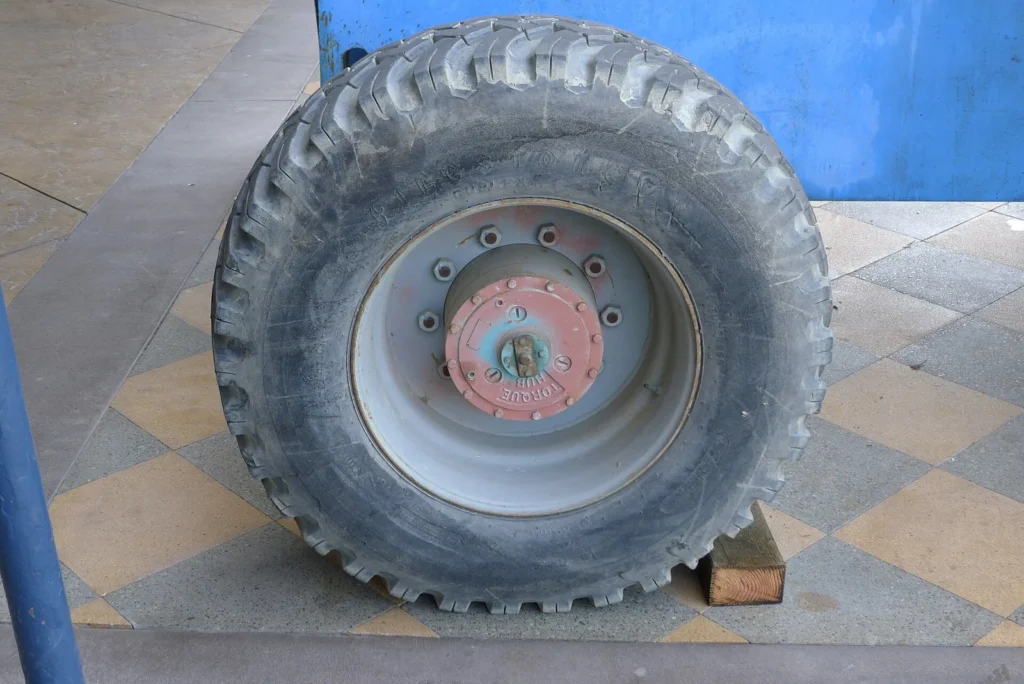
Tractor wheels and rims come down to a handful of numbers: rim diameter, rim width, profile, bolt circle and offset. Get those five right and the wheel fits. Get one wrong and you own a very round paperweight. We start at the rim and work inward.
What is the difference between a rim and a wheel?
The rim is the steel hoop the tire sits on. The wheel is the rim plus the center that bolts it to the axle. A wheel is just a rim with commitments.
Some wheels are one welded piece. Others are a rim bolted or clamped to an adjustable center, so you can slide the wheel along the axle. Heuver, a European rim specialist, also separates single-piece rims (marked with an x) from multi-piece rims (marked with a dash). Multi-piece suits machines where wheels come off and go on often (Heuver, agricultural rim types).
That matters when you order. A rim-only quote and a complete-wheel quote are two different jobs, so tell us which one you want.
Which rim profile do you need: W, DW or TW?
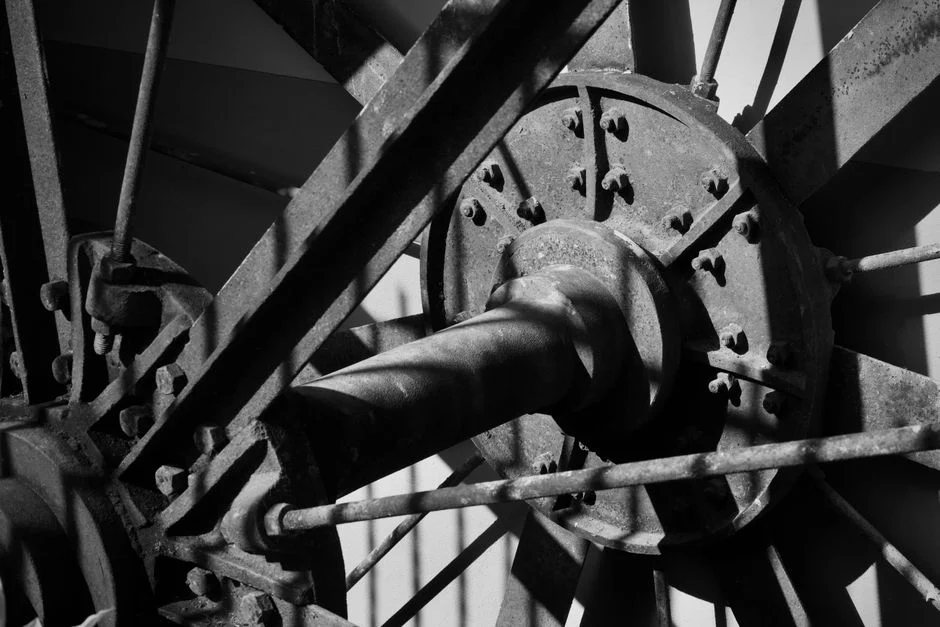
Match the profile to the tire width and the load. Wider tires and heavier machines need a wider, stronger profile. The three common families are below.
| Profile | Example | Typical use |
|---|---|---|
| W | W15L x 30 | The standard agricultural rim for ordinary tractor tires |
| DW | DW14L x 20 | Wider tires and heavier equipment |
| TW | TW23L x 38 | The widest tires and the highest capacity |
The honest answer on choosing: it depends on the machine, the tire width, field or road work and the working pressure. Heuver names the same four factors. Our big tractor tires guide shows what the widest tires look like before you pick a profile.
How do you decode a rim marking? Three worked examples
A rim marking is a small spec sheet stamped in steel. It is usually near the valve hole. Read it left to right and it is easier than the manual that came with the tractor.
| Marking | Profile | Width | Flange | Diameter |
|---|---|---|---|---|
| W15Lx30 | W | 15 in (381 mm) | L | 30 in (762 mm) |
| DW14L-20 | DW | 14 in (356 mm) | L | 20 in (508 mm) |
| TW23Lx38 | TW | 23 in (584 mm) | L | 38 in (965 mm) |
Notice the x in the first and third rows and the dash in the second. By the Heuver convention, x means single-piece and a dash means multi-piece. So DW14L-20 is a multi-piece rim, not a typo. (We checked. Twice. It was not a typo.)
Rule of thumb: diameter has no wiggle room, width does. A 38 in rim takes a 38 in tire, and nothing else however politely you ask. Width only has to fall inside the range the tire maker approves for that tire size. Tire dimensions in the data books are valid on the recommended rim, so a rim outside that choice changes the numbers (Kleber, dimensions and rims). That is a rim shot, if you like. We will see ourselves out.
Stuck on the tire side of the code? Read our tractor tire size guide.
Which rim diameter goes with which tire?
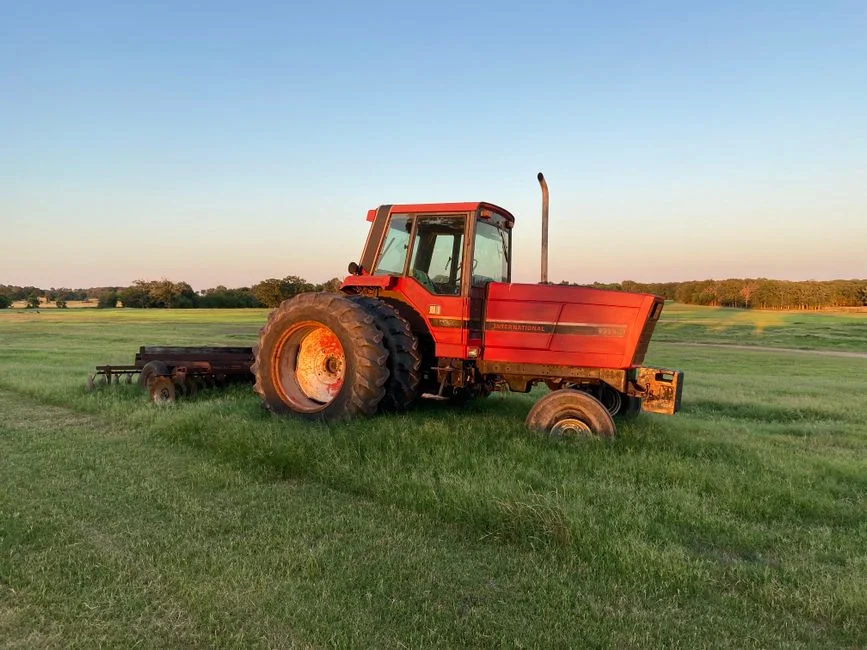
The last number in a tire size is the rim diameter. In 18.4-34 it is 34 in (864 mm). In 520/85R38 it is 38 in (965 mm). Inch sizes and metric sizes line up like this, using the equivalents in the Eil-Bulldog conversion guide.
| Inch size | Metric equivalent | Tire section width | Rim diameter |
|---|---|---|---|
| 14.9-28 | 380/85R28 | 14.9 in (378 mm) | 28 in (711 mm) |
| 16.9-38 | 420/85R38 | 16.9 in (429 mm) | 38 in (965 mm) |
| 18.4-34 | 460/85R34 | 18.4 in (467 mm) | 34 in (864 mm) |
| 20.8-38 | 520/85R38 | 20.8 in (528 mm) | 38 in (965 mm) |
The table gives the diameter. The width range for each tire comes from the tire maker, so we leave it out rather than guess. Convert odd sizes with the tire size converter, then browse all tire sizes by rim diameter.
Can you swap a W rim for a DW, or fit a wider tire?
Sometimes. Kleber lists W rims that can be replaced by DW rims, up to 13 in width, and W14 to W18 rims that can be swapped for W14L to W18L or DW14 to DW18. Those are permitted swaps, not a free-for-all (source).
Kleber also lists five things a rim must handle: load, torque, speed, geometry that fits the tire, and airtightness. A wider tire on a narrow rim is not a bargain. It is just a tire with a bad fit.
Not sure which tread goes with the rim? Our R1, R2, R3 and R4 guide covers tread, and the tire diameter calculator shows what a new size does to overall height. Changing the tire also changes the load and pressure, so check our tractor tire pressure guide and the ballast calculator. For the engineering side, see the University of Kentucky Extension guide, Proper Tire and Ballast Inflation (AEN-93).
What kinds of agricultural wheels are there?
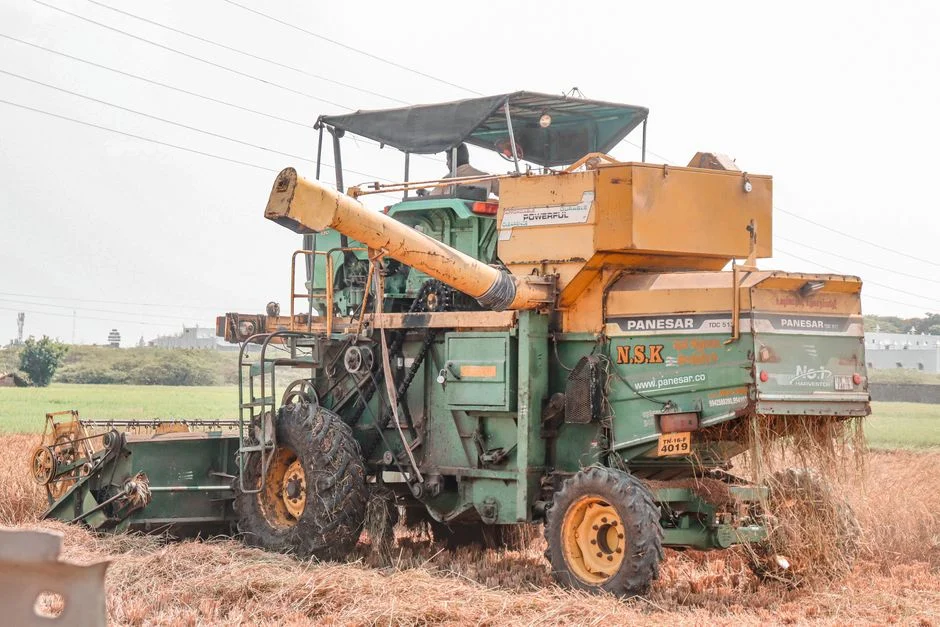
Wheels are named by how the center and rim join and by the machine they serve. Wheel makers list styles such as waffle-center fronts, clamp-and-loop wheels, power-adjust wheels, dolly duals and straddle duals. The groups below cover most of what we see in quote requests.
| Wheel group | Where it goes | What to know |
|---|---|---|
| Tractor rear wheels | Drive axle of row-crop and 4WD tractors | Often an adjustable center, so track width can change. See rear tractor tires. |
| Tractor front wheels | Steer axle, including MFWD | Often a fixed center, sometimes a waffle-pattern disc. See front tractor tires. |
| Dual wheels | Combines and some big tractors | Dolly duals use a spacer, commonly 2 in (51 mm). Straddle duals use two bolt circles. |
| Implement and trailer rims | Planters, drills, wagons, grain carts | Rim catalogs run from 12 in (305 mm) to 22.5 in (572 mm). See implement tires. |
| Flotation rims | Spreaders, sprayers, carts that need low ground pressure | Catalogs run from 22.5 in (572 mm) to 30.5 in (775 mm). See flotation tires. |
| Sprayer wheels | Self-propelled sprayers | Often a disc-style center with row-spacing fitment |
Not sure where your machine sits? Our farm equipment tires guide matches tire type to machine. Custom row-crop wheels exist too: one UK wheel maker builds tractor rims from 12 to 54 in (305 to 1,372 mm) in diameter and 7 to 28 in (178 to 711 mm) in width. If your wheel is unusual, send us a photo and we will tell you what we can supply.
How do the center and bolt pattern decide the fit?
The center decides whether the wheel physically mounts. A perfect rim on the wrong center is a very nice rim you cannot use. Wheel catalogs describe the mounting with five numbers.
| What to measure | What it is | How to get it |
|---|---|---|
| Bolt count | Number of mounting holes. Farm wheels commonly run from 8 to 20 holes. | Count the holes on the hub face |
| Bolt circle (PCD) | Diameter of the circle through the hole centers | Measure across the holes with a tape and photograph it |
| Center bore | Diameter of the hole in the middle of the center | Measure the hole, edge to edge |
| Stud hole size | Diameter of each bolt hole | Measure one hole, edge to edge |
| Offset | Distance from the mounting face to the rim centerline | Photograph the wheel from the side with a tape across it |
The quote details line up with what wheel makers ask for: diameter and width, bolt count, center bore, bolt circle, offset, stud hole size, and the machine make and model. A photo of the back of the wheel saves a lot of guessing. Bring your tape measure, and your sense of humor if the paint is thick.
How does offset set your track width?
Offset sets how far the wheel sits from the tractor. That sets track width, and track width has to clear your crop rows. Common row spacings run from 20 in (508 mm) and 22 in (559 mm) up to 30 in (762 mm) and 38 in (965 mm).
If you change to a different wheel, measure the current one or tell us the tractor model. We want the new wheel to keep the same track, or the one you want for your rows. Guessing here is the costliest mistake on this page, because row crops do not forgive it.
What should you check on a used wheel?
A used wheel is a good deal when it is straight and sound. We supply used wheels as well as new, and photos of the actual item are available on request. Ask for them, then run this checklist.
- Flange: straight, with no dents, cracks or flat spots
- Bead seat: free of deep rust pitting where the tire seals
- Bolt holes: round, not stretched, and free of cracks around the edge
- Welds and center: no cracks where the center meets the rim
- Rim stamp: readable, so you can confirm profile, width and diameter
- Valve hole: clean and undamaged
- Out-of-round: look along the rim edge for any wobble
Our used tractor tire inspection guide covers the rubber side. Tread carefully, and photograph everything.
Which wheel ordering mistakes cost the most?
- Matching width and forgetting diameter. A 38 in rim does not take a 34 in tire.
- Ordering a rim without the center. The rim may be right and the mounting wrong.
- Guessing the offset. It sets your track width.
- Sizing from the tire alone. Old sidewalls fade, so read the rim stamp too.
- Ignoring the approved width range. A rim outside it changes the tire dimensions.
- Mixing single-piece and multi-piece rims without checking the marking.
How can you spend less on wheels?
Honest answer: mostly by not buying what you do not need. These save real money.
- Keep a straight rim and replace only the tire
- Consider used wheels with photos when the rim is sound
- Ask for tires and wheels in one quote, so the sizes are checked together
- Measure first, so you do not order a second set after the first does not mount
- Ask what size range works, since one tire size may fit more than one approved rim width
For tire prices see how much a tractor tire costs.
When don't you need a new wheel?
Often. If the tire is worn but the rim is straight, holds air and sits inside the approved width range for the tire you want, you only need a tire. Save the money for the rubber. Do not reinvent the wheel.
Buy the wheel when the rim is damaged, when the tire you want needs a wider rim, or when you want a different track width. Browse tire listings for what we have, or see the full tractor tires range.
What should you send us for a quote?
Send us what is on this list and we can usually work from it.
- The tractor or implement make and model
- The rim marking, such as DW16Lx38
- The tire size you will fit
- A photo of the front and back of the wheel
- Bolt count, bolt circle and offset if you have them
- How many you need, new or used, and where to ship
Then request a quote. We ship to the USA and Europe in about 1 week, and payment is by Zelle. We quote first, so you see the full figure before you pay. Send us your rim marking and we will find the wheel. We will probably make a rim joke too. Consider it free.
Questions
What does W15Lx38 mean on a rim?
It describes the rim profile (W), a width of 15 inches (381 mm), a flange code (L) and a diameter of 38 inches (965 mm). The tire must be made for a 38-inch rim, and 15 inches must be inside the tire maker approved rim widths for that size.
What is the difference between a rim and a wheel?
The rim is the steel hoop the tire sits on. The wheel is the rim plus the center that bolts it to the axle. Some wheels are one welded piece, others are a rim on an adjustable center.
What is the difference between W, DW and TW rims?
They are rim profiles. W is the standard agricultural rim, DW suits wider tires and heavier equipment, and TW suits the widest tires and the highest capacity. Send us the marking and the tire size and we will check the match.
What do the x and the dash mean in a rim marking?
An x marks a single-piece rim and a dash marks a multi-piece rim, following the convention Heuver describes. So W15Lx30 is single-piece and DW14L-20 is multi-piece.
Can I put a wider tire on my existing rim?
Only if your rim width is inside the approved range for the new tire size. Otherwise you need a wider rim. Send us both sizes and we will check.
Where do I find the rim size on my wheel?
It is stamped on the rim, usually near the valve hole. If paint or rust hides it, send a photo of the wheel and the tractor model and we will work from there.
What do I need to measure for a bolt pattern?
Count the bolts, measure the bolt circle across the holes, then measure the center bore, the stud hole size and the offset. A photo of the back of the wheel with a tape across it helps most.
Do I need new wheels when I buy new tires?
Not if your rims are straight, hold air and fall inside the tire maker approved width range for the new size. If the new tire needs a wider rim, you need a different wheel.
Do you sell used wheels?
Yes, new and used. Send us the rim marking, the tractor model and a photo, and we will quote what we can supply. Photos of the actual used item are available on request.
How long does shipping take and how do I pay?
We ship to the USA and Europe in about 1 week. Payment is by Zelle. We quote first, so you see the full figure before you pay.