
Tire Sizing & Fitment
Big Tractor Tires: How Big They Get, What They Fit and Cost
Big tractor tires are usually radials on 38 to 42-inch rims, 650 to 900 mm (26 to 35 in) wide and around 6 to 7 feet tall. The largest in production, such as 900/60R42 and 710/75R42, stand over 2,140 mm (84 in). They fit high-horsepower row-crop and 4WD tractors and cost thousands of dollars each.

Big tractor tires are the only tires that make grown adults stop their pickup on the side of the road to take a photo. We get it. We do it too. (We’re also the people measuring them while everyone else takes selfies.)
Here’s the short answer. Most modern big tractor tires are radials on 38 to 42-inch rims, between about 650 and 900 mm (26 to 35 in) wide, and stand around 6 to 7 feet tall. The tallest farm tires in production today stand about 2,171 mm (85.5 in). They go on high-horsepower row-crop and four-wheel-drive tractors, and they cost thousands of dollars each.
Let’s size them up.
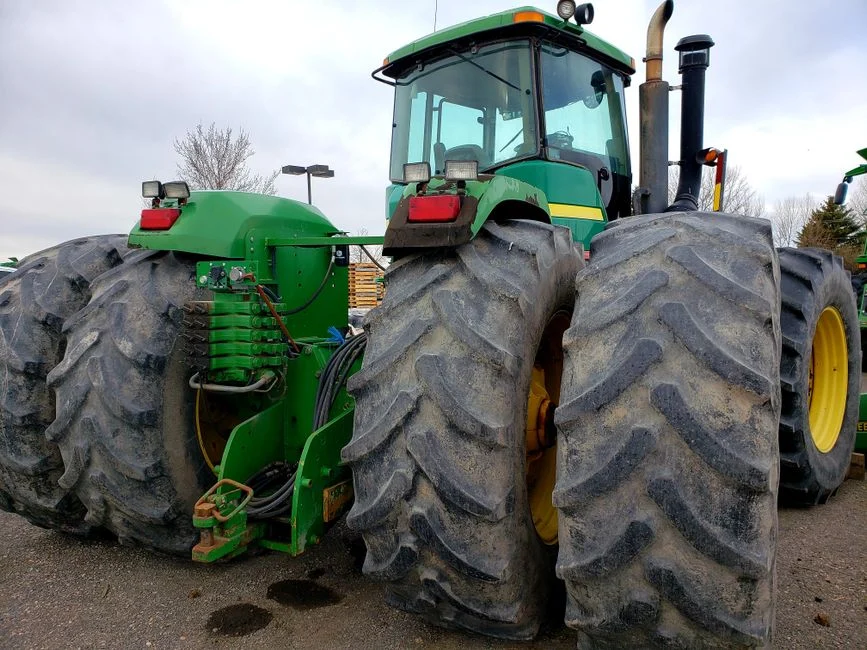
How big are big tractor tires?
“Big” depends on the farm, but the common big sizes look like this. The diameters are nominal, worked out from the size itself: two sidewalls plus the rim.
| Size | Width | Overall diameter | Typical tractor |
|---|---|---|---|
20.8-38 |
20.8 in (528 mm) | about 73.4 in (1,864 mm) | Older high-horsepower 2WD and MFWD |
520/85R38 |
20.5 in (520 mm) | 72.8 in (1,849 mm) | Row-crop MFWD, often as duals |
650/65R38 |
25.6 in (650 mm) | 71.3 in (1,810 mm) | Mid-to-large MFWD |
710/70R42 |
28 in (710 mm) | 81.1 in (2,061 mm) | High-horsepower row-crop tractors |
800/70R38 |
31.5 in (800 mm) | 82.1 in (2,085 mm) | Large MFWD and 4WD |
900/60R42 |
35.4 in (900 mm) | 84.5 in (2,147 mm) | The biggest tractors on the market |
Want the math for your own size? Our tire diameter calculator does it in a second. The tractor tire size guide explains what each number means.
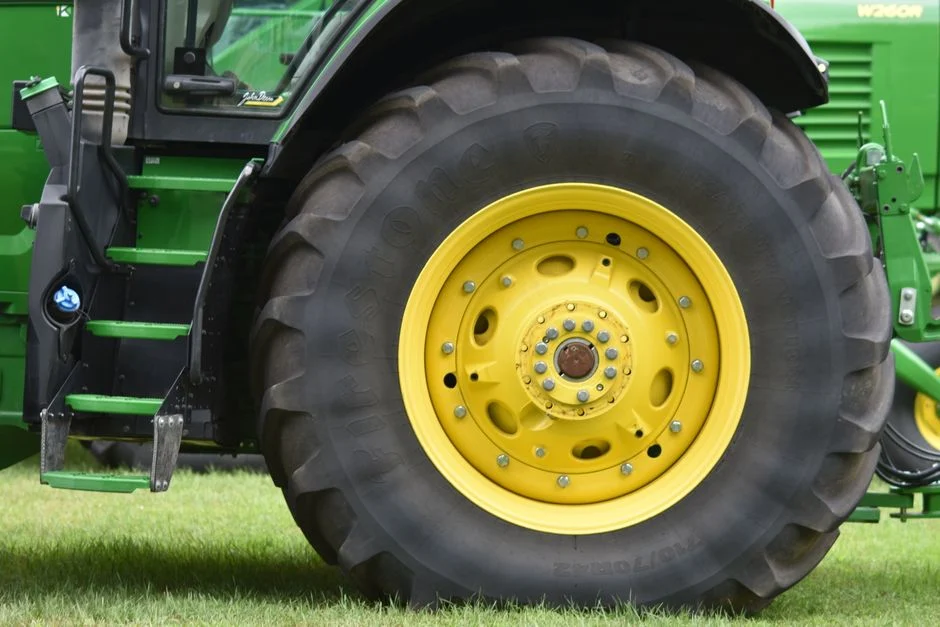
The largest tractor tires in the world
The current giants are all radials with flexible sidewalls, built for tractors of 300 horsepower and up.
- VF900/60R42. Continental lists its version at a 2,147 mm diameter, carrying 10,300 kg (22,708 lbs) per tire at load index 189. It’s aimed at tractors over 300 horsepower.
- 900/60R42 and 710/75R42. Mitas calls its 900/60R42 its largest farm tire overall, at 2,150 mm across and 860 mm wide. Its 710/75R42 is the tallest, at 2,171 mm.
- 1250/50R32. The widest Mitas makes, at 1,220 mm (48 in). That’s a tire about as wide as a kitchen table is long.
Those numbers are what “we’re gonna need a bigger tire” looks like on paper.
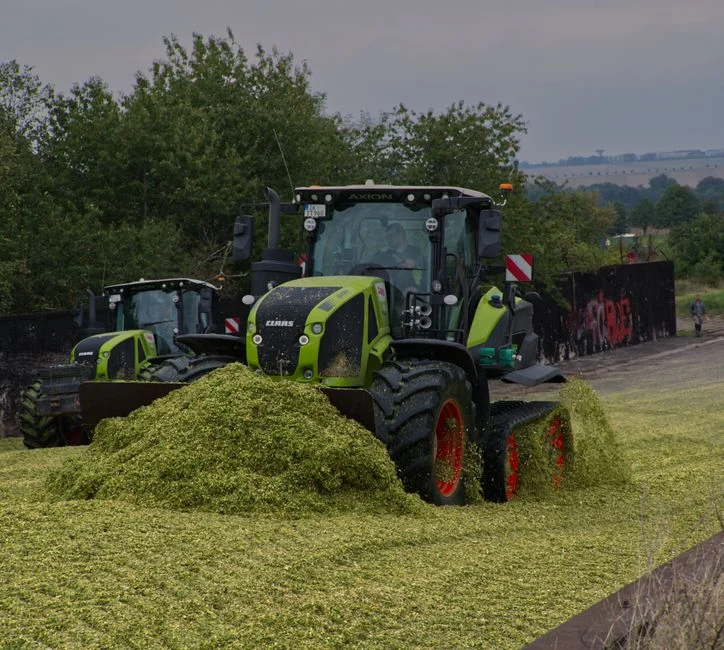
The story of the biggest tractor tires ever made
For the all-time record you have to go back to Big Bud 747, built in 1977. Its original tires stood 8 feet tall and were 39.6 inches wide, custom-made by a Canadian company that later went out of business. With no replacements available, the tractor eventually stopped regular field work.
In 2020 it got new rubber: 1400/30R46 tires slightly under 7 feet tall, which brought the tractor to just over 25 feet wide. The tractor now makes 1,100 horsepower. That’s not a tractor. That’s a weather system.
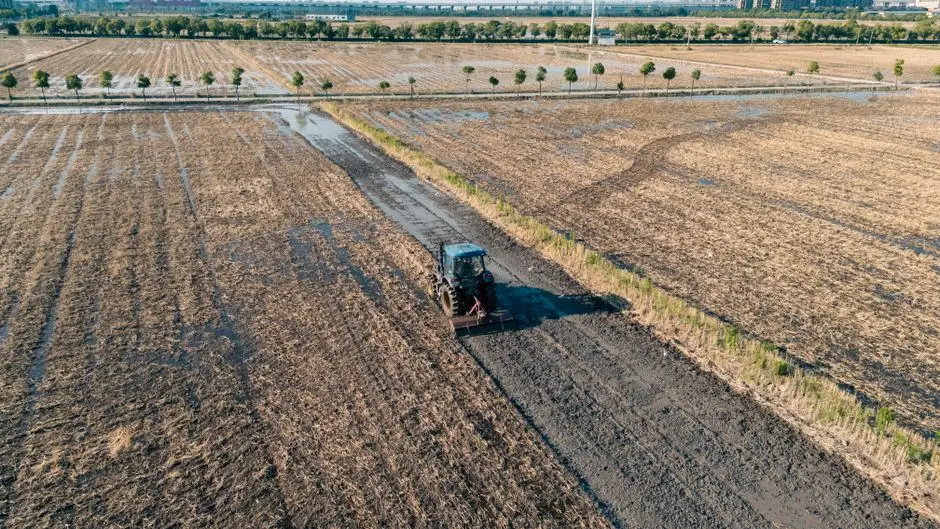
Why big tractors need big tires
A big tractor’s power has to reach the ground somehow. Bigger tires do three jobs at once:
- They carry the weight. High-horsepower tractors weigh a lot before you add ballast. A larger air volume carries more load at the same pressure.
- They put power down. A longer, wider footprint means more lugs in the soil and less slip. The University of Kentucky extension service targets about 10% wheel slip for MFWD and 4WD tractors.
- They protect the soil. Spreading the same weight over a bigger footprint lowers the pressure on the ground, which means less compaction.
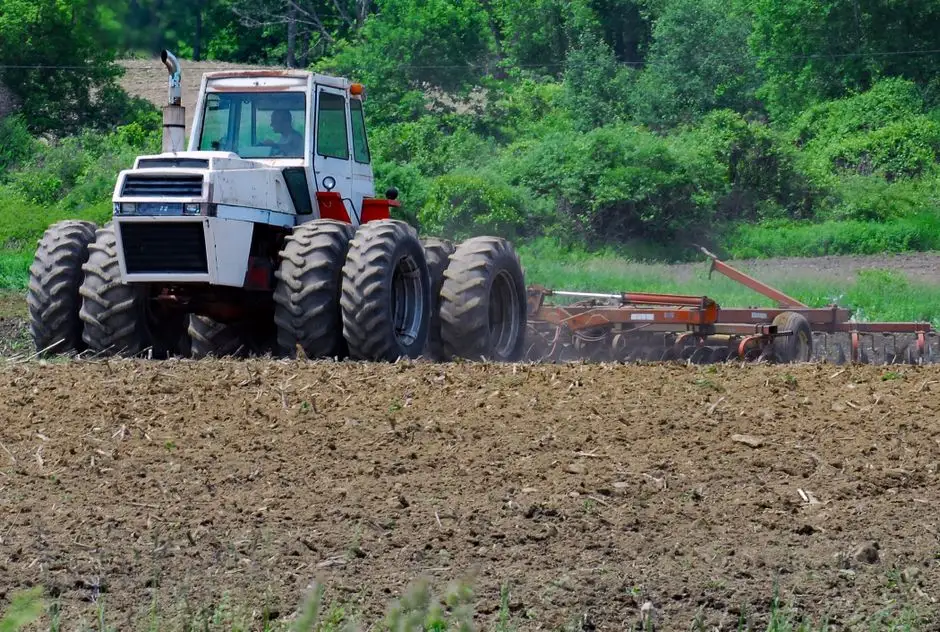
Big singles or duals?
You can get the footprint two ways: one very wide tire per side, or two narrower ones bolted together as duals.
| Wide singles | Duals | |
|---|---|---|
| Example | 800/70R38 |
2 × 520/85R38 |
| Road width | Narrower overall | Wider, harder on narrow roads |
| Row-crop work | Too wide for narrow rows | Can straddle rows |
| Fitting time | One tire per side | Twice the tires, more bolts |
| Soil pressure | Low | Low, spread over two tires |
Neither is “right”. Duals suit row crops and heavy draft. Wide singles suit farms with lots of road travel and open-field work.
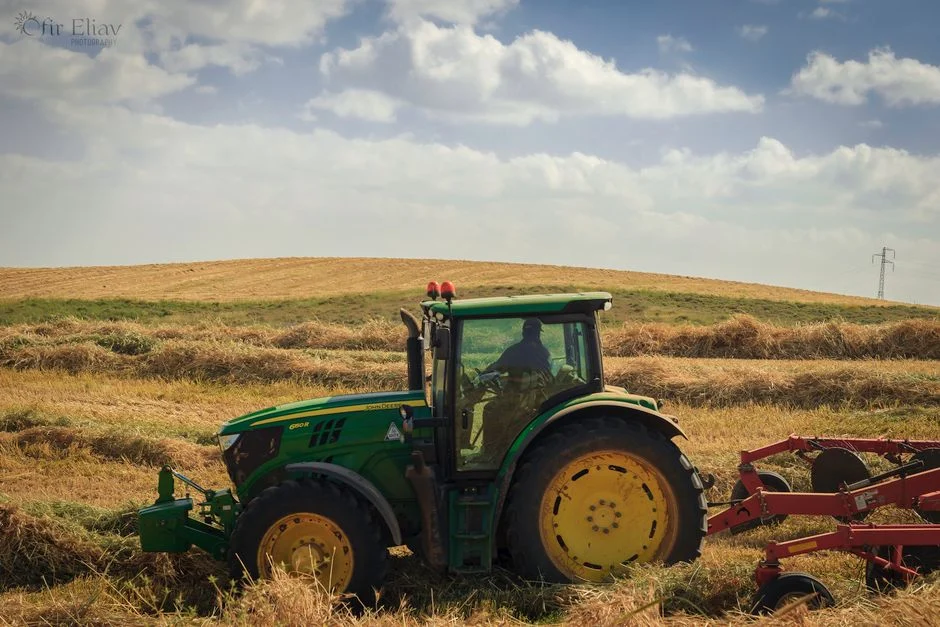
IF and VF: big tires that run softer
You’ll see IF or VF in front of many big sizes. These radials have more flexible sidewalls, so they carry the same load at a lower pressure. Continental puts the VF advantage at 40% more load at the same pressure, or 40% less pressure at the same load. Lower pressure means a longer footprint and gentler treatment of your soil. More in our IF vs VF tires guide.
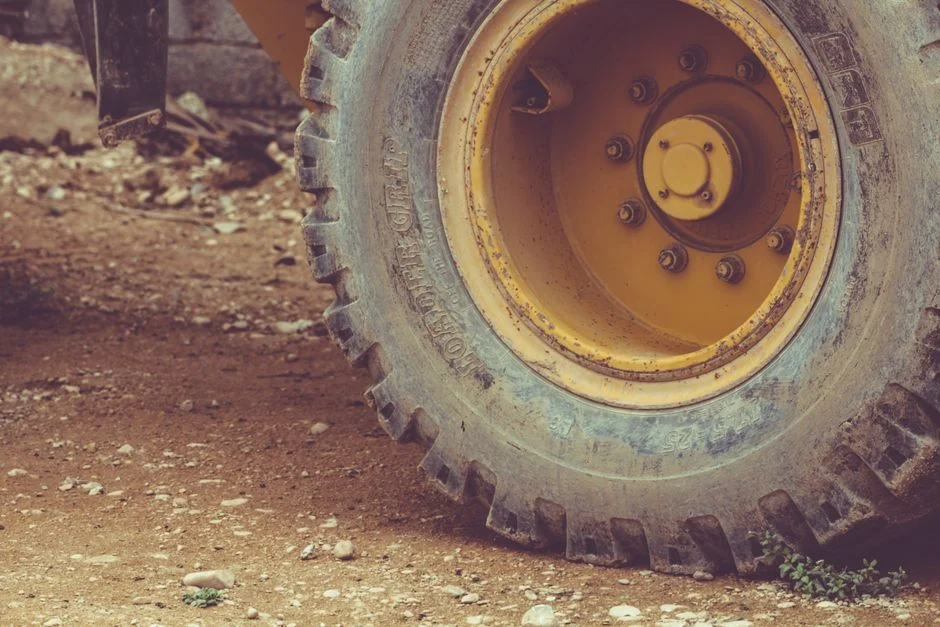
What big tractor tires cost
Big tires come with big invoices. Real listed prices from our catalog, per tire:
- 20.8-38 bias: $1,484 (Galaxy Earth-Pro R-1) to $2,083 (BKT TR 135)
- 520/85R38 radial: $1,788 (Ascenso TDR 850) to $2,420 (Michelin AgriBib 2)
- 650/65R38 radial: $2,526 (BKT Agrimax RT 657) to $4,141 (Michelin Multibib)
- 710/70R42 radial: $4,120 (Trelleborg TM900 High Power) to $5,022 (Michelin MachXBib)
Freight on a tire this size isn’t small either, which is why our quotes include shipping. The full breakdown is in how much does a tractor tire cost.
When bigger isn’t better
Honest answer: don’t buy the biggest tire that fits. Buy the one your tractor’s maker approves for its weight and front-to-rear ratio. Oversized rears on a front-wheel-assist tractor change the lead between the axles, and the drivetrain pays for it. Check yours with our lead-lag calculator. A taller tire also needs fender clearance and has to fit between your rows.
Looking for the big sizes themselves? Our agricultural tires page and the tire size index list what we can quote.
More tractor tire guides from us:
- How to Measure Tractor Tire Size: Width, Diameter and Circumference
- R14 Tractor Tires: Hybrid Tread, Sizes and R4 vs R14
- R1 Tractor Tires: What They Are and Where They Work
- Garden Tractor Tires: Sizes, Tread and How to Choose
- Lawn Tractor Tires: Sizes, Tread and How to Choose
- R4 Tractor Tires: What They Are and When to Use Them
- Firestone Tractor Tire Size Chart: Every Size by Model
- Farm Equipment Tires: Which Type Fits Which Machine
- Rear Tractor Tires: Sizes, Tread and How to Pick a Pair
- Goodyear Tractor Tires: Who Makes Them and What Changed
- Titan Tires: Who Owns Titan, Where It Makes Them and Are They Good
- Front Tractor Tires: Which Tread, Size and Pair to Buy
- Who Makes BKT Tires? Owner, Factories and Where They're Made
- How Much Does a Tractor Tire Cost? Real Prices by Size
- IF vs VF Tires: What They Mean and When to Choose Them
- Tractor Tire Pressure: How to Set It for Load and Speed
- How to Inspect Used Tractor Tires Before You Buy
- R1 vs R1W Tractor Tires: What Is the Difference?
- Radial vs. Bias-Ply Tractor Tires: Which Should You Choose?
- Tractor Tire Size Guide: How to Read Every Number on the Sidewall
- Tractor Tire Types Explained: R1 vs R2 vs R3 vs R4
If your current size is right, stick with it. If you’re ready to replace, browse our tractor tires or send us your size on WhatsApp. We’ll quote it with shipping to the USA or Europe, delivered in about a week. We can’t promise the tire will fit in your shed. That part’s on you.
Questions
What is the biggest tractor tire made today?
Among current farm tires, the 900/60R42 size is one of the largest overall, at about 2,147 to 2,150 mm (84.5 in) across. Mitas lists its 710/75R42 as its tallest at 2,171 mm, and its 1250/50R32 as its widest at 1,220 mm.
How tall is a big tractor tire?
Common big rear sizes such as 520/85R38 and 650/65R38 stand about 6 feet tall (1,810 to 1,850 mm). A 710/70R42 is about 81 inches (2,061 mm), and the largest sizes reach about 85 inches.
What tractor had the biggest tires ever?
Big Bud 747, built in 1977. Its original custom tires were 8 feet tall and 39.6 inches wide. Since 2020 it has run on 1400/30R46 tires just under 7 feet tall.
How much does a big tractor tire cost?
On our site, 650/65R38 radials list from about $2,526 to $4,141 per tire, and 710/70R42 from about $4,120 to $5,022. A 20.8-38 bias tire costs about $1,484 to $2,083.
Are wider tractor tires better?
Wider tires spread the load over a bigger footprint, which lowers soil pressure and can improve traction. But they must clear the fenders, fit your row spacing and be approved for your tractor.
Should I run duals or wide singles?
Duals suit row crops and heavy draft work and can straddle rows. Wide singles are narrower overall on the road and quicker to fit. Your row spacing and road travel usually decide it.
Can I put bigger tires on my tractor?
Sometimes. The rim diameter must match, the rim width must be approved for the tire, and on a front-wheel-assist tractor the front-to-rear ratio must stay within the maker's spec. Check with a lead-lag calculator before you buy.
Are big tractor tires radial or bias?
Almost all of the biggest ones are radial. Sizes like 650/65R38, 710/70R42 and 900/60R42 only exist as radials. Bias big tires still exist in older sizes such as 20.8-38, and they cost less, but they flex less and put a shorter footprint on the ground.
How wide are big tractor tires?
Common big sizes run from about 520 mm (20.5 in) to 900 mm (35.4 in) wide. The widest Mitas farm tire, the 1250/50R32, is 1,220 mm (48 in) wide. Width is the first number in a metric size like 710/70R42.
What rim sizes do big tractor tires fit?
Most big rears fit 38-inch or 42-inch rims. The last number in the size is the rim diameter in inches, so a 710/70R42 fits a 42-inch rim and a 520/85R38 fits a 38-inch rim. Always confirm the rim width and bolt pattern before you order.