
Tire Types & Tread Patterns
R1 vs R1W Tractor Tires: What Is the Difference?
R-1W is the wet-soil version of the R-1 farm tread, with lugs at least 20% deeper (makers quote 15 to 25%). The extra depth gives more grip in wet, heavy ground and more rubber to wear through. R-1 costs less and suits dry ground, high speed and lighter work.
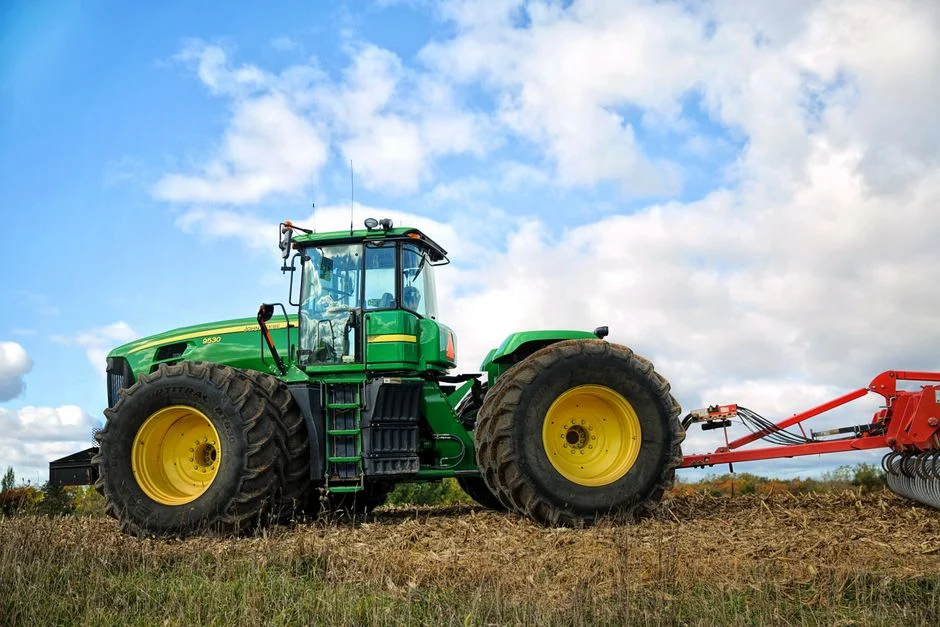
R-1 and R-1W look identical until you stand next to them, which is roughly when someone says “same tire, right?” Not quite. One of them just dug a little deeper.
Here’s the direct answer on R1 vs R1W tractor tires. Both are bar-lug farm treads for driven wheels. R-1W is the wet version: its lugs are at least 20% deeper than the same size in R-1 (makers quote anything from 15% to 25%), so it keeps biting in soft, sticky soil and has more rubber to wear through. R-1 is the standard tread for dry ground, higher speeds and lighter work, and it costs less. Both codes are molded into the sidewall next to the size, for example 18.4-38 R-1 or 520/85R38 R-1W.
Below: a side-by-side table, a soil guide, a cost-per-lug-depth table, and what we actually list in each tread. (We’ll keep the puns shallow. Mostly.)
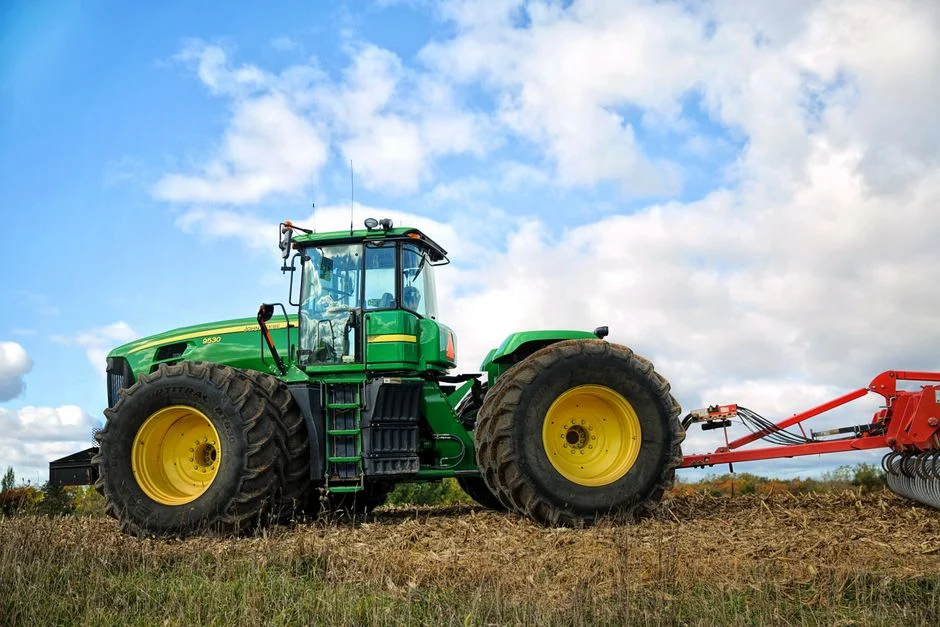
How do R1 and R1W tires compare, side by side?
| R-1 | R-1W | |
|---|---|---|
| Lug (tread) depth | Standard | At least 20% deeper; makers quote 15 to 25% |
| Best ground | Dry to moderately damp | Wet, heavy or sticky soil |
| Traction on dry ground | Good | About the same |
| Traction in wet clay | Good | Better, especially at higher slip |
| Soil compaction | About the same | About the same |
| Tread life | Standard | Longer: more rubber to wear |
| Road and high-speed work | Runs cooler under high load and speed | Taller lugs move more on pavement |
| Price | Lower | Higher |
| Typical use | Utility tractors, sprayers, dry ground | High-hour field tractors, wet or heavy soil |
The pattern itself is the same family. Think of R-1W as R-1 with a deeper tread bank account. For what R-1 is on its own, see our R1 tractor tires guide.
On the depth figure, the makers don’t quite agree. Bridgestone and Firestone say at least 20%. In the manufacturer answers collected by AG Tire Talk, Titan says 20 to 25%, CEAT about 25%, and Yokohama’s contributor usually 15 to 20%. Titan also puts R-1 depth at 1.25 to 1.75 inches (32 to 44 mm) depending on the size. So treat 20% as the floor, not a promise, and ask for the actual lug height of the model you are buying.
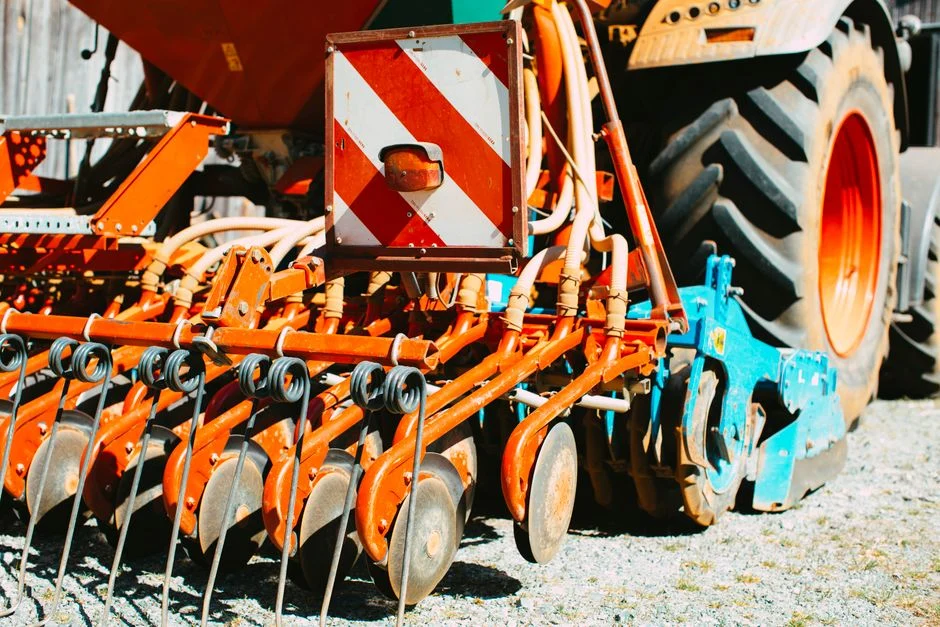
What does the W in R1W stand for?
The W stands for wet. R-1W is the industry tread code for the R-1 style with deeper lugs, built for fields that stay soft and sticky. Farm Progress describes R-1 as the bar-tread design for dryland farming and puts R-1W lugs at least 20% deeper than the same-size R-1.
The codes form a ladder of lug depth:
| Code | Built for | Lug depth |
|---|---|---|
| R-1 | General farm work, dry to moderate ground | Standard |
| R-1W | Wet, heavy or sticky soil | At least 20% deeper than R-1 |
| R-2 | Rice and saturated fields | About twice R-1 |
| R-3 | Turf and lawns | Shallow |
| R-4 | Industrial and loader work | Shallow, wide lugs |
Trelleborg even sells a rice tire it describes as an R-1W+ profile, sitting between R-1W and R-2. Our tractor tire types guide covers the full R-1 to R-4 range.
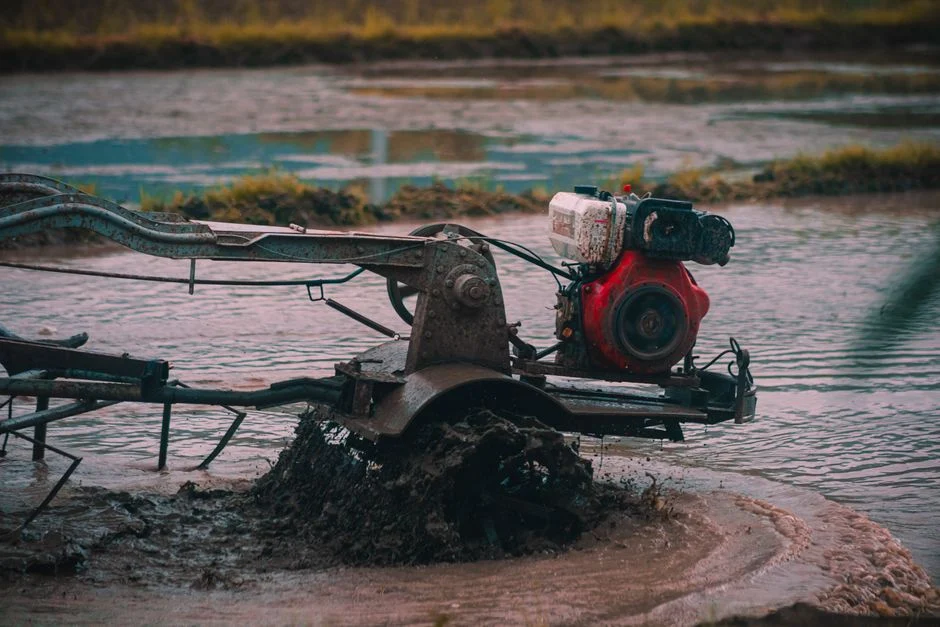
Does R1W give you more traction?
Only when the ground is soft. On dry, firm soil an R-1 and an R-1W pull much the same, because neither lug sinks far. Bridgestone says as much: R-1W does not add traction in dry or normal soils. The gap shows up in wet or heavy clay, where deeper lugs reach firmer soil and clean out better as the tire turns. That means less wheel slip, less fuel burned and less time on each field. It also means fewer moments in the cab, staring at a spinning wheel and rethinking your life choices.
Mud also packs between lugs and turns a tread into a slick. Open shoulders and angled grooves help a tire clear itself, and deeper lugs give the mud more room before it fills the gap. Use this as a rough guide:
| Ground | Usual pick |
|---|---|
| Dry most of the year | R-1 |
| Moderately damp, firm underneath | R-1 |
| Wet, heavy clay or borderline wet | R-1W |
| Standing water, rice, saturated fields | R-1W at the deep end, or R-2 |
Bridgestone’s advice is blunt: in wetter soil, even borderline wetter soil, consider R-1W. If your fields hold water in spring, that’s your answer. If they bake hard by June and stay that way, you are paying for lugs the soil never asks for. Not sure which side you are on? Our tread type picker matches tread to ground and work.
Does R1W compact the soil less than R1?
No. Bridgestone puts compaction about the same for both treads, because compaction depends on pressure, load and footprint, not lug depth. If compaction is your worry, the lever is a radial with IF or VF construction run at a low pressure. Firestone suggests keeping those below about 15 psi (1.0 bar). Our IF vs VF guide explains how much lower they can run.
When is plain R1 the better tire?
More often than the brochures suggest. R-1 makes sense when:
- The ground is dry or only moderately damp most of the year.
- The tractor is a utility or chore tractor with modest yearly hours. Titan notes that tractors under 150 horsepower (112 kW) typically ship on R-1.
- The work is high-speed and high-load. AG Tire Talk lists R-1 as the cooler-running choice there, with self-propelled sprayers as its example, and Alliance cites a 380/90R46 sprayer tire where R-1 is more stable.
- Road time matters. Continental says R-1 can ride better on pavement, thanks to wider, lower lugs.
- Price matters more than the last bit of tread life.
Deeper lugs aren’t free. They flex more, and on pavement the difference can be a slightly rougher ride. Radial construction narrows the gap.
Is R1W worth the extra money?
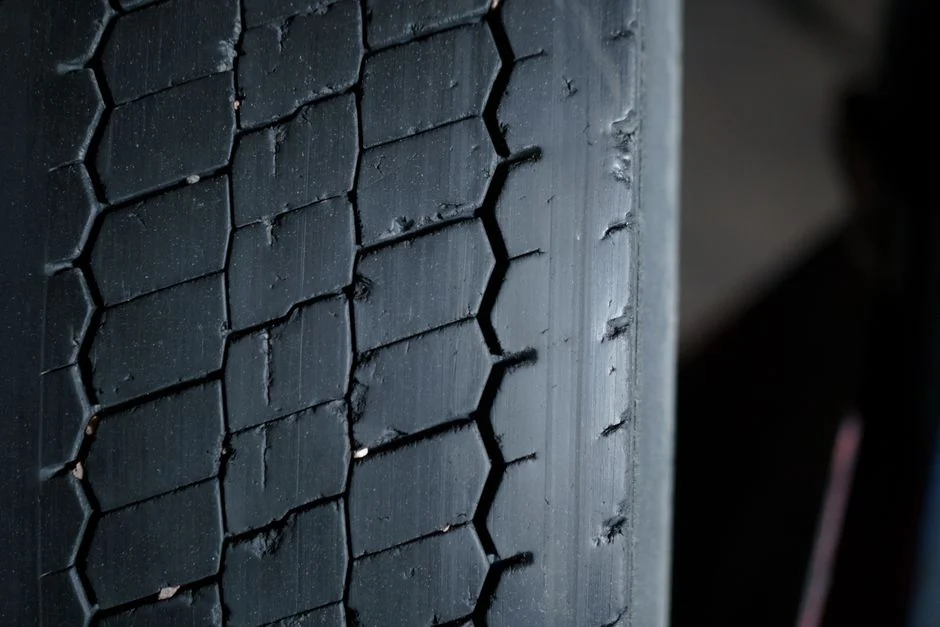
Honest answer: it depends on hours. Deeper lugs mean more rubber to wear before the tire is done, which is why R-1W is the usual choice on tractors that log many field hours a year. It costs more up front, so the saving only shows if you wear the tread down. Precision Inflation, quoted at AG Tire Talk, says an R-1W wears down to about R-1 depth after roughly 1,000 hours.
You can check the maths with a price quote and one number from the maker, the extra lug depth. This table shows how the cost of each unit of lug depth changes against R-1. Minus means R-1W is cheaper per unit of depth.
| R-1W costs this much more than R-1 | If R-1W is 15% deeper | If 20% deeper | If 25% deeper |
|---|---|---|---|
| 10% more | 4% cheaper | 8% cheaper | 12% cheaper |
| 20% more | 4% dearer | Equal | 4% cheaper |
| 30% more | 13% dearer | 8% dearer | 4% dearer |
It is plain arithmetic: price divided by depth. When the price gap equals the depth gap, the two cost the same per unit of tread. CEAT, in the same AG Tire Talk piece, says to think hard about R-1 only if it is at least 25% cheaper. The table ignores that you cannot wear down every millimeter of lug, and it leaves out slip, fuel and road time, which tend to favor R-1W on wet ground and R-1 on a tractor that mostly travels.
On a tractor that does a few hundred hours of light work, a standard R-1 usually ages out before it wears out. Paying for depth you’ll never use is the tire equivalent of buying a snow shovel in Phoenix. Our tractor tire cost guide shows real listed prices by size so you can run your own numbers.
Road work, heat and making any tread last
Tread depth is only half the story. Bridgestone’s tire-life advice applies to both treads:
- Keep the inflation right. Under-inflation is the fastest way to flex lugs, build heat and wear a tire out.
- Respect the maker’s road speed limit. Deep lugs run hotter on pavement.
- Let the tires cool between hard field work and a long road trip.
- Check for stones and debris lodged in the tread, because they cut into the casing.
If much of your life is road or concrete feedlot, AG Tire Talk’s answers lean to R-1W for its longer wear. Continental leans the other way for ride and comfort. Both can be right, which is why we ask about your ground and your hours before we quote.
Which R1 and R1W tires do we list?
We list 17 R-1 models with 225 size listings, and 14 R-1W models with 76 size listings. The split follows construction. Fifteen of the 17 R-1 models are bias, covering sizes like 18.4-38, 16.9-28 and 13.6-28. Every R-1W model we list is radial. Two R-1 models are radial too, so you do have a choice on the biggest sizes.
| Radial size | R-1 models listed | R-1W models listed |
|---|---|---|
| 320/85R24 | 1 | 9 |
| 340/85R24 | 1 | 10 |
| 380/85R24 | 1 | 10 |
| 420/85R28 | 1 | 10 |
| 460/85R30 | 1 | 10 |
| 520/85R38 | 1 | 9 |
| 600/65R28 | 1 | 4 |
| 650/65R38 | 1 | 4 |
| 710/70R42 | 1 | 2 |
Nine radial sizes come in both treads. Most of our R-1 range is bias, and no R-1W bias model is listed, so choosing R-1W on a bias-sized tractor usually means a switch to radial. The radial vs bias guide covers that move. Browse all R-1W tires or R-1 tires, or send us your size and ask for either tread. Availability changes by brand, so we confirm the exact tire in your quote.
Can you mix R1 and R1W tires?
None of the top-ranking pages we read cover this one. Short version: not on the same axle.
- Same axle: different lug depths mean slightly different rolling diameters and grip. The tractor can pull to one side and the tires wear unevenly.
- Front and rear on front-wheel-assist tractors: the rolling diameters must keep the ratio set by the tractor maker. Changing tread depth on one axle changes that ratio a little. Check your operator’s manual before you order.
Replace in pairs, match the tread, and tread carefully on anything fancier.
Five questions to pick R1 or R1W (and when to pick neither)
- How wet is the ground when you work it? Wet or heavy points to R-1W.
- How many hours a year does the tractor run? Many hours favor R-1W. Few favor R-1.
- Is the work high-speed or high-load? Sprayers and similar jobs favor R-1.
- How much of the time is on the road? Check the heat and ride notes above.
- What does the tractor maker approve for your rim and axle? Your manual decides.
Here’s a sentence a tire supplier isn’t supposed to write: you may not need R-1W. You don’t if your ground is dry, your hours are low, or your tractor is a loader that lives on hard surfaces. For yard and loader work, look at R-4 industrial. For lawns, R-3 turf. Neither is an R-1 question. You may not need new tires either. If the tractor is slipping, check tire pressure first. A gauge is cheaper than a quote, and a repairable puncture is a local repair job.
If you do need tires, send us your size on WhatsApp. Tell us the ground and the hours, and we’ll tell you R-1 or R-1W, even when the cheaper one means a smaller invoice for us. We’ll probably add a tread joke. The joke is free.
Questions
What is the difference between R1 and R1W tractor tires?
Lug depth. R-1W is the same bar-lug farm tread as R-1 with lugs at least 20% deeper (makers quote 15 to 25%), built for wet, sticky soil. R-1 costs less and suits dry ground, higher speeds and lighter work.
What does the W in R1W stand for?
Wet. R-1W is the farm tread with lugs at least 20% deeper than the same-size R-1, for better grip in wet, sticky soil.
How much deeper is R1W tread than R1?
At least 20% by Bridgestone and Firestone. Titan says 20 to 25%, CEAT about 25%, and Yokohama usually 15 to 20%. R-2, by comparison, is about twice as deep as R-1. Ask for the lug height of your model.
Is R1W better than R1?
In wet or heavy soil, yes: more traction and more tread to wear. On dry ground, on a low-hour utility tractor or on high-speed, high-load work, R-1 does the job for less money.
Does R1W give more traction than R1?
Only in soft ground. Bridgestone says R-1W does not add traction in dry or normal soils. In wet clay its deeper lugs keep biting at higher slip.
Is R1W worth the extra cost?
On a tractor with many field hours or wet soil, usually yes. On a low-hour tractor, R-1 usually ages out before the tread wears out, so the extra depth goes unused. When the price gap is bigger than the depth gap, R-1 is the cheaper tread per unit of depth.
Can I mix R1 and R1W tires on the same tractor?
Not on the same axle, because rolling diameter and grip differ slightly. On a front-wheel-assist tractor, check the operator manual first, since front and rear rolling diameters must stay in the maker ratio.
Which is better for wet soil, R1 or R1W?
R-1W. Bridgestone advises considering it in wetter soil, even borderline wet. For standing water, rice or saturated fields, R-2 goes deeper still.
Does R1W compact soil less than R1?
No. Bridgestone puts compaction about the same for both. To cut compaction, use an IF or VF radial at a lower pressure, and keep the pressure right.
Which tread is better for sprayers and high-speed work?
R-1. AG Tire Talk lists it as the cooler-running choice for high-speed, high-load work such as self-propelled sprayers, and Continental says it can ride better on the road. R-1W lugs move more on pavement.