
Farm tires
Tractor Tires
Tractor tires are identified by the size on the sidewall, such as 18.4-38 or 520/85R38, and by a tread code: R-1 for general field work, R-1W for deeper lugs in wet soil, R-3 for turf and R-4 for loader and industrial work. Find your size below to see what it means, add it to a quote, or send it to us on WhatsApp for new and used prices.
- 63sizes listed
- New & usedcondition options
- 20brands sourced
- About 1 weekshipping to the USA & Europe
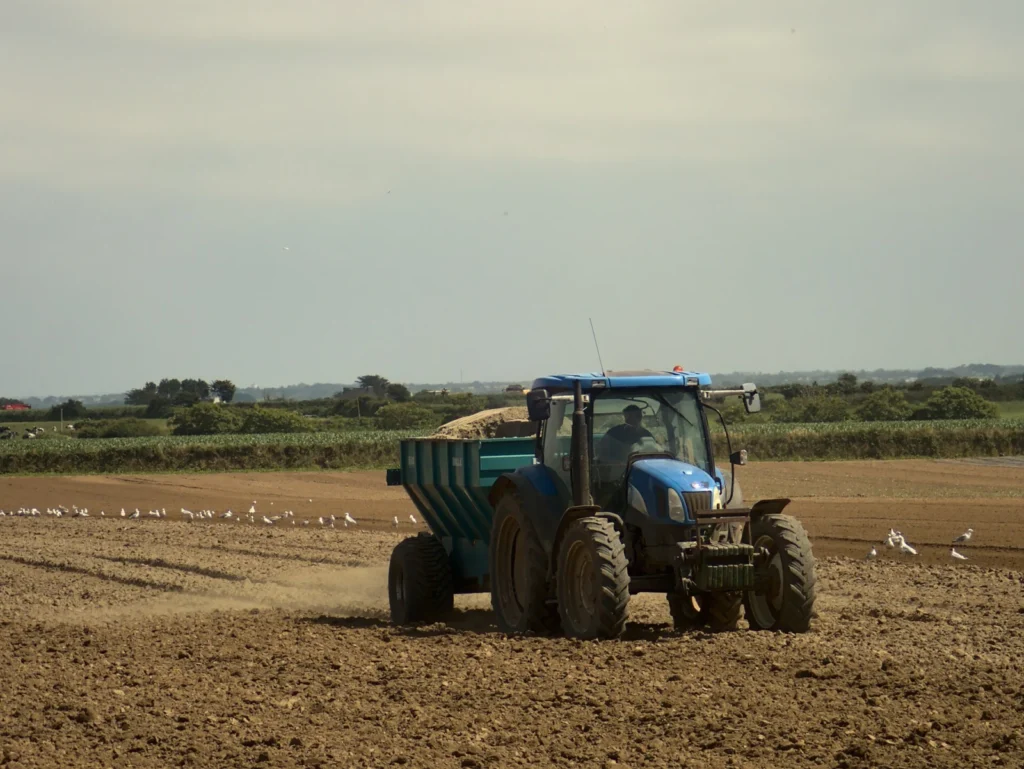

Tractor Tires sizes
Rear Tractor Tires
| Size | Tread | Construction | Typical use | Add to quote |
|---|---|---|---|---|
| 12.4-24 | R-1 | Bias | Utility / row crop | |
| 13.6-24 | R-1 | Bias | Utility / row crop | |
| 14.9-24 | R-1 | Bias | Utility / row crop | |
| 16.9-24 | R-1 | Bias | Utility / heavy tractor | |
| 18.4-24 | R-1 | Bias | Utility / heavy tractor | |
| 23.1-26 | R-1 | Bias | Heavy tractor | |
| 28L-26 | R-1 | Bias | High flotation / heavy tractor | |
| 11.2-28 | R-1 | Bias | Compact / row crop | |
| 12.4-28 | R-1 | Bias | Row crop / utility | |
| 13.6-28 | R-1 | Bias | Row crop / utility | |
| 14.9-28 | R-1 | Bias | Utility / row crop | |
| 16.9-28 | R-1 | Bias | Heavy utility | |
| 18.4-28 | R-1 | Bias | Heavy utility | |
| 20.8-28 | R-1 | Bias | Heavy tractor | |
| 12.4-30 | R-1 | Bias | Row crop / utility | |
| 13.6-30 | R-1 | Bias | Row crop / utility | |
| 14.9-30 | R-1 | Bias | Utility / row crop | |
| 16.9-30 | R-1 | Bias | Heavy utility | |
| 18.4-30 | R-1 | Bias | Heavy utility | |
| 20.8-30 | R-1 | Bias | Heavy tractor | |
| 12.4-32 | R-1 | Bias | Row crop | |
| 14.9-32 | R-1 | Bias | Row crop | |
| 24.5-32 | R-1 | Bias | Heavy tractor | |
| 16.9-34 | R-1 | Bias | Utility / row crop | |
| 18.4-34 | R-1 | Bias | Heavy utility | |
| 20.8-34 | R-1 | Bias | Heavy tractor | |
| 23.1-34 | R-1 | Bias | Heavy tractor | |
| 13.6-36 | R-1 | Bias | Row crop | |
| 14.9-38 | R-1 | Bias | Row crop | |
| 16.9-38 | R-1 | Bias | Heavy row crop | |
| 18.4-38 | R-1 | Bias | Heavy row crop | |
| 20.8-38 | R-1 | Bias | Heavy tractor | |
| 23.1-38 | R-1 | Bias | Heavy tractor |
Radial Tractor Tires
| Size | Tread | Construction | Typical use | Add to quote |
|---|---|---|---|---|
| 320/85R24 | R-1W | Radial | Row crop / utility | |
| 340/85R24 | R-1W | Radial | Row crop / utility | |
| 380/85R24 | R-1W | Radial | Row crop / utility | |
| 420/85R24 | R-1W | Radial | Heavy utility | |
| 420/85R28 | R-1W | Radial | Heavy utility | |
| 600/65R28 | R-1W | Radial | High horsepower tractor | |
| 460/85R30 | R-1W | Radial | Heavy utility | |
| 480/80R34 | R-1W | Radial | Row crop / utility | |
| 520/85R38 | R-1W | Radial | Heavy row crop | |
| 650/65R38 | R-1W | Radial | High horsepower tractor | |
| 710/70R42 | R-1W | Radial | High horsepower tractor |
Front Tractor Tires
| Size | Tread | Construction | Typical use | Add to quote |
|---|---|---|---|---|
| 5.00-15 | R-1 | Bias | Front axle / row crop | |
| 11L-15 | F-2 | Bias | Front axle / row crop | |
| 5.50-16 | R-1 | Bias | Front axle / utility | |
| 6.00-16 | R-1 | Bias | Front axle / utility | |
| 6.50-16 | R-1 | Bias | Front axle / utility | |
| 7.50-16 | R-1 | Bias | Front axle / utility | |
| 7.50R16 | — | Radial | Front axle / utility | |
| 8.3-16 | R-1 | Bias | Front axle / row crop | |
| 9.5-16 | R-1 | Bias | Front axle / utility | |
| 10.00-16 | R-1 | Bias | Front axle / utility | |
| 11L-16 | F-2 | Bias | Front axle / utility | |
| 12.4-16 | R-1 | Bias | Front axle / utility | |
| 9.00R20 | R-1 | Radial | Front axle / heavy utility |
Compact & Garden Tractor Tires
| Size | Tread | Construction | Typical use | Add to quote |
|---|---|---|---|---|
| 18x8.50-10 | R-3 | Bias | Lawn / garden tractor | |
| 20x8.00-10 | R-3 | Bias | Lawn / garden tractor | |
| 23x8.50-12 | R-3 | Bias | Lawn / garden tractor | |
| 26x12.00-12 | R-3 | Bias | Lawn / garden tractor | |
| 27x8.50-15 | R-1 | Bias | Compact utility tractor | |
| 9.5-16 | R-1 | Bias | Compact utility tractor | |
| 11.2-24 | R-1 | Bias | Compact / utility tractor | |
| 12.4-24 | R-1 | Bias | Compact / utility tractor |
That size isn’t in this list — we can often still source it. Ask us on WhatsApp
How to choose tractor tires
1. Start with the size on your sidewall
Every tractor tire has its size molded into the sidewall. Standard bias sizes look like 18.4-38: an 18.4-inch section width on a 38-inch rim. Metric radial sizes look like 520/85R38: 520 mm wide, a sidewall 85% as tall as the width, radial construction, on a 38-inch rim. The rim diameter must match your wheel exactly. Width and height decide whether the tire clears the fenders, fits between your rows and keeps the right ratio with the other axle.
2. Match the tread to the work
| Tread | Lug design | Best for |
|---|---|---|
| R-1 | Standard agricultural bar lugs | General field work, tillage and hauling on firm to moderately soft soil |
| R-1W | Lugs about 20% deeper than R-1 | Wet or heavy soil, and high-hour tractors that need longer wear |
| R-3 | Shallow, closely spaced tread | Lawns, turf and grounds care where you must not tear the surface |
| R-4 | Industrial lug, between R-1 and R-3 | Loaders, backhoes and yard work on hard surfaces and dirt |
| F-2 | Ribbed steering tread | Front tires on two-wheel-drive tractors |
3. Bias or radial?
| Bias | Radial | |
|---|---|---|
| Sidewall | Stiff, built from crossing plies | Flexible, with a belted tread |
| Footprint | Shorter and narrower | Longer and wider at the same load |
| Traction and soil | Good | Better traction and less compaction |
| Ride | Firmer | Smoother, especially on the road |
| Price | Lower up front | Higher, usually with longer tread life |
| Typical use | Utility and loader tractors, lower-hour machines | High-hour field and row crop tractors |
Keep the same construction across an axle: never mix a bias tire and a radial tire on the same axle. On front-wheel-assist (MFWD) tractors, the front and rear tires also have to stay in the right size ratio, so check both axles before changing one of them.
4. Front tractor tires
Two-wheel-drive tractors steer on ribbed front tires, such as 11L-15 F-2. Front-wheel-assist tractors drive the front axle too, so they use lugged R-1 or R-1W tires matched to the rears. Our front sizes run from 5.00-15 for smaller row crop tractors up to 9.00R20 radials for heavy utility work.
5. Buying used tractor tires
- Ask for the tread remaining, or a photo of the lugs next to a tape measure.
- Check the sidewalls for deep weather cracks, cuts and bulges.
- Ask about repairs, and whether the tire has been run flat.
- Read the DOT date code: the last four digits are the week and year it was made. Old rubber cracks sooner, even with good tread.
- Buy matched pairs so both sides of the axle wear and pull evenly.
When should you replace tractor tires?
Lug height is the first thing to measure. Koenig Equipment advises replacing when the lugs are down to about half their original height, because soft-ground traction drops off measurably from there, and below a quarter the tire is mostly cosmetic. Surface weather cracks are usually fine. Cracks that show cord, or splits that reach the inner casing, mean replacement, since repairs on a casing like that rarely pay. Cupped or scalloped lugs usually point to a pressure or alignment problem, so fix the cause before you fit new tires or they will wear the same way.
What air pressure should tractor tires run?
Lower in the field, higher on the road. Lower pressure widens the contact patch, which improves traction and cuts compaction. The same low pressure on a long road haul heats the casing and fatigues the sidewall. The same source gives examples such as 16 to 20 psi (1.1 to 1.4 bar) for a compact tractor on R-4 rears in the field, against 22 to 28 psi (1.5 to 1.9 bar) on the road. Treat those as examples only: your tire's maximum cold pressure and your tractor manual set the real limits. Our tractor tire pressure guide covers the method.
What do IF and VF mean on a radial?
They are flexion ratings. Maxam and Hobby Farms both describe IF (increased flexion) as carrying about 20% more load than a standard radial at the same pressure, or the same load at about 20% less pressure. VF (very high flexion) pushes that to about 40%. The benefit is the same either way: a bigger footprint with less pressure on the soil. The full comparison is in our IF vs VF tires guide.
Do you need liquid ballast?
If you run a front-end loader, usually yes, on the rears. Filling the tire with fluid adds weight low down, which improves traction and counters the load on the front. The usual fill is about 75% of the tire's volume, with the rest left as air. Water freezes, and calcium chloride corrodes rims, so many owners use a beet-juice-based fluid instead. Ask a dealer to fill it. To estimate how much weight you need, use our ballast calculator.
What about R-2, I-1 and I-3 treads?
Three codes you will see beyond the table above. R-2 has lugs about twice as deep as R-1 and is built for rice paddies and cane fields. It wears unevenly on hard roads. I-1 is the implement tread for trailers, planters and other towed equipment, with a reinforced casing for loads and low rolling resistance on the road. I-3 is a bar tread similar to R-1 but with shallower lugs, used for flotation on heavy implements such as manure spreaders and grain carts. Our tread types guide goes through all of them.
Which tires fit a lawn tractor or garden tractor?
Lawn tractor tires and garden tractor tires are small. Sizes show diameter, tread width and rim in inches, so 23x8.50-12 is 23 inches tall, 8.5 inches wide, on a 12-inch rim. Some sizes show only width and rim, such as 9.50-8. Tire retailers Tires-Easy and Giga Tires both describe the same three choices of tread. A turf tread, usually a chevron pattern, is the default for mowing because it grips grass without tearing it. A lug or agricultural tread has deep grooves that clear mud and suit dirt, sand or towing, but it is harsh on a lawn. A rib tread rolls easily and lasts, but pulls less, so keep it for flat, firm ground.
Casing strength is the other choice. A 4-ply (load range B) tire resists punctures better than a 2-ply (load range A), which helps on thorny or rough ground. Pressure on riding mowers is usually low, with 10 to 20 psi (0.7 to 1.4 bar) quoted as typical, but your sidewall and manual decide. We list 18x8.50-10, 20x8.00-10, 23x8.50-12, 26x12.00-12 and 27x8.50-15, and the Carlisle Turf Saver is a turf-tread model. Read the full guides to lawn tractor tires and garden tractor tires, or send us your size on WhatsApp if you are not sure which one fits.
Send us your size and we’ll tell you what we can supply new and used. Ask for photos of any used tire before you buy.
Questions
What does R-1 mean on a tractor tire?
R-1 is the standard agricultural tread code for rear tractor tires, with bar lugs for general field traction. R-1W has lugs about 20% deeper for wet soil and longer wear, R-3 is a turf tread, and R-4 is an industrial tread for loader work.
Where do I find my tractor tire size?
It is molded into the sidewall, usually in the largest numbers, for example 18.4-38 or 520/85R38. If it is worn or hard to read, send us a photo of the sidewall on WhatsApp.
Can I switch from bias to radial tractor tires?
Often, yes, as long as the radial fits your rim diameter and width and has a similar overall diameter. Change both tires on an axle together, and on front-wheel-assist tractors check the front-to-rear ratio. Tell us your current size and we will suggest options.
Do you sell used tractor tires?
Yes. We supply new and used tractor tires. Ask us for the tread remaining, the age and photos before you buy.
Where do you ship tractor tires?
We ship to customers in the USA and Europe. Include your delivery location in your quote request and we will quote the shipping with the tires.
When should I replace my tractor tires?
When the lugs are worn to about half their original height, or when cracks show cord or reach the casing. Surface weather cracking alone is usually fine. Fix cupping or uneven wear at its cause, usually pressure or alignment, before fitting new tires.
What pressure should tractor tires run?
Lower in the field for traction and less compaction, higher on the road to protect the casing. Never exceed the maximum cold pressure on the sidewall, and follow your tractor manual for the exact figures.
What tires does a lawn tractor use?
Small turf tires in sizes such as 18x8.50-10 or 23x8.50-12. A chevron turf tread is the usual choice for mowing, a lug tread suits dirt and mud, and a rib tread suits flat ground. Read the size on your sidewall or in your manual.
How do I read a garden tractor tire size?
A size like 23x8.50-12 gives the overall diameter, the tread width and the rim diameter in inches. A two-number size such as 9.50-8 gives only the width and the rim.