
Tire Sizing & Fitment
Tractor Tire Size Guide: How to Read Every Number on the Sidewall
A tractor tire size gives the width and the rim it fits. In 18.4-38, the tire is 18.4 inches wide, the dash means bias-ply and 38 is the rim diameter in inches. In 520/85R38, 520 is the width in mm, 85 is the sidewall height as a percentage of the width, R means radial and 38 is the rim.
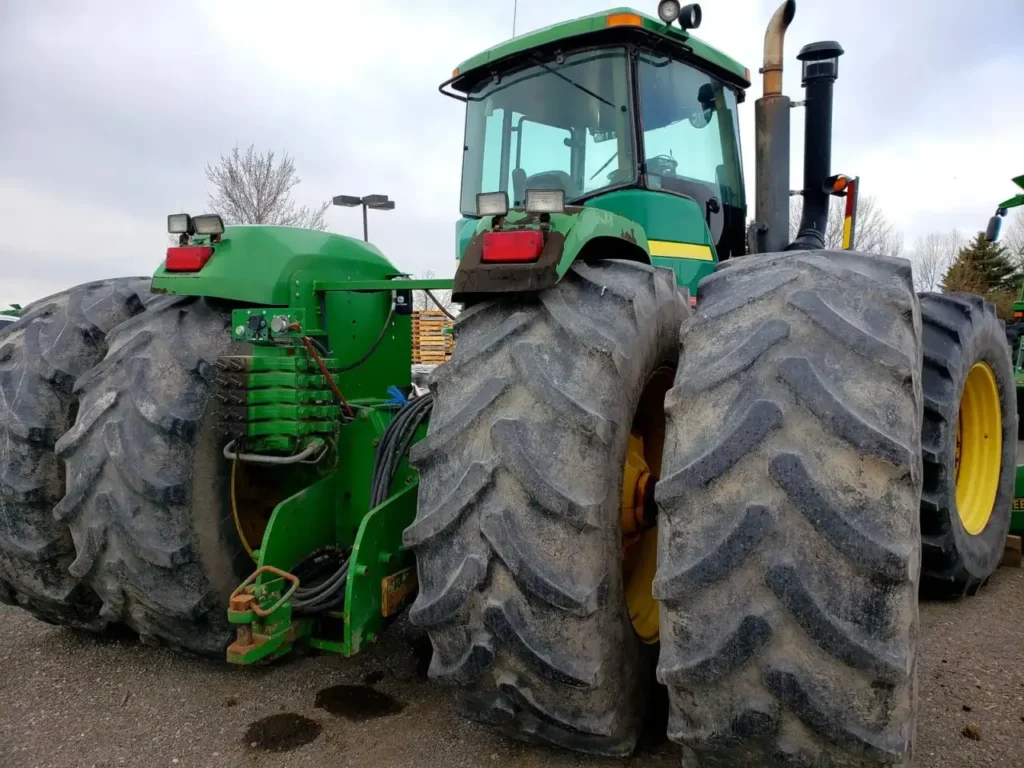
A tractor tire size tells you two things first: how wide the tire is and which rim it fits. Most sizes also say how the tire is built, with a dash for bias-ply and an R for radial. Metric sizes add the sidewall height as a percentage of the width.
That’s the short version. Tractor tire sizes still look like somebody dropped a calculator in the mud, so this tractor tire size guide decodes all four formats in about ten minutes. Then it covers the rest of the sidewall and how to pick a size that fits. (Nobody asked us either.)
Let’s get to the bottom of it. Or at least to the rim.
Every tractor tire size uses one of four formats
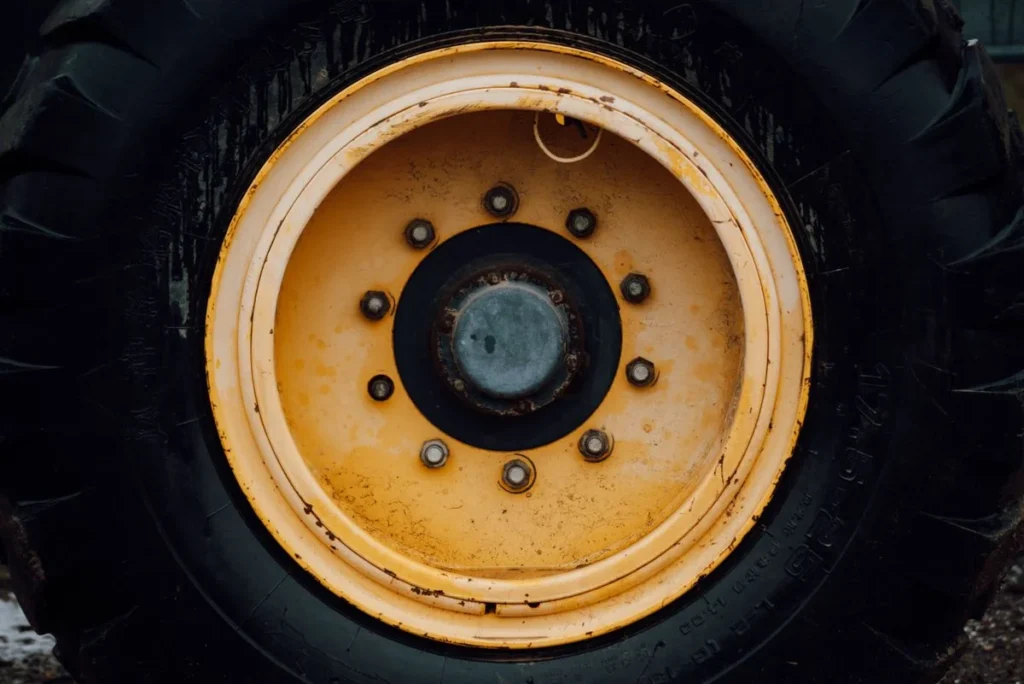
Find the biggest numbers molded into the sidewall. That’s the size. Then match it to one of these:
| Format | Example | Where you’ll see it |
|---|---|---|
| Standard (inch) | 18.4-38 or 18.4R38 |
Rear and front tractor tires, older and utility tractors |
| Metric radial | 520/85R38 |
Most modern rear tractor tires |
| Low-section and flotation | 11L-15, 10.0/75-15.3 |
Implements, wagons, two-wheel-drive fronts |
| Three-number (garden) | 23x8.50-12 |
Lawn, garden and small compact tractors |
Rule of thumb: read the size off the tire you’re replacing, then check it against the operator’s manual. Tractors get re-tired over their lives, and the previous owner may have gone a different way.
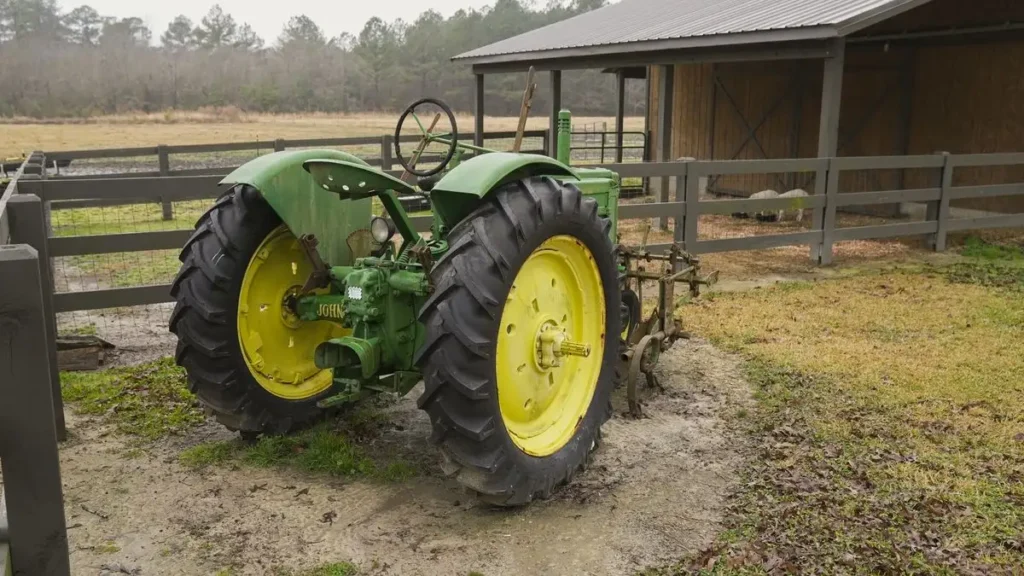
What 18.4-38 means on a standard tractor tire
In 18.4-38, the tire is 18.4 inches (467 mm) wide and fits a 38-inch rim. The dash means bias-ply construction.
| Part | Meaning |
|---|---|
18.4 |
Section width in inches, measured across the widest point of the inflated tire |
- |
Bias-ply construction |
38 |
Rim diameter in inches |
Swap the dash for an R and you get 18.4R38: same nominal size, same 38-inch rim, but a radial. Never put one of each on the same axle.
Standard sizes don’t print the sidewall height. As a rule of thumb, old inch sizes work out to about 85% of the width. So an 18.4 has a sidewall roughly 15.6 inches (397 mm) tall.
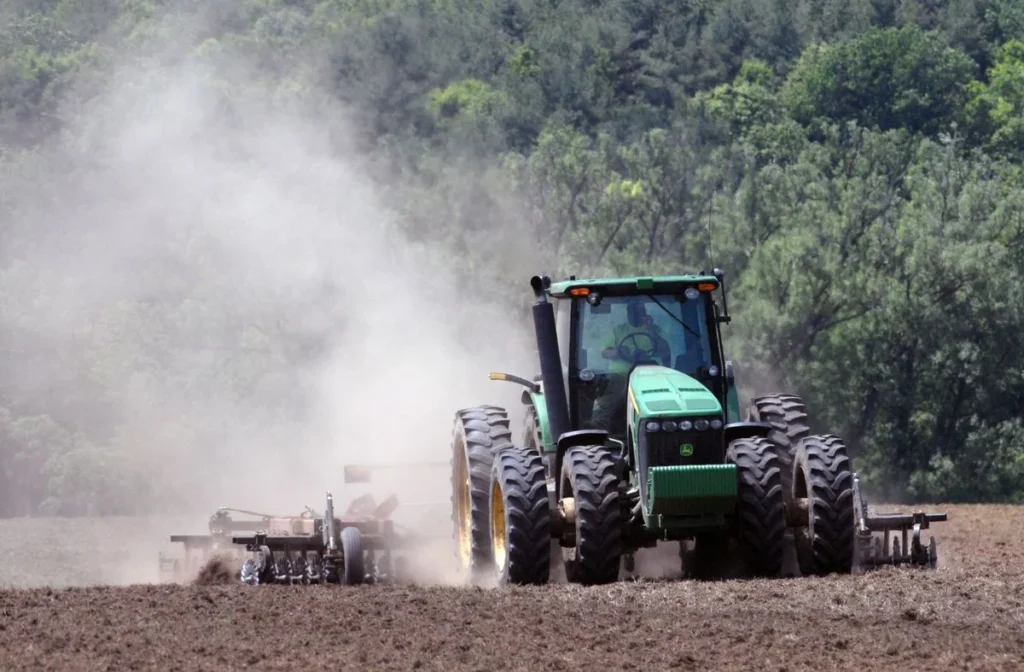
What 520/85R38 means on a metric radial
Metric sizes give you one extra number, and it’s the useful one.
| Part | Meaning |
|---|---|
520 |
Section width in millimeters (20.5 in) |
85 |
Aspect ratio: the sidewall is 85% as tall as the tire is wide |
R |
Radial construction |
38 |
Rim diameter in inches (yes, inches, in the middle of a metric size) |
How to work out the overall diameter
Two sidewalls plus the rim. For 520/85R38:
- Sidewall: 520 × 0.85 = 442 mm
- Rim: 38 × 25.4 = 965 mm
- Overall: 965 + 442 + 442 = 1,849 mm (72.8 in)
That’s the nominal figure. Real tires vary a little by brand and tread depth. Our tire diameter calculator does the maths for any size, so you don’t have to (we did it by hand once, for the dramatic effect).
Lower aspect ratios mean shorter sidewalls. A 710/70R38 and a 650/65R42 can stand about as tall as each other while putting very different rubber on the ground.
How to switch between millimeters and inches
The rim is always in inches, even in a metric size. Only the width needs converting.
- Millimeters to inches: divide by 25.4. So 520 mm ÷ 25.4 = 20.5 in.
- Inches to millimeters: multiply by 25.4. So 18.4 in × 25.4 = 467 mm.
- Sidewall height: multiply the width by the aspect ratio. So 520 mm × 0.85 = 442 mm.
Low-section, flotation and garden sizes follow their own rules
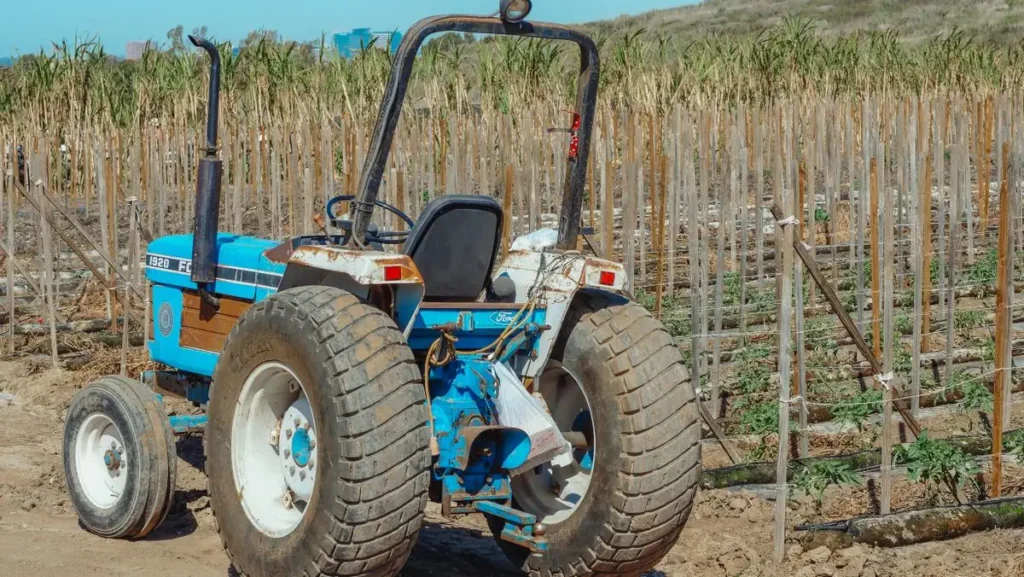
11L-15: 11 inches wide on a 15-inch rim. The L means a low-section tire, wider and lower than a standard one. Common on implements and two-wheel-drive fronts.10.0/75-15.3: flotation format. 10 inches wide, sidewall about 75% of the width, bias, on a 15.3-inch rim. Built to stay on top of soft ground (some tires just know how to stay on top of things).23x8.50-12: the garden format. The first number is the overall diameter: 23 inches tall, 8.5 inches wide, on a 12-inch rim.- IF or VF in front of a size means an increased or very high flexion radial. It carries its load at lower pressure. Our IF vs VF guide covers the details.
The load index and speed symbol tell you what the tire can carry
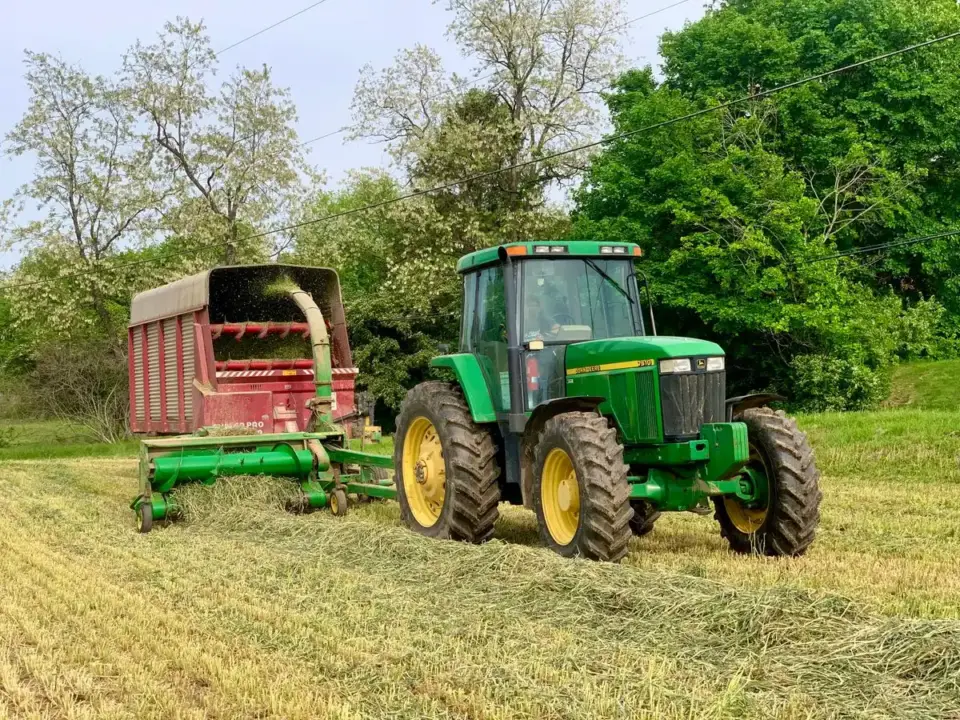
Next to the size you’ll usually find a code like 155A8. The number is the load index. The letter is the speed symbol.
- Load index 155 = 3,875 kg (8,543 lbs) per tire at its rated pressure.
- A8 = 40 km/h (25 mph). B = 50 km/h (31 mph). D = 65 km/h (40 mph).
Look up any code in our load index and speed rating chart.
Older tires show load differently:
- Ply rating on bias tires, such as
8 PR. It’s a strength rating, not a count of actual plies. - Star rating on standard-size radials: one, two or three stars. More stars, more load at a higher pressure.
The tread code sits nearby too: R-1, R-1W, R-2, R-3, R-4. That’s a whole topic of its own, covered in tractor tire types explained.
A full tractor tire sidewall says far more than the size
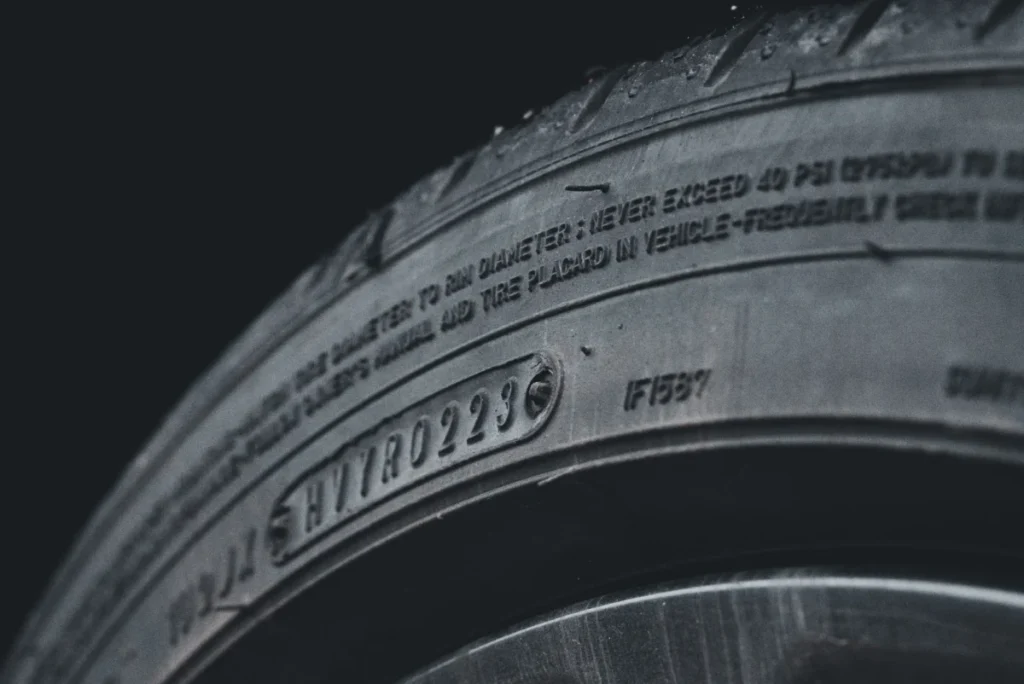
The size is the biggest writing on the tire. The smaller print around it tells you what the tire can carry, how it seals and when it was made. Here is the whole list, with an example of each.
| Marking | Example | What it tells you |
|---|---|---|
| VF or IF prefix | VF520/85R38 |
A flexion tire. It carries the same load as a standard tire at a lower pressure. |
| Size | 520/85R38 |
Width, aspect ratio, construction and rim, as decoded above. |
| Load index and speed symbol | 155A8 |
The load each tire carries at its rated pressure, and the top speed that load is rated for. |
| TL or TT | TL |
TL is tubeless. TT is tube-type and needs a tube and flap. |
| Ply rating or stars | 8 PR, two stars |
Strength rating: PR on bias tires, stars on standard-size radials. |
| Tread code | R-1W |
The lug pattern, such as R-1 or R-4. |
| Brand and model | Molded name |
Which line the tire belongs to. You need it to match a pair. |
| DOT code | DOT ... 2322 |
The last four digits are the week and year it was made. |
| Bead seating warning | Maximum pressure |
The highest pressure to use when seating the bead on the rim. Treat it as a hard limit. |
| Dismounting groove | Molded groove or label |
A labeled groove that helps the fitter when taking the tire off the rim. |
| Country and maker | Made in ... |
Where the tire was built and under which brand. |
Two of these are about safety, not fit. The bead seating line gives a maximum pressure for seating the bead on the rim. Go past it and you risk a burst while the tire is being mounted. If you’re not sure, let a fitter do it.
The TL or TT mark matters when you buy. A tubeless tire needs a rim that holds air without a tube. A tube-type tire needs the right tube for its rim size. Check both before you order. (We’ve been known to ask about the rim before the price.)
The dash or the R changes how the tire behaves
We’re not biased. Well, one of them is.
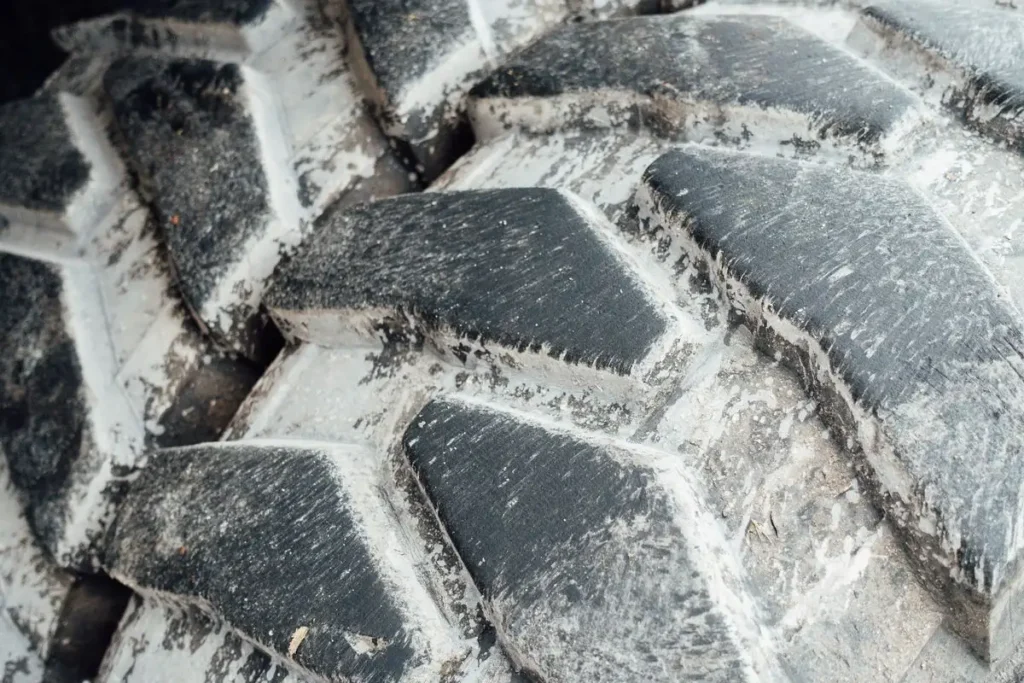
Radials put a longer, flatter footprint on the ground. The University of Kentucky’s extension guide notes they give better fuel efficiency than bias-ply, but they need more careful pressure management. Bias tires cost less and shrug off sidewall knocks, which matters on rough ground and loader work.
Two rules that don’t bend:
- Never mix bias and radial on the same axle.
- Pressure matters more on a radial. Run the lowest pressure the maker’s load table allows for your load.
The full comparison is in radial vs bias-ply tractor tires.
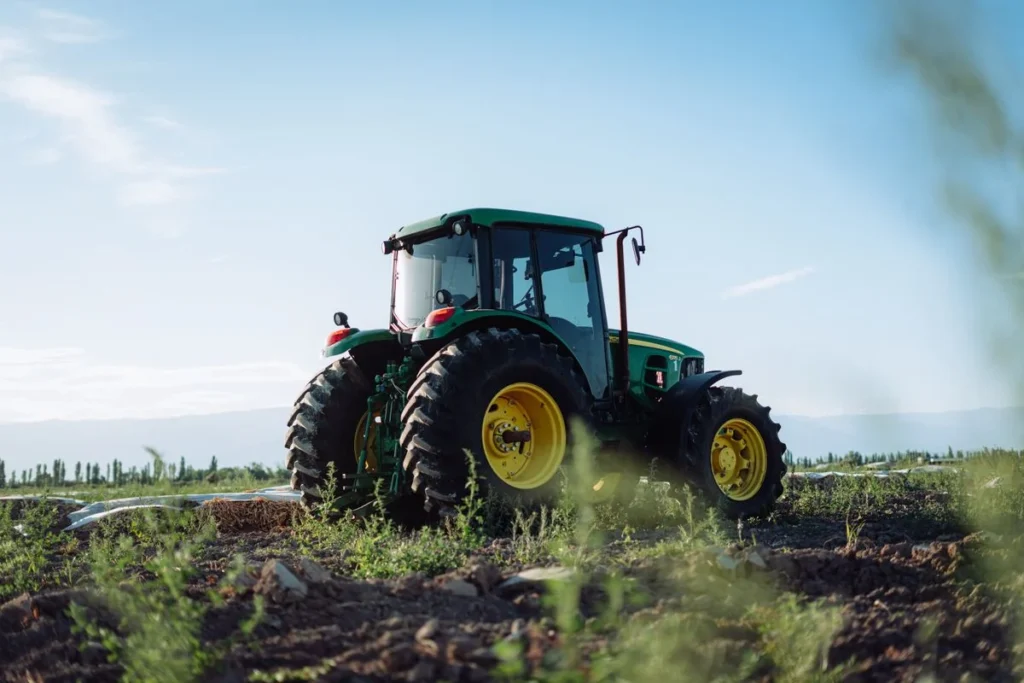
How to choose the right tire size for your tractor
Size is more than fit. It decides how much lug touches the ground, how much the wheels slip and how hard the tractor presses on the soil. Rule of thumb: if the tire you have works, stay within the sizes your tractor maker approved.
Changing size is allowed. It just has to clear four checks.
- Rim diameter must match exactly. A 38 fits a 38. There’s no “close enough” in rim sizes.
- Rim width must be in the approved range for that tire. The tire maker’s data sheet lists it.
- Overall diameter changes your ground speed. Taller tires go further per turn, which throws off the speedometer and slip readings.
- Width needs clearance from fenders and frame, and has to fit between your crop rows.
On a front-wheel-assist (MFWD) tractor there’s a fifth check: the front-to-rear ratio. The front tires are meant to run very slightly faster than the rears, at a lead set by the tractor maker. Change one axle and you change that lead. Get it wrong and the drivetrain fights itself. Check yours with our lead-lag calculator before you order.
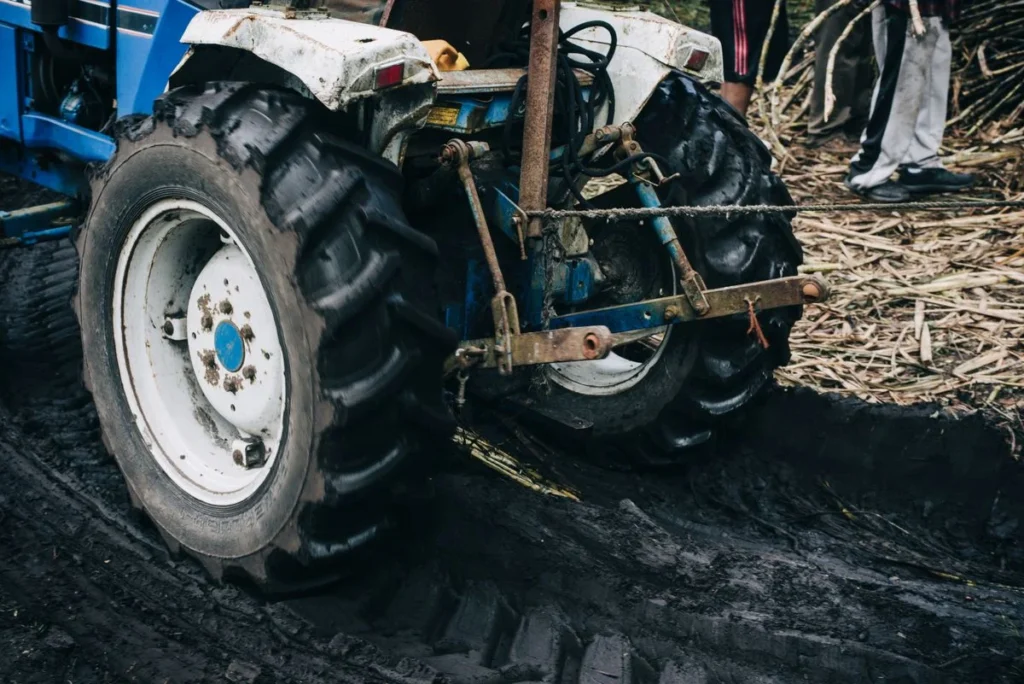
Standard and metric equivalents are close, not identical
Many standard sizes have a metric twin. A quick way to spot one: multiply the inch width by 25.4 and look for the nearest metric size with an 85 aspect ratio.
| Standard | Metric equivalent |
|---|---|
12.4-24 |
320/85R24 |
14.9-28 |
380/85R28 |
16.9-28 |
420/85R28 |
16.9-38 |
420/85R38 |
18.4-34 |
460/85R34 |
18.4-38 |
480/80R38 |
20.8-38 |
520/85R38 |
Here’s our one strong opinion: match the overall diameter, not the name on the chart. Take 18.4-38 and 480/80R38. On paper the 18.4 stands about 69.3 inches tall. The 480/80R38 works out to about 68.2 inches (1,733 mm). That inch matters on an MFWD tractor. Our tire size converter shows both diameters side by side.
What the sizes we list stand at, on paper
Here are the nominal width and height of 15 sizes from our catalog. Every size we list is on the tractor tire size chart, and the diameter calculator handles anything else.
| Size | Build | Section width | Rim (in) | Nominal height |
|---|---|---|---|---|
11.2-24 |
Bias (standard) | 11.2 in (284 mm) | 24 | 43.0 in (1,093 mm) |
12.4-24 |
Bias (standard) | 12.4 in (315 mm) | 24 | 45.1 in (1,145 mm) |
13.6-28 |
Bias (standard) | 13.6 in (345 mm) | 28 | 51.1 in (1,298 mm) |
14.9-28 |
Bias (standard) | 14.9 in (378 mm) | 28 | 53.3 in (1,355 mm) |
16.9-30 |
Bias (standard) | 16.9 in (429 mm) | 30 | 58.7 in (1,492 mm) |
18.4-34 |
Bias (standard) | 18.4 in (467 mm) | 34 | 65.3 in (1,658 mm) |
18.4-38 |
Bias (standard) | 18.4 in (467 mm) | 38 | 69.3 in (1,760 mm) |
20.8-38 |
Bias (standard) | 20.8 in (528 mm) | 38 | 73.4 in (1,863 mm) |
320/85R24 |
Radial (metric) | 320 mm (12.6 in) | 24 | 45.4 in (1,154 mm) |
380/85R24 |
Radial (metric) | 380 mm (15.0 in) | 24 | 49.4 in (1,256 mm) |
420/85R28 |
Radial (metric) | 420 mm (16.5 in) | 28 | 56.1 in (1,425 mm) |
480/80R34 |
Radial (metric) | 480 mm (18.9 in) | 34 | 64.2 in (1,632 mm) |
520/85R38 |
Radial (metric) | 520 mm (20.5 in) | 38 | 72.8 in (1,849 mm) |
600/65R28 |
Radial (metric) | 600 mm (23.6 in) | 28 | 58.7 in (1,491 mm) |
710/70R42 |
Radial (metric) | 710 mm (28.0 in) | 42 | 81.1 in (2,061 mm) |
Nominal heights come from the width, aspect ratio and rim. Inch sizes use the 85% rule of thumb, so treat them as estimates. Real tires vary by brand and tread depth. That is why the maker’s data sheet beats any chart, including ours.
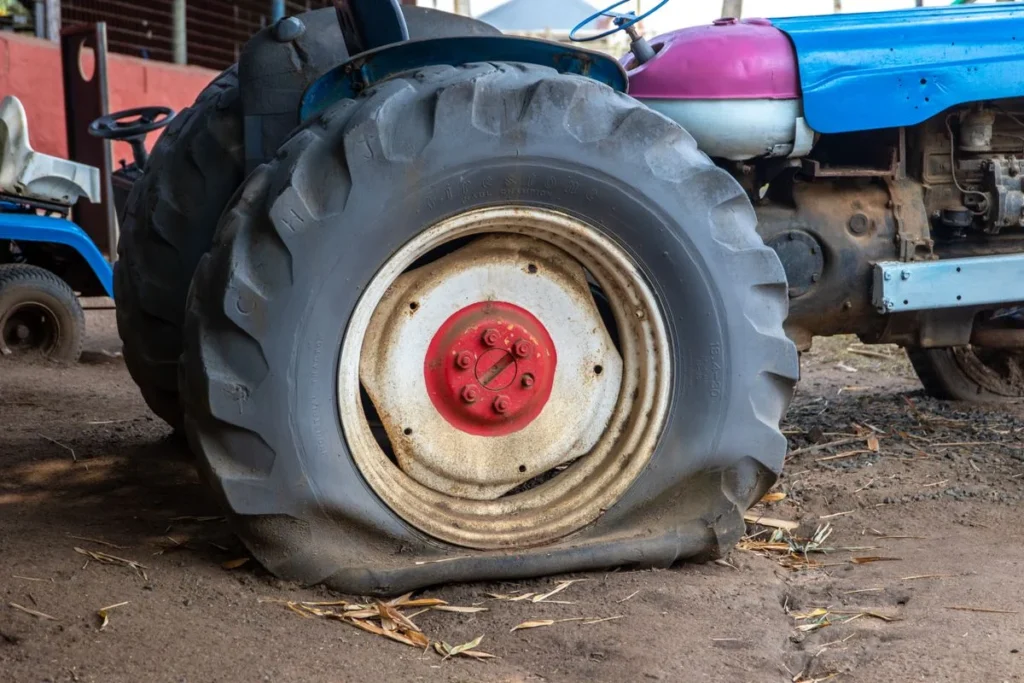
What to do when the sidewall is worn or unreadable
Old tires lose their writing. Sun, mud and twenty seasons will do that. You still have options:
- Read the other tire on the same axle.
- Read the rim. Ag wheels are stamped with their own size, such as
W15Lx38: a 15-inch-wide rim, 38 inches in diameter. That gives you the rim diameter for certain and narrows the width. - Measure it. Width across the widest point of the inflated tire, and overall height from the ground to the top of the tread.
- Check the operator’s manual for the sizes the maker approved.
- Send us a photo. Sidewall, rim stamp and tractor model. We’ll work it out.
While you’re down there, find the DOT code. According to NHTSA, its last four digits are the week and year the tire was made: 2322 means week 23 of 2022. Age matters most when you’re buying used tractor tires. Tread carefully.
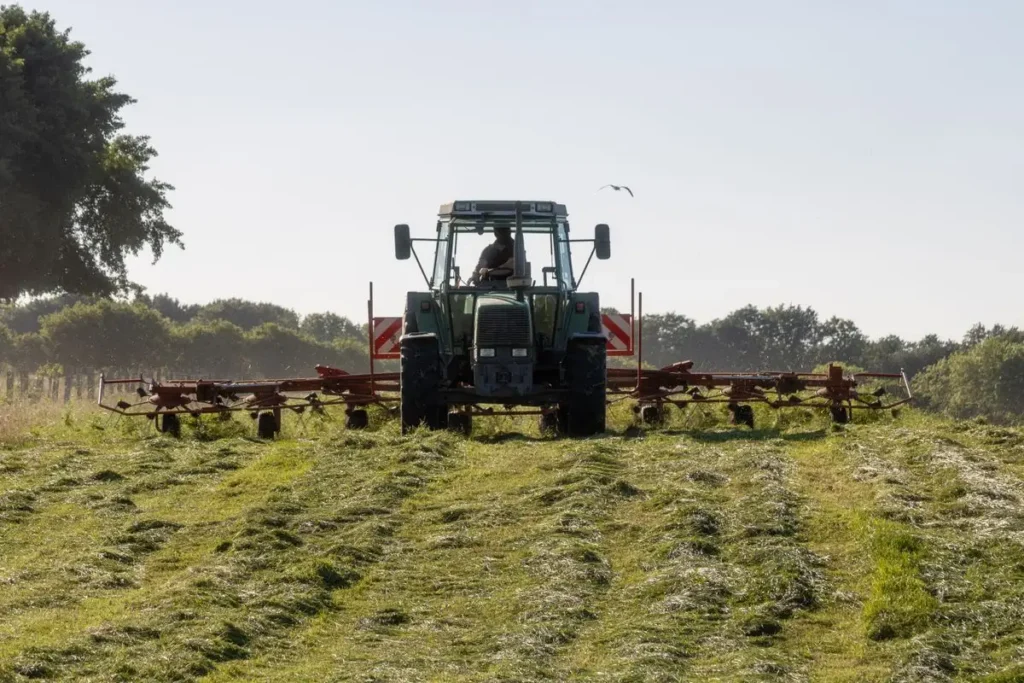
When you don’t need new tires at all
Honest answer: plenty of “tire problems” aren’t. If your tractor is slipping, check the pressure before you check our prices. Under-inflated tires need a gauge, not a quote. If your current size is right and the tire is sound, keep running it. If it’s a repairable puncture, get it fixed locally.
If you do need tires, browse the tractor tire size chart or send us your size for a new or used tire quote. We ship to the USA and Europe in about a week.
Sidewall worn off or unreadable? Our guide on how to measure tractor tire size shows how to work out the size with a tape and a piece of string.
More tractor tire guides from us:
- How to Measure Tractor Tire Size: Width, Diameter and Circumference
- R14 Tractor Tires: Hybrid Tread, Sizes and R4 vs R14
- R1 Tractor Tires: What They Are and Where They Work
- Garden Tractor Tires: Sizes, Tread and How to Choose
- Lawn Tractor Tires: Sizes, Tread and How to Choose
- R4 Tractor Tires: What They Are and When to Use Them
- Firestone Tractor Tire Size Chart: Every Size by Model
- Farm Equipment Tires: Which Type Fits Which Machine
- Rear Tractor Tires: Sizes, Tread and How to Pick a Pair
- Goodyear Tractor Tires: Who Makes Them and What Changed
- Titan Tires: Who Owns Titan, Where It Makes Them and Are They Good
- Front Tractor Tires: Which Tread, Size and Pair to Buy
- Who Makes BKT Tires? Owner, Factories and Where They're Made
- Big Tractor Tires: How Big They Get, What They Fit and Cost
- How Much Does a Tractor Tire Cost? Real Prices by Size
- IF vs VF Tires: What They Mean and When to Choose Them
- Tractor Tire Pressure: How to Set It for Load and Speed
- How to Inspect Used Tractor Tires Before You Buy
- R1 vs R1W Tractor Tires: What Is the Difference?
- Radial vs. Bias-Ply Tractor Tires: Which Should You Choose?
- Tractor Tire Types Explained: R1 vs R2 vs R3 vs R4
Send us your size on WhatsApp. We’ll find the tire. We’ll probably also make a tread joke. Consider it free.
Questions
What do the numbers on a tractor tire mean?
A size has up to three numbers: the width, the aspect ratio (metric sizes only) and the rim diameter. A dash or an R shows bias-ply or radial. The other numbers and letters on the sidewall give the load index, the speed symbol and the DOT date code.
How do I know what size tractor tire I need?
Read the size molded into the sidewall of the tire you're replacing, then check it against your operator's manual. If the sidewall is worn, read the size stamped on the rim (for example W15Lx38) or the other tire on the same axle. Still unsure? Send us a photo and your tractor model.
What does 18.4-38 mean on a tractor tire?
18.4 is the section width in inches (467 mm), the dash means bias-ply construction and 38 is the rim diameter in inches. An 18.4R38 is the same nominal size built as a radial.
Is 18.4-38 the same as 480/80R38?
They're listed as equivalents and fit the same 38-inch rim, but they aren't identical. On paper the 18.4-38 stands about 69.3 inches tall and the 480/80R38 about 68.2 inches. Check the overall diameter before mixing sizes on a front-wheel-assist tractor.
What does the 85 mean in 520/85R38?
It's the aspect ratio: the sidewall is 85% as tall as the tire is wide. For a 520 mm wide tire that's a sidewall of about 442 mm.
Can I put a different size tire on my tractor?
Yes, if the rim diameter matches exactly, the rim width is in the tire maker's approved range, the tire clears the fenders and fits your rows, and on an MFWD tractor the front-to-rear ratio stays within the maker's spec.
How do I convert a tractor tire size to metric?
Multiply the inch width by 25.4 and look for the nearest metric size with an 85 aspect ratio. For example, 14.9-28 is close to 380/85R28. Our tire size converter shows both overall diameters so you can compare them.
How do I measure a tractor tire without a size on the sidewall?
Measure the width across the widest point of the inflated tire and the overall height from the ground to the top of the tread. Read the rim stamp for the rim diameter. Those three numbers narrow it down to one or two sizes.
How old is my tractor tire?
Look for the DOT code on the sidewall. The last four digits are the week and year it was made, so 2322 means week 23 of 2022.
What does TL mean on a tractor tire?
TL means tubeless. The tire seals against the rim without an inner tube. TT means tube-type, which needs a tube and a flap. Check the sidewall before you mount it.