
Industrial
Backhoe & Loader Tires
Backhoes and tractor loaders need tires that carry heavy loads on the front axle and grip on dirt and hard surfaces. Many backhoes run a smaller front size, such as 12.5/80-18, with a larger R-4 rear, such as 16.9-28. Find your sizes below, or send us your machine model and we will match them.
- 6sizes listed
- New & usedcondition options
- 20brands sourced
- About 1 weekshipping to the USA & Europe
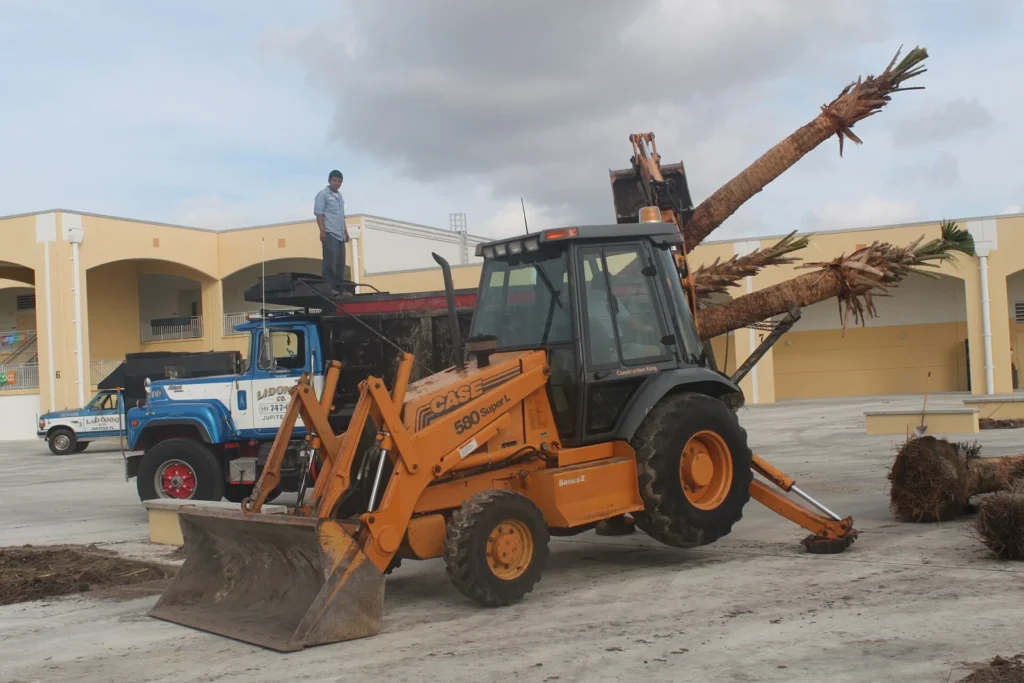

Backhoe & Loader Tires sizes
Industrial Tractor Tires
That size isn’t in this list — we can often still source it. Ask us on WhatsApp
Which construction tire does your machine need?
It depends on the machine, and the answer is printed on the sidewall of the tire you have now. Backhoes and tractor loaders normally run R-4 industrial tread. Skid steers run a bias skid steer tire, often with an R-4 pattern. Wheel loaders, graders and dump trucks use a different alphabet of codes: L, G and E. (Two tread alphabets. We have stopped apologizing for them.)
Construction tires is a wide term, so here is what this page covers: backhoe loaders, tractor loaders, skid steers, telehandlers and wheel loaders. We read the published guides from Yokohama-ATG, Maxam, Heuver and Boom & Bucket, then added what we know from our own catalog of 69 tire models.
| Your machine | Tread family to look for | Check this first |
|---|---|---|
| Backhoe loader or tractor loader | R-4 industrial | Load rating on the front pair |
| Skid steer | Bias skid steer tire, R-4 pattern | Ply rating and sidewall cuts |
| Telehandler | Match what the machine runs now | Load rating for the heaviest lift |
| Wheel loader | L code: L2 to L5 | Rock depth of your site |
| Grader | G code: G2 to G5 | Travel speed and distance |
| Dump truck or earthmover | E code: E2, E3, E4 | Haul distance and speed |
Farm tractors with a front loader are a special case. They often wear R-4 industrial tread too, and our R-1 to R-4 tread guide covers that. Our industrial tires page is the home for R-4 sizes.
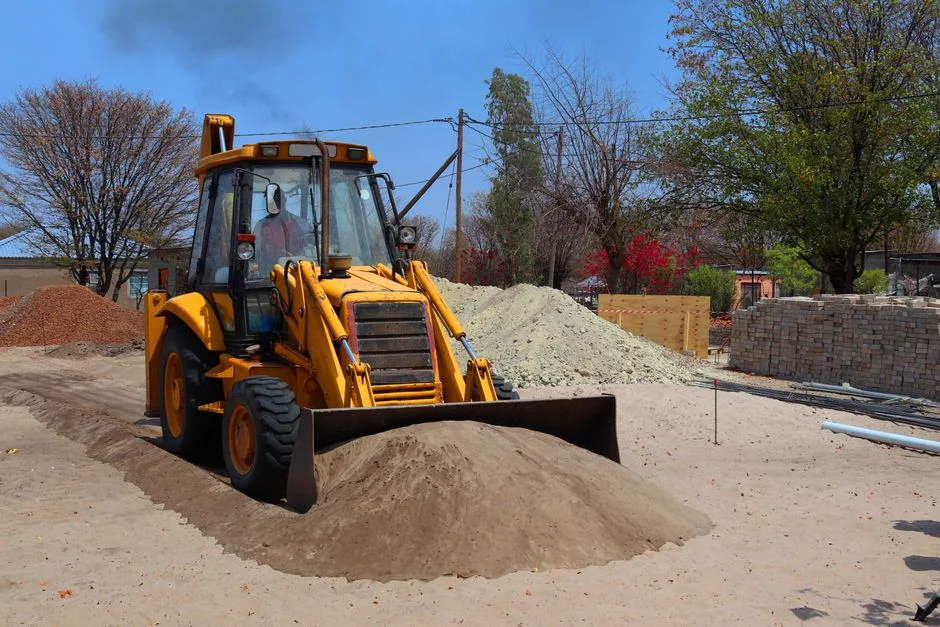
Why are the front and rear tires on a backhoe different sizes?
The front carries the loader bucket and steers. The rear carries the backhoe arm and most of the pulling. So the fronts are smaller and the rears are bigger, and each axle is ordered by its own size.
The front pair takes the bucket load
A raised, full bucket puts a heavy load on two small tires. Match the load rating (load index or ply rating) on your current tires or go higher. Never go lower. If you run a heavier attachment than the original, tell us so we can check the rating.
The rear pair does the pulling
Rear tires are larger and carry the traction. A typical backhoe pairs a 12.5/80-18 front with a 19.5L-24 or 16.9-28 rear, according to Boom & Bucket's heavy equipment size guide. Your machine can differ, so the sidewall wins.
Replace in pairs, never mix on one axle
Mixing radial and bias tires on the same axle is a known mistake in the published guides. Mixing sizes is worse. When one tire is done, check the other before you decide to buy one or two.
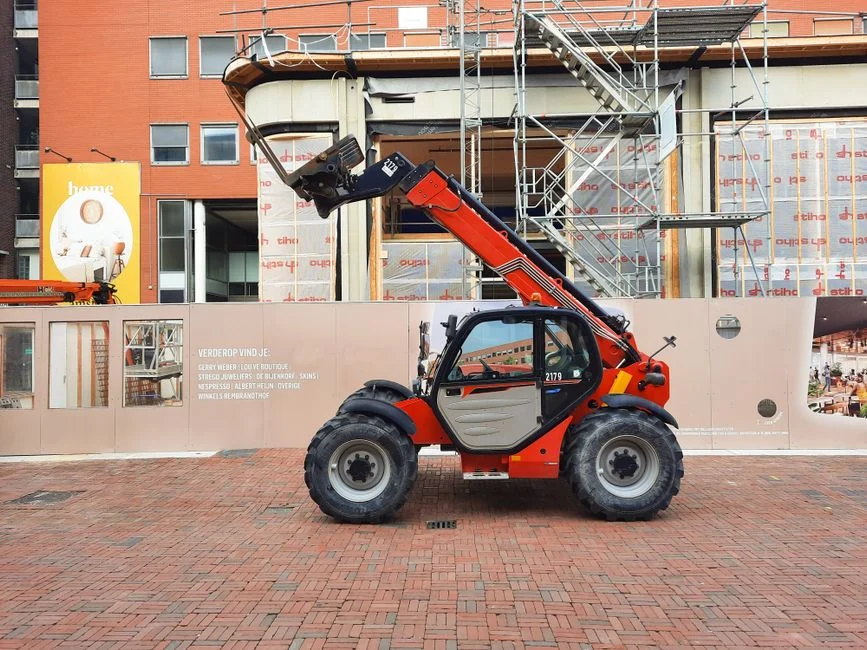
What sizes do construction machines usually run?
Here are typical examples from the published guides. Inch widths are converted to millimeters (inches times 25.4). The tire size converter does the rest, and tractor tire sizes explained shows how to read the numbers.
| Machine | Typical size examples | What to know |
|---|---|---|
| Backhoe loader, front | 12.5/80-18 (318 mm wide) | Carries the bucket and steers |
| Backhoe loader, rear | 19.5L-24 (495 mm), 16.9-28 (429 mm) | Carries the backhoe and the traction |
| Telehandler | 13.00-24 (330 mm), 14.00-24 (356 mm), 405/70R20 | Rough sites and heavy lifts |
| Skid steer | 10-16.5 (254 mm), 12-16.5 (305 mm), 14-17.5 (356 mm) | Constant turning wears sidewalls fast |
| Wheel loader | 17.5R25, 20.5R25, 23.5R25 (597 mm), 26.5R25 | R means radial, 25 is the rim in inches (635 mm) |
Quick size maths, because we enjoy it. A 12.5/80-18 is 12.5 in (318 mm) wide with an 80 percent sidewall, about 10 in (254 mm) tall. Add the 18 in (457 mm) rim and the tire stands roughly 38 in (965 mm) tall. That overall diameter is the number to protect when you swap sizes. The tire diameter calculator checks it for you.
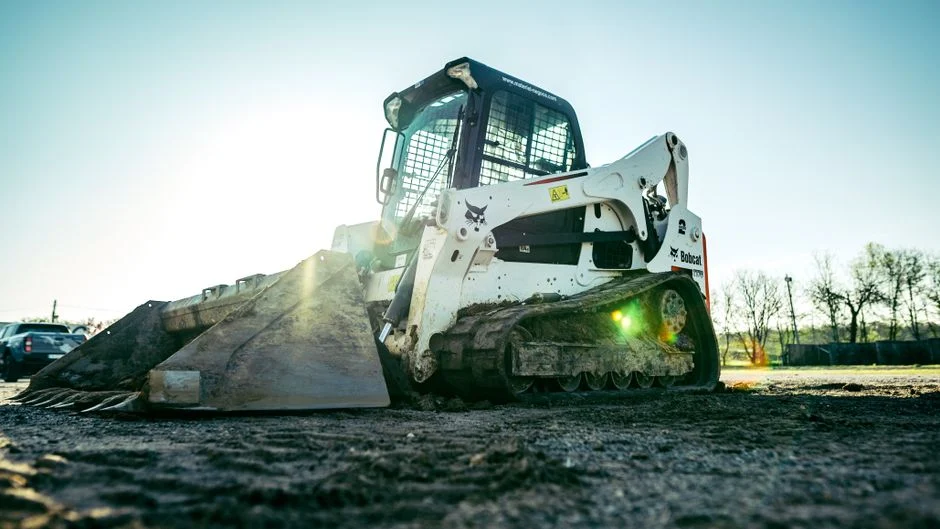
Which of these sizes do we actually list?
We counted. Our catalog has 69 tire models, 85 sizes and 20 brands, and these are the construction-relevant sizes inside it. The ply figures are what the listings show.
| Size | Models listing it | Where it fits | Ply or rating shown |
|---|---|---|---|
| 12.5/80-18 (318 mm) | 4 models, 4 brands | Backhoe front, skid steer | 12, 14 and 16 ply |
| 16.9-28 (429 mm) | 11 models | Backhoe rear, large tractor loader | 6 to 14 ply |
| 16.9-24 (429 mm) | 9 models | Backhoe rear, tractor loader | 8, 10 and 14 ply |
| 18.4-26 (467 mm) | 7 models | Large tractor loader rear | 8 to 16 ply |
| 23.1-26 (587 mm) | 4 models | Large loader rear | 12 to 16 ply |
| 10-16.5 (254 mm) | 2 models | Skid steer | 10 and 12 ply |
| 12-16.5 (305 mm) | 2 models | Skid steer | 12 and 14 ply |
| 14-17.5 (356 mm), 15-19.5 (381 mm) | 1 model each | Skid steer | 15-19.5 is 12 ply, LI 146 |
Two honest notes. First, the big rear sizes in that list sit mostly on R-1 farm lug models, and only one of our 69 listings carries an R-4 name (a skid steer tire in five sizes). If your machine needs R-4 in a rear size, send us the size and we will check what we can source. Second, we list no 19.5L-24, 13.00-24, 405/70R20 or 23.5R25 today. Send us the sidewall size anyway. We quote, so asking costs nothing.
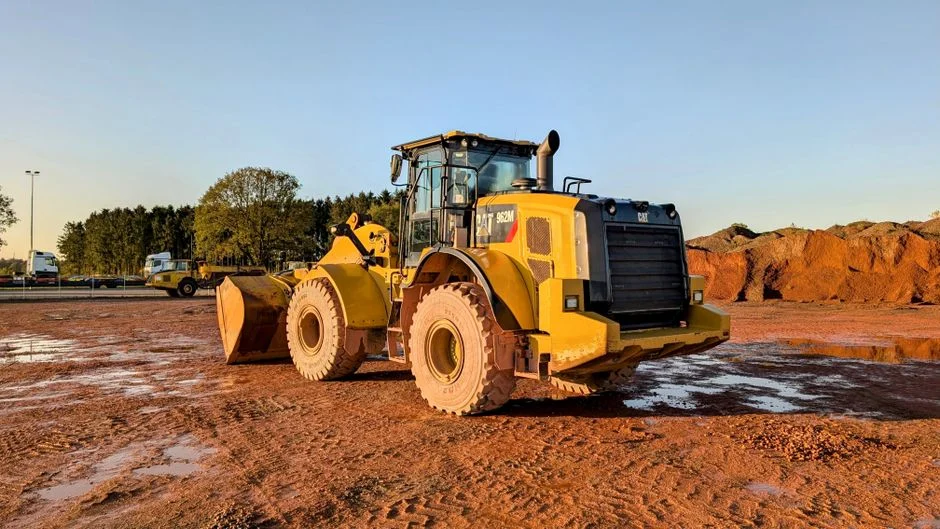
What do L2, L3, L4, L5 and R-4 mean on a construction tire?
R-4 is the farm and industrial code you will meet on backhoes and tractor loaders. L, G and E are the OTR codes. The letter says the machine type. The number says how deep and aggressive the tread is. Heuver publishes the full list in its OTR tread code overview.
| Code | Machine | What the number means |
|---|---|---|
| L2 | Wheel loader, dozer | Traction pattern for softer ground |
| L3 | Wheel loader, dozer | Regular rock pattern, the standard choice |
| L4 | Wheel loader, dozer | Deep rock tread for harder work |
| L5 | Wheel loader, dozer | Extra-deep rock pattern, quarry work |
| L3S, L4S, L5S | Wheel loader | Smooth versions with thicker tread |
| G2 to G5 | Grader | Traction at G2, extra-deep at G5 |
| E2, E3, E4 | Dump truck, earthmover | Haul road traction up to aggressive rock |
| E7 | Earthmover | Flotation |
| C1 | Compactor roller | Smooth, no pattern |
These codes also set how far and how fast a tire may travel, according to Yokohama-ATG's selection guide. E-rated tires are made for up to 30 mph (48 km/h) over about 2.5 miles (4 km). G-rated tires are made for 25 mph (40 km/h) with no distance limit. L-rated tires are the strictest, at 5 mph (8 km/h) over about 250 feet (76 m). Heat is the limit, which brings us to the next sections.
Backhoes and tractor loaders skip this alphabet and use R-4, with shorter, closer lugs than a farm tread. We keep the deep dive on our tread types guide and industrial tires page. Our tread type picker gives a quick answer.
Which tread suits your ground?
Deep lugs suit soft soil and mud. They grip, shed mud and resist slipping. Block-type treads suit hard surfaces. They give better wear, better fuel economy and a higher rubber-to-void ratio, so there is less open space for a sharp stone to find. That is the Yokohama-ATG explanation, and it matches what we hear from buyers.
Maxam adds that makers tune the lug-to-void ratio for the job. More void means more bite. Less void means more rubber to wear and a tougher L5-type quarry tire. So the question is not which tread is best. It is which floor your machine lives on.
- Mostly concrete, asphalt and gravel: closer lugs, R-4 or a block pattern
- Mostly mud and clay: deeper lugs that clean themselves
- Sharp rock and demolition: rock patterns, or a solid tire
- Mixed work: R-4 on backhoes, because it holds steady and still pulls in dirt
Bias, radial or solid: which one fits the work?
Radials make a longer, squarer footprint and wear evenly. Bias tires make an oval footprint and wear toward the center, which shortens life, says Maxam. Boom & Bucket adds that radials usually give better fuel economy, ride and tread life, while bias tires have stronger sidewalls and resist punctures. We are not biased. Well, one of them is.
| Type | Strong point | Weak point | Fits |
|---|---|---|---|
| Radial | Even wear, ride, tread life | Needs closer pressure checks | Hauling, loading, long shifts |
| Bias | Stiff sidewall, puncture resistance | Wears toward the center | Demolition, forestry, quarry, skid steers |
| Solid | Close to puncture-proof | Builds heat, so short trips and low speed | Metal slag, recycling yards, demolition |
Rule of thumb: keep the construction your machine came with. Do not mix types on one axle. Our radial vs bias-ply guide goes deeper. Solid tires are a special order, so send us the machine and the job first.
How do you read the sidewall before you order?
Photograph it. Then write down these six things. A sidewall is the cheapest spec sheet you will ever get.
- Size, for example 12.5/80-18 or 10-16.5
- Ply rating or load index, for example 14PR or LI 146
- Tread code, for example R-4, L3 or G2
- Tubeless (TL) or tube-type (TT), which our listings show per size
- Rim diameter, the last number in the size
- Manufacture date, the last four digits of the DOT code (0308 is week 3 of 2008, per NHTSA)
If the numbers look like code, our load index and speed rating tool translates them. Send the photo on WhatsApp and we do the rest.
What mistakes cost the most on a construction machine?
Boom & Bucket lists the usual suspects. We have added the reason each one hurts.
- Choosing the cheapest tire instead of the best value for the job
- Ordering a lower load rating than the original, which hurts most on a bucket loader's front pair
- Mixing radial and bias on one axle
- Ignoring the manufacturer-approved size
- Wrong pressure for the load
- Ignoring the tread pattern for the ground
- Forgetting the jobsite: sharp rock and soft clay need different tires
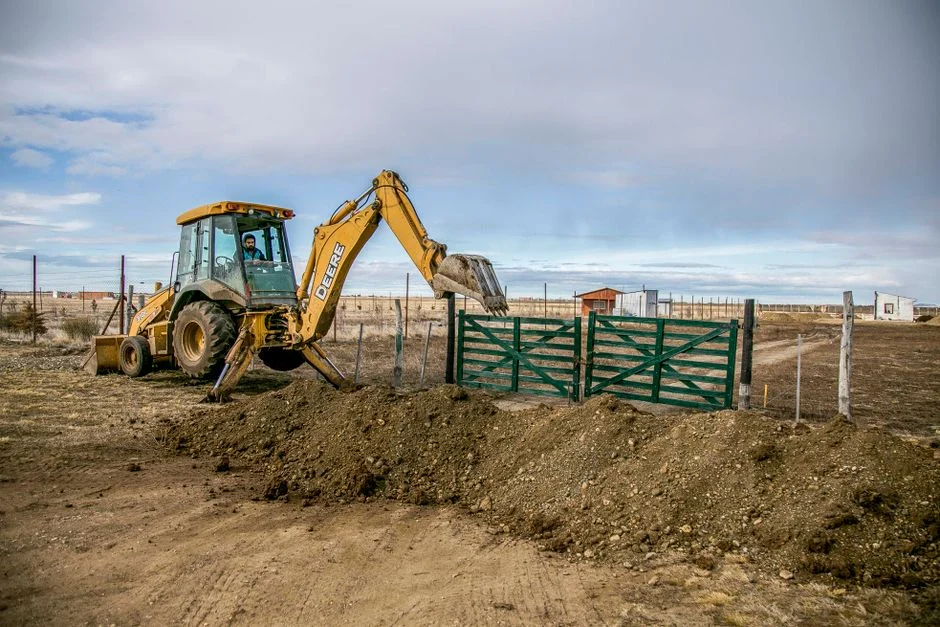
How do you make construction tires last longer?
Heat destroys tires, regardless of type, according to Maxam. Air pressure is how you control it. Check pressure every day before the machine moves, and check it cold, as Boom & Bucket advises. Low pressure wears the shoulders and burns fuel. High pressure wears the center. Our pressure guide explains how to set it for the load.
Then watch for the signs that a tire is finished. Boom & Bucket lists them:
- Tread worn well past the original pattern
- Deep sidewall cracks
- Exposed steel belts
- Air leaks that keep coming back
- Structural damage anywhere on the casing
Last tip from Yokohama-ATG: keep notes on what each machine does and for how long. Fleet buyers who log hours and ground type pick better tires next time. A paper notebook works.
How do you save money without buying the wrong tire?
- Stay on the original size so overall diameter does not change
- Ask for several brands in one size. We list 12.5/80-18 from 4 brands
- Fix pressure habits first. Uneven wear costs more than any discount
- Match tread to the floor, since block-type treads wear longer on hard ground
- Consider used for machines that work a few hours a week
- Replace in pairs only when both are worn
Used is where you tread carefully. We sell new and used, and suppliers send photos of the actual used tire on request. Read how to inspect used tractor tires first.
When do you not need new construction tires?
When the tread is deep, the sidewalls are clean and the pair wears evenly. Do not replace a tire because it looks old. Do not replace a whole axle for one cut that a visual check shows is shallow. Do not buy a bigger tire hoping for more grip, because a different overall diameter changes how the machine drives.
You also may not need a construction tire at all. A farm tractor with a loader that mostly works fields may be better served by a farm tread. Browse our tire catalog or our flotation tires if soft ground is the problem.
Where do you go from here?
Send us the sidewall size, the tread code and your machine model on WhatsApp or through get a quote. We quote, ship to the USA and Europe in about 1 week, and take payment by Zelle. We are based in Bangkok. We will probably make a tread joke too. Consider it free.
Questions
What size tires does a backhoe use?
It depends on the model. A common pairing is a 12.5/80-18 front with a 19.5L-24 or 16.9-28 rear. The size is printed on the sidewall of your current tires.
What tread is best for a backhoe?
R-4 industrial tread. The lugs are shorter and closer than a farm tread, so it is stable and hard-wearing on hard surfaces and still pulls in dirt.
What do L2, L3, L4 and L5 mean on a loader tire?
L is the loader code. L2 is a traction pattern, L3 is a regular rock pattern, L4 is a deep rock pattern and L5 is an extra-deep rock pattern. The S versions are smooth with thicker tread.
Are construction tires bias or radial?
Both exist. Radials usually give longer tread life and a smoother ride. Bias tires have stiffer sidewalls and resist punctures. Keep what your machine runs and do not mix them on one axle.
What does OTR mean on a tire?
OTR means off-the-road. It usually refers to large loader, grader and earthmover tires with L, G and E tread codes. Backhoes and tractor loaders normally use R-4 instead.
When should I use solid tires?
Where punctures are the main risk, such as demolition sites, recycling yards and floors with metal slag. Solid tires build more heat, so they suit low speeds and short travel.
How often should I check construction tire pressure?
Daily, before the machine moves, and with the tires cold. Low pressure wears the shoulders and high pressure wears the center.
When should I replace a construction tire?
When you see tread worn well past the pattern, deep sidewall cracks, exposed steel belts, repeated air leaks or structural damage.
Do I need to replace backhoe tires in pairs?
Yes, on each axle, once they are worn. Front and rear are different sizes, so you order each axle by its own size. One new tire is fine only if the other is near new and the same size.
Can you supply skid steer and telehandler tires?
We list skid steer sizes such as 10-16.5, 12-16.5, 14-17.5 and 15-19.5. For telehandlers, send us the sidewall size and the machine model, and we will tell you what we can source, new or used.