
Farm tires
Implement Tires
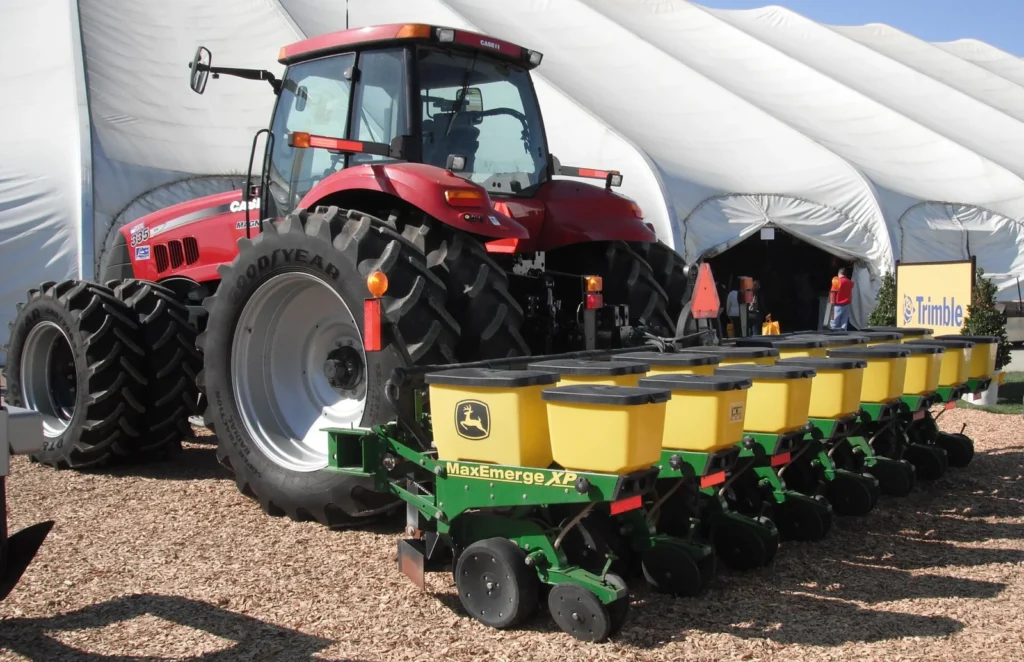
Implement tires carry the weight of wagons, planters, drills, trailers and other towed equipment. Most of these wheels roll freely instead of pulling, so they use an I-1 rib tread that tracks straight and resists sliding sideways. Pick your size below, from 5.00-15 trailer tires to 21.5L-16.1 low-profile sizes, then add it to a quote or send it on WhatsApp.
- 12sizes listed
- New & usedcondition options
- 20brands sourced
- About 1 weekshipping to the USA & Europe

Implement Tires sizes
Implement Tires
| Size | Tread | Construction | Typical use | Add to quote |
|---|---|---|---|---|
| 9.5L-14 | I-1 | Bias | Implement / wagon | |
| 5.00-15 | I-1 | Bias | Trailer / implement | |
| 5.90-15 | I-1 | Bias | Trailer / implement | |
| 11L-15 | I-1 | Bias | Implement / wagon | |
| 12.5L-15 | I-1 | Bias | Implement / wagon | |
| 6.00-16 | I-1 | Bias | Trailer / implement | |
| 7.50-16 | I-1 | Bias | Trailer / implement | |
| 14L-16.1 | I-1 | Bias | Implement / wagon | |
| 16.5L-16.1 | I-1 | Bias | Implement / wagon | |
| 21.5L-16.1 | I-1 | Bias | Implement / wagon | |
| 19.0/45-17 | I-1 | Bias | Implement / wagon | |
| 23.1-26 | I-1 | Bias | Heavy implement |
That size isn’t in this list — we can often still source it. Ask us on WhatsApp
Short answer: for a free-rolling planter, drill, wagon or baler, buy an I-1 rib tire in the same size and load rating as the one you have now. Match the rim exactly, and never drop the load rating. That is the whole job, give or take a few numbers on the sidewall. (Our implement tires are the quiet ones of the farm: they carry everything and get no credit.)
What do planters, drills and wagons ask of a tire?
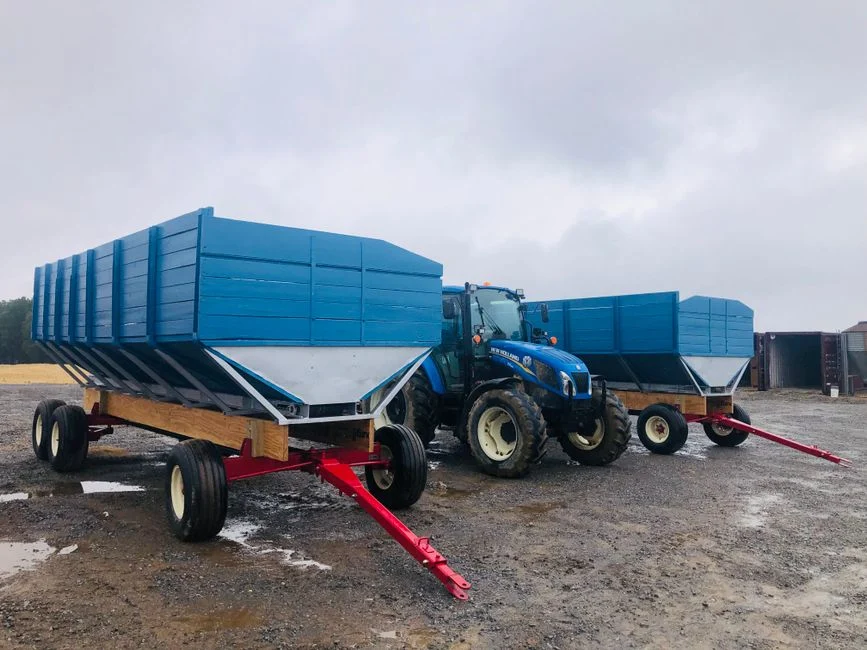
Three things: carry the load, roll straight and stay out of the way. An implement tire does not pull anything, so it does not need big lugs. It needs ribs and a sidewall that can hold a full hopper without complaining. Straight ribs are, frankly, the right tool for the job. (We checked. We did not need the rib jokes to be that good.)
Titan describes its Dura-Life Planter as designed to minimize seed bed compaction, with an open center and ribs at the tread edge that straddle the seed placement location. Its rib implement tire is built for easy rolling. Both details come from Titan's agriculture tire page. For the tread codes behind this, read the R1 to R4 tread guide.
The same family of tire sits under balers, grain wagons, manure spreaders, cultivators, seeders and sprayer tanks. Diameters run from 15 in (381 mm) to 32 in (813 mm) rims across the market, according to a BKT product manager quoted by Modern Tire Dealer. Our wider overview of towed-machine rubber is in the farm equipment tires guide.
How do you read an implement tire size?
Implement sizes come in three common styles:
- Standard, like 7.50-16: a 7.5-inch section width on a 16-inch rim.
- L-series, like 11L-15: the L means low section height, a wider and lower tire that spreads the load and resists sinking.
- Width and aspect, like 19.0/45-17: 19.0 inches wide, a sidewall about 45% as tall as the width, on a 17-inch rim.
Radial flotation sizes, like 710/50R26.5, use millimeters for width. One inch is 25.4 mm, so 710 mm is about 28 in. Not sure how yours reads? Try the tire size converter or our tractor tire sizes explained guide.
Check the rim, not just the tire. Implement rim diameters like 15, 16 and 16.1 inches are not interchangeable. A 16.1-inch implement rim is a different wheel from a 16-inch rim, so a 16-inch tire will not fit it. Read the size stamped on the wheel as well as the one on the tire. If the wheel is the problem, see our wheels and rims.
Which tire goes on which machine?
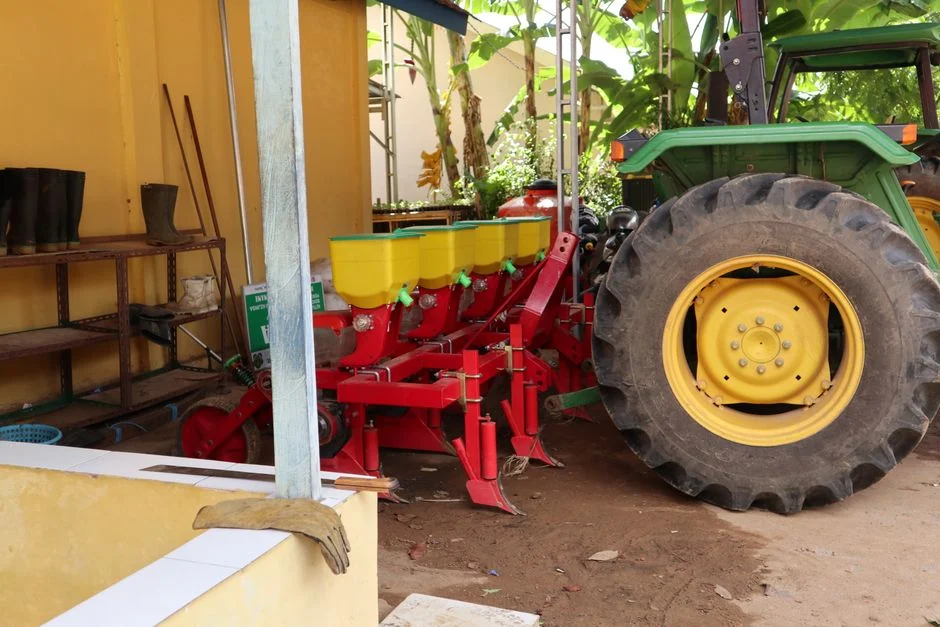
Use this as a starting point. Your machine manual and the load table decide the final answer.
| Machine | Usual tire | What to watch |
|---|---|---|
| Ground-drive planter or drill | I-1 rib, same size as original | The wheel turns the seed meter, so size changes the seeding rate |
| Free-rolling planter or toolbar wheel | I-1 rib, L-series or standard | Load rating first, then rim diameter |
| Grain wagon or trailer | I-1 rib, 10 to 14 ply L-series, or a radial flotation size | Loaded weight is far more than empty weight; road speed matters |
| Baler | I-1 rib, standard or L-series | Check both sides for wear and cuts |
| Manure spreader or sprayer tank | Wide L-series or radial flotation | Soft ground and heavy liquid loads; width spreads the weight |
| Cultivator or field cultivator wheel | I-1 rib, smaller L-series | Light loads, but stubble and cuts |
What do implement tires cost from our catalog?
Most guides skip the numbers, so here are ours. We list 11 bias implement models and 3 radial implement models. These are the listed prices in US dollars from our price sheet for the bias L-series and standard sizes. The range is wide because ply count and brand change the price. The final price is always confirmed in your quote.
| Size | Width | Rim | Priced models | Listed price range (USD) |
|---|---|---|---|---|
| 5.00-15 | 5.00 in (127 mm) | 15 in (381 mm) | 1 | $90 |
| 5.90-15 | 5.90 in (150 mm) | 15 in (381 mm) | 1 | $78 |
| 9.5L-14 | 9.5 in (241 mm) | 14 in (356 mm) | 5 | $111 to $168 |
| 11L-15 | 11 in (279 mm) | 15 in (381 mm) | 6 | $142 to $200 |
| 12.5L-15 | 12.5 in (318 mm) | 15 in (381 mm) | 6 | $175 to $245 |
| 14L-16.1 | 14 in (356 mm) | 16.1 in (409 mm) | 2 | $400 to $608 |
| 16.5L-16.1 | 16.5 in (419 mm) | 16.1 in (409 mm) | 5 | $420 to $622 |
| 21.5L-16.1 | 21.5 in (546 mm) | 16.1 in (409 mm) | 5 | $824 to $1,394 |
The radial flotation sizes (560/60R22.5, 600/50R22.5, 650/55R26.5 and 710/50R26.5) are listed from $1,150 to $1,425. Honest answer: the dearest 21.5L-16.1 lists at more than ten times the price of the cheapest 9.5L-14, so size is the biggest price lever you have. Browse every listing in the tire catalog or the tire size index. For the wider cost picture, read how much tractor tires cost.
How fast can you tow, and how much can the tire carry?
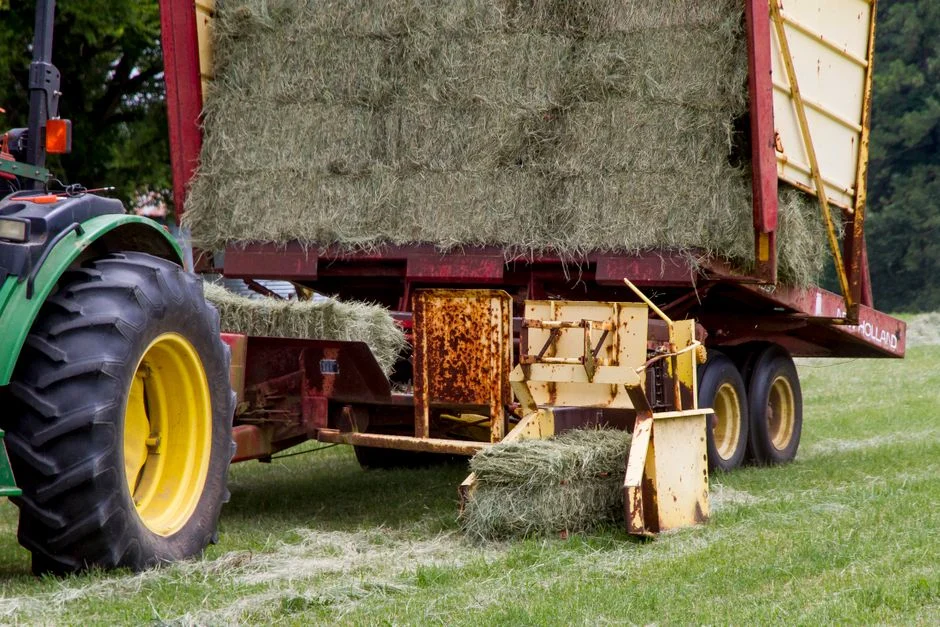
Speed and load are linked. Load capacity falls as speed rises, and a tire that runs too fast for its rating builds heat. Titan's Scott Sloan makes the same point in Ag Proud's implement tire guide: look at speed rating and load capacity together, not one at a time. Typical implement tires are built for 25 to 30 mph (40 to 48 km/h). Highway-rated designs go to 30 to 45 mph (48 to 72 km/h), per the BKT quote above.
Read the two together on the sidewall. A mark like 123A8 means load index 123 and speed symbol A8. Our catalog shows the Maxam MS965 at A8, several L-series bias tires at B, and radial flotation sizes at D.
| Speed symbol | Top speed | Where you see it |
|---|---|---|
| A8 | 25 mph (40 km/h) | Field and short farm-lane towing |
| B | 31 mph (50 km/h) | Many L-series bias implement tires |
| D | 40 mph (65 km/h) | Radial flotation sizes for faster transport |
Speed symbols come from the ETRTO and TRA standard table. Our load index and speed rating tool decodes any pair. Heavy rough roads call for a higher ply rating. A full wagon on a bumpy lane works the sidewall harder than a smooth field does.
Rib or lug: which tread belongs on an implement?
| Tread | Design | Best for |
|---|---|---|
| I-1 | Straight ribs | Free-rolling wheels on wagons, planters, drills, rakes and trailers. Tracks straight and resists side-slip. |
| I-3 | Traction lugs | Ground-driven implements and soft ground where the wheel has to grip. See our flotation tires. |
Shoulder shape matters in a standing crop. Ag Proud notes that the shape of the tire affects crop damage, with rounded shoulders gentler on rows than square ones. If your wheels run between crop rows, ask us for the shoulder profile. Not sure which tread you need? The tread type picker narrows it down in a few clicks.
Should you buy radial, bias-ply, IF or VF?
We are not biased. Well, one of them is. Bias-ply is the traditional implement tire: simple and proven. The University of Kentucky says radials give better fuel efficiency but need more careful pressure management, so only choose one if you will check it.
IF and VF tires push this further. Titan says its IF radial implement tire runs at about 20% lower inflation pressure. Yokohama says VF tires can run at about 40% lower pressure than a standard radial, or carry about 40% more load, as explained in its implement tire buying guide. Lower pressure means a bigger footprint and less soil compaction. Some tires just know how to stay on top of things. We compare them in radial vs bias-ply and IF vs VF tires.
How much does a size change move your seeding rate?
On a ground-drive planter, a bigger tire travels farther per turn, so the meter turns less per acre. Take two common sizes and do the sums.
| Step | 15.0/55-17 | 19.0/45-17 |
|---|---|---|
| Sidewall (width x aspect) | 8.25 in (210 mm) | 8.55 in (217 mm) |
| Overall diameter (rim + 2 sidewalls) | 33.5 in (851 mm) | 34.1 in (866 mm) |
| One turn of the wheel | 105.2 in (2.67 m) | 107.1 in (2.72 m) |
That is about 1.8% more distance per turn, so roughly 1.8% fewer seeds per acre if nothing else changes. Small, but real money on a big field. Real tires also shrink under load and with wear, so treat this as a guide. Run your own pair through the tire diameter calculator, and check your seeding rate after any change.
What should you check before you order?
- Read the size on the sidewall, or photograph it.
- Check the rim diameter on the wheel itself (15, 16 and 16.1 are different).
- Note the load rating on the old tire and keep it or go higher.
- Note the speed symbol and how fast you actually tow.
- Decide rib (I-1) or lug (I-3) from how the wheel works.
- Count the tires and decide new or used.
- Check the DOT date code on any used tire.
- Ask for the final price in a quote before you commit.
Which mistakes cost people a second set of tires?
| Mistake | What happens | Fix |
|---|---|---|
| Dropping the load rating | Cheaper tires with fewer plies look fine until the hopper is full | Match or exceed the old rating |
| Mixing up 16 and 16.1 | The rims look alike, and the tire will not fit | Read the rim stamp |
| Farm utility tire on a road trailer | Titan notes its Farm Utility tire is not DOT approved and not for highway use | Check the sidewall before the road does |
| Full pressure out of habit | Hard ride, smaller footprint, more compaction | See below |
| New size on a ground-drive wheel | The seed meter follows the wheel, so the rate shifts | Keep the size or recalibrate |
On pressure, the University of Kentucky says to use the lowest pressure your tire maker's load table allows, and warns that ignoring the maker's recommendations can void the warranty. Our tractor tire pressure guide shows how to read a load table.
How do you keep implement tires alive between seasons?
Implement tires work a few weeks a year, then sit. Ag Proud lists inflation and off-season storage as the two habits that matter most. Here is the short version.
- Check pressure before the season, when the tire is cold, not after the first hour of work.
- Look at both sidewalls for cuts, cracks and bulges.
- Park out of direct sun when you can, and take weight off the tire for a long layup.
- Check the valve and rim before you blame the tire for a slow leak.
Where can you save money on implement tires?
- Choose the smallest size that carries the load. Our listed prices swing widely by size, as the table above shows.
- Match ply to the job. A light cultivator wheel does not need the ply count of a loaded wagon.
- Consider used. Used implement tires can save money. Tread carefully, though. Ask for photos of the actual tire and read the DOT code. NHTSA explains that the last four digits show the week and year of manufacture, so 0308 means week 3 of 2008 (NHTSA tire guide). Our used tire inspection checklist covers the cracks and cuts.
- Order the whole set in one go. Matching tires wear and carry alike, which saves a second hunt for the odd one out.
When you don't need new implement tires
- The ribs still have tread, the sidewalls have no cracks and the tire holds air. Check the valve and the rim before you blame the tire.
- Your trailer runs on the road. It may need a road-rated tire. Look at our light truck tires instead.
- The wheel sinks in soft ground. A wider flotation tire may fix it. A new tire in the same size will not.
- The rim is bent or rusted through. A new tire on a bad wheel is a new problem.
What to send us for a quote
- The size on the sidewall, or a photo of it.
- The machine and what it carries.
- How many, new or used, and where to ship.
We ship from Bangkok to the USA and Europe in about 1 week, and take payment by Zelle. Send us your size on WhatsApp or use the quote form. For other farm sizes, start at agricultural tires. We will find the tire. We will probably also make a tread joke. The joke is free.
Questions
What is an I-1 implement tire?
I-1 is the rib tread code for implement tires: straight ribs that roll freely, track in a straight line and resist sliding sideways. It is the usual tread for wagons, planters, drills and trailers.
What does the L mean in 11L-15?
L stands for low section height. An 11L-15 is about 11 inches wide on a 15-inch rim, with a lower, wider profile than a standard size of the same width.
Are 16-inch and 16.1-inch rims the same?
No. 16.1-inch implement rims are a different size from 16-inch rims, and the tires are not interchangeable. Check the rim size before you order.
Do you sell used implement tires?
Yes. We supply new and used implement tires. Tell us the size and quantity, and ask for photos of any used tire.
How do I know if my implement tire is wide enough for my planter?
Match the size on the tire you have now, then check the load rating. A different width can change the rolling circumference, which matters on ground-drive wheels that turn the seed meters.
Can I put a farm utility tire on a road trailer?
Check the sidewall first. Titan states its Farm Utility tire is not DOT approved and not for highway use. If the trailer travels on public roads, ask us for a road-rated size.
What tire pressure should implement tires run?
Use the lowest pressure the tire maker's load table allows for your load. The University of Kentucky gives that advice, and warns that ignoring the maker can void the warranty.
How do I check how old a used implement tire is?
Read the DOT code on the sidewall. The last four digits are the week and year of manufacture, so 0308 is week 3 of 2008. Check both sidewalls, because the code may be on one side only.
How fast can I tow with implement tires?
Most implement tires are built for 25 to 30 mph (40 to 48 km/h). Highway-rated designs go to 30 to 45 mph (48 to 72 km/h). Check the speed symbol on the sidewall: A8 is 25 mph (40 km/h), B is 31 mph (50 km/h), D is 40 mph (65 km/h).
How much do implement tires cost?
Our listed prices for bias L-series implement tires run from $111 for a 9.5L-14 to $1,394 for a 21.5L-16.1, and radial flotation sizes from $1,150 to $1,425. Ply count and brand change the price, and the final figure is confirmed in your quote.