
Tire Types & Tread Patterns
Tractor Tire Pressure: How to Set It for Load and Speed
The right tractor tire pressure is the lowest pressure that carries the load on each tire at your top working speed, from the tire maker's load and inflation table for that exact size. Weigh each axle, find the load and speed in the table, and set it cold. There is no single PSI for every tractor.
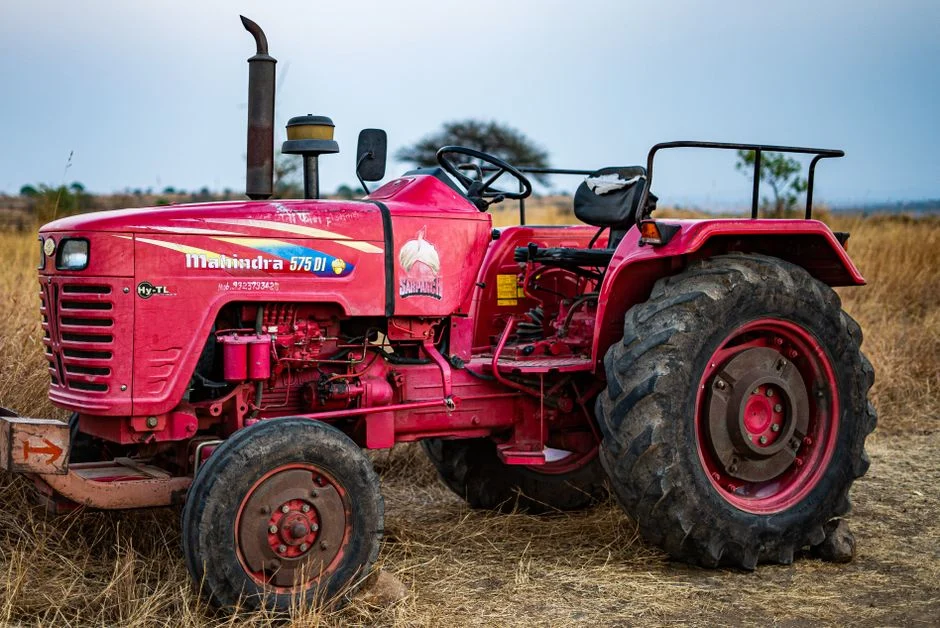
Letting some air out of a tractor tire is one of the few times “deflating” is good news. (Please don’t try it on a meeting.) The catch: how much to let out depends on weight, speed and the tire in front of you.
Here’s the direct answer. Tractor tire pressure is the lowest pressure that carries the load on each tire at your top working speed, taken from the tire maker’s load and inflation table for that exact size. There is no universal PSI. The number molded on the sidewall is the maximum, not the target. Running it on a lightly loaded tractor shrinks the footprint, costs traction and packs the soil. Running too low for the load damages the casing. The table sits between the two.
Let’s walk through it. We promise to keep the pressure low.
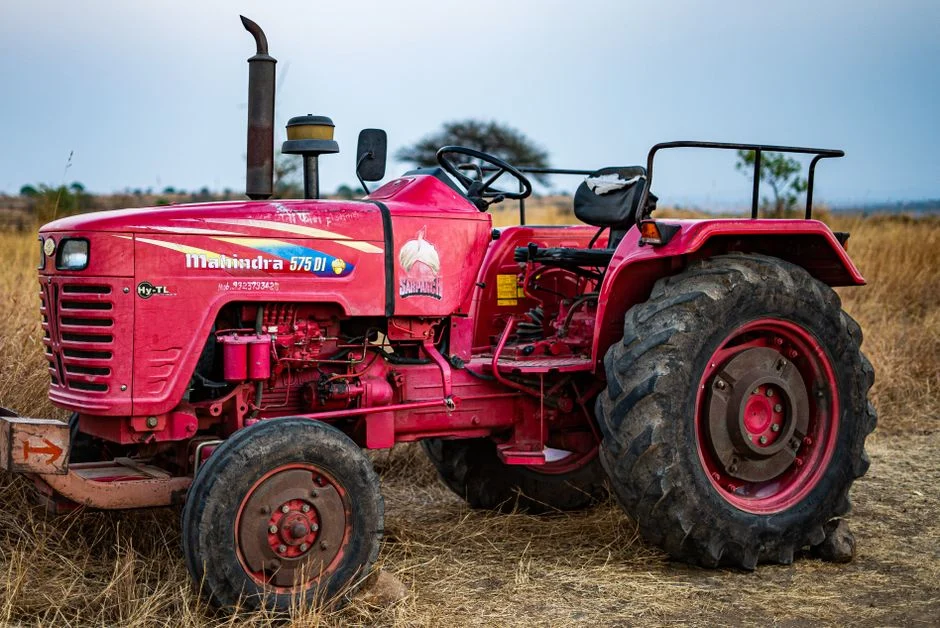
Tractor tire pressure in five steps
- Read the exact size and markings on the sidewall, including IF or VF, load index and speed symbol. Our guide to reading tractor tire sizes covers the code.
- Weigh each axle with the tractor set up as it works: ballast on, implement mounted or hitched. A public scale or axle scale works. Guessing from the spec sheet does not.
- Work out the load per tire: axle weight divided by the number of tires on that axle.
- Find that load in the maker’s table for your size, on the row for your speed and your single or dual setup. If your load falls between two rows, AG Tire Talk says to take the higher pressure, or interpolate between the two.
- Set it cold, before work, with an accurate gauge. Keep both tires on an axle at the same pressure.
Each maker publishes its own tractor tire pressure chart, usually as a load and inflation table in a data book. Use the one for the tire you run, for example the Firestone Ag data book. We link to tables instead of copying them, because they change between tire models and a copied number can be wrong for your tire. Our load index and speed rating tool helps you decode the markings first.
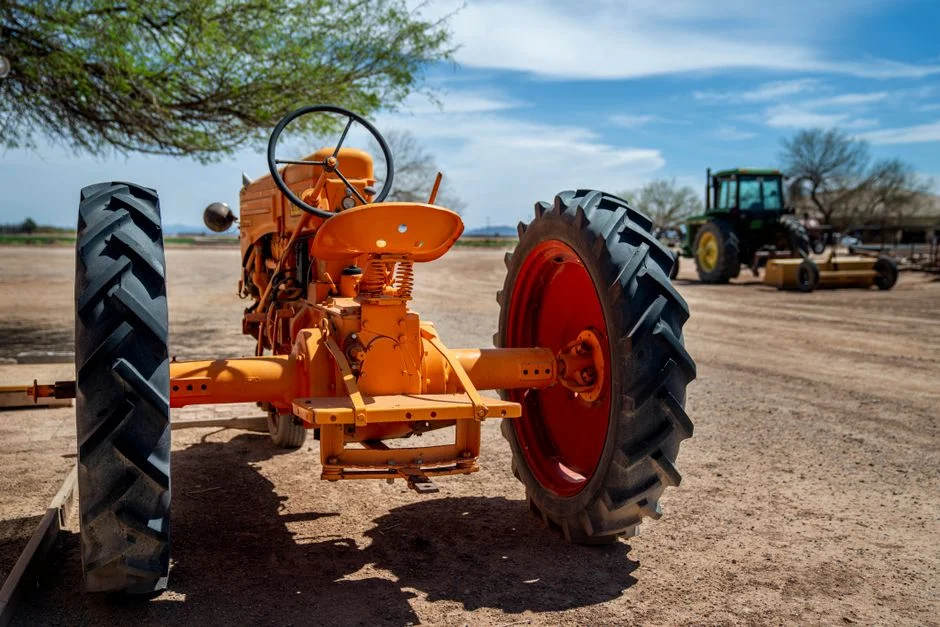
Air carries the load, so the table matters
It is the compressed air that holds up your tractor. AG Tire Talk puts it at roughly 80% of the load carried by air and 20% by the casing and rubber. Too little air means the casing does work it was never built for.
The University of Kentucky’s extension publication Proper Tire and Ballast Inflation (AEN-93) gives the working rule: use the lowest allowable pressure for the actual axle weight, from the maker’s load table. It also warns that not following the maker’s recommendations can void the tire warranty. (Archived since 2008, but the physics hasn’t changed.)
Pressure and ballast are a pair. The same publication lists target wheel slip of about 10% for MFWD and 4WD tractors, 13 to 15% for 2WD and about 6% for track tractors. If slip is well above target, check the weight and the pressure before blaming the tread. Our ballast calculator is a good place to start on the weight side.
What front-to-rear weight split should the tractor have?
Pressure follows the weight on each axle, so the split matters. Iowa State University Extension gives these targets as a share of total tractor weight, front over rear:
| Tractor type | Towed or drawbar implement | Semi-mounted | Fully mounted |
|---|---|---|---|
| 2WD | 25/75 | 30/70 | 35/65 |
| MFWD | 35/65 | 35/65 | 40/60 |
| 4WD | 55/45 | 55/45 | 60/40 |
Rule of thumb: weigh the axles first, compare the split with this table, then set pressure from the weights you measured. The split can shift by up to 10% with the implement, and Iowa State’s example tractor needs about 2,000 lbs (907 kg) less ballast when the implement is towed 3 mph (5 km/h) slower. Change the setup and you change the pressure.
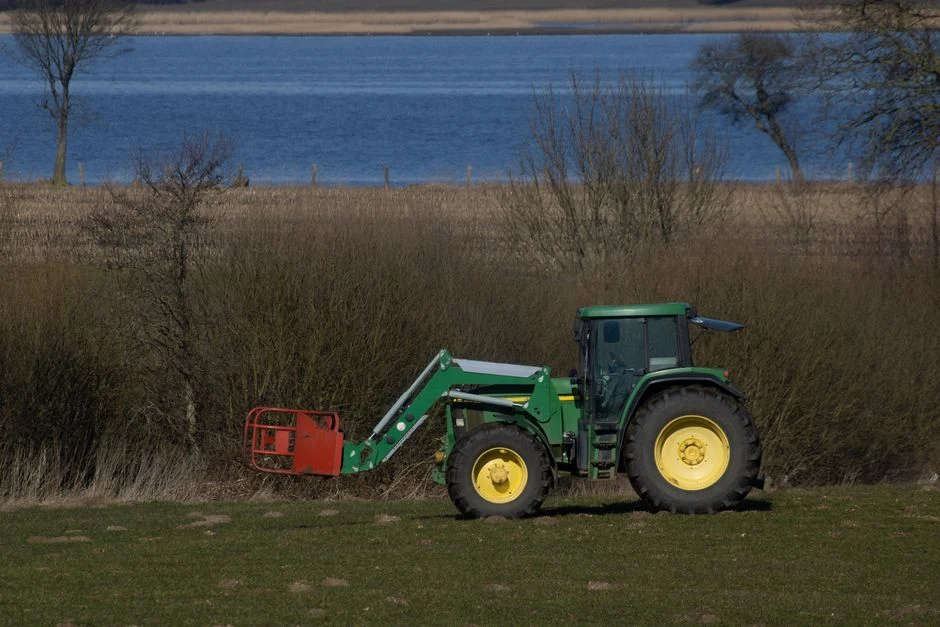
Duals and triples carry less per tire
Dual tires share the axle load, but you can’t just halve it and call it a day. Load shifts between the pair on bumps and uneven ground. AG Tire Talk’s method is to multiply the calculated load per tire by 1.12 for duals and 1.18 for triples before you look it up.
Here is the arithmetic on an example from Iowa State University Extension: a rear axle at 23,000 lbs (10,433 kg) on four tires is 5,750 lbs (2,608 kg) per tire. With AG Tire Talk’s duals factor, that becomes 6,440 lbs (2,921 kg) to find in the table. Some tables already build the dual allowance in, so read the notes printed with yours and apply it once, not twice.
Keep both tires in each pair at the same pressure and a similar rolling diameter, or one tire ends up doing the other’s job.

Field and road speeds need different pressure
Faster means more pressure for the same load, because the casing flexes faster and runs hotter. Tables list separate rows for field and transport speeds. AG Tire Talk’s advice is to plan for the worst case: your highest speed with your heaviest load.
AG Tire Talk’s tables show the gap: field work at 5 mph (8 km/h) needs noticeably less pressure than transport at 30 to 40 mph (48 to 64 km/h) for the same load. If the tractor spends real time on the road, set for the road speed row. Never run field pressure at road speed under a heavy load.
Central tire inflation systems (CTIS) change pressure on the go: lower in the field, higher on the road. Nice if you have one. Most farms don’t, so the speed row of the table does the thinking.
No CTIS and a tractor that does both jobs? Michelin’s guidance is to compromise toward the higher, road figure rather than run field pressure on the road. Its example is one tire at 12 psi (0.8 bar) in the field and 20 psi (1.4 bar) on the road, which it settles at 20 psi without a CTIS. Treat that as an example for one tire, not a rule for yours. The cost is a smaller footprint in the field. The alternative is a damaged casing on the road, which costs more.
Radials, IF/VF and liquid-filled tires have their own rules
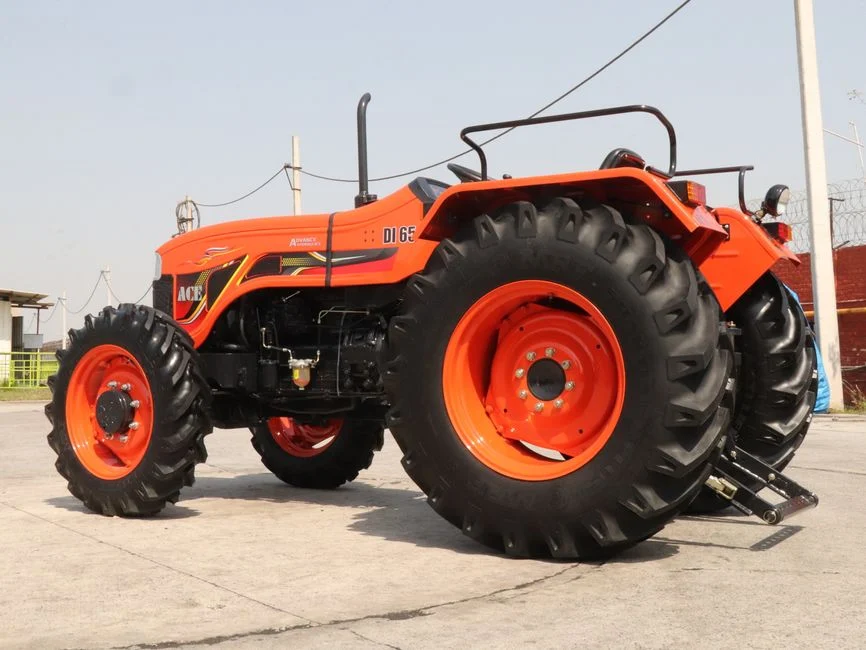
Radials look low, and that’s normal. A radial at the right pressure bulges at the bottom of the sidewall. That bulge is how it puts a long footprint on the ground. Kentucky’s extension notes that radials give better fuel efficiency than bias-ply but need more careful pressure management, so judge with a gauge, never by eye. More in our radial vs bias guide.
IF and VF radials carry the same load at lower pressure than a standard radial of the same size, so they have their own tables. A standard table on an IF or VF tire throws the benefit away. See IF vs VF tires.
Liquid-filled tires need an air-water gauge made for them. A normal gauge can clog or corrode. Follow the gauge’s instructions for valve position. The pressure you set is the same as for an air-filled tire at that load.
Signs the pressure is wrong
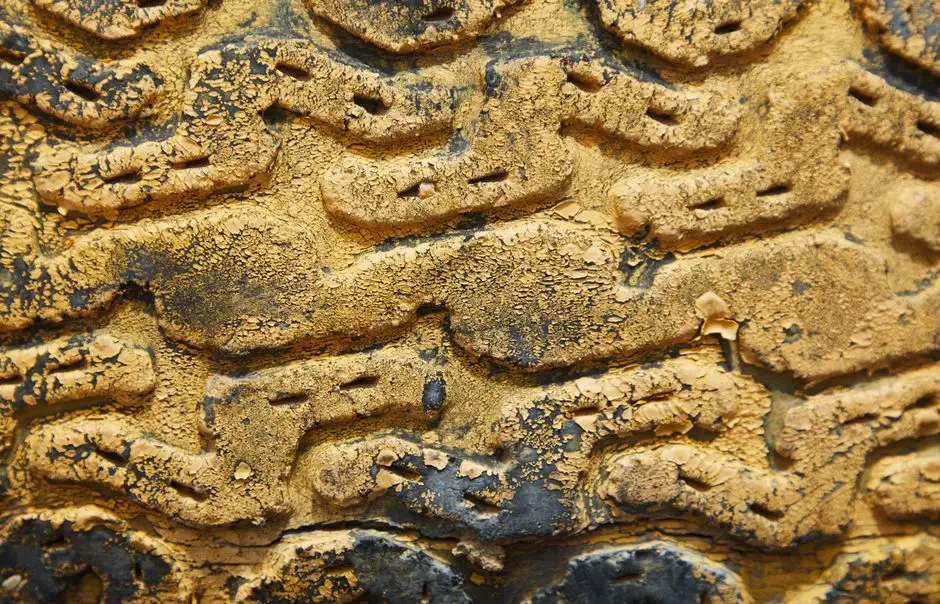
| Too low for the load | Too high for the load | |
|---|---|---|
| What you see | Sidewall buckling or rippling, tire creeping on the rim, cracks at the base of the sidewall | Small footprint, fast wear in the center of the tread |
| In the field | Risk of casing damage and a sudden failure | More wheel slip, more compaction, rougher ride |
| On the road | Heat build-up and bounce at speed | Harsh ride and less grip when braking |
A gauge settles it. Eyeballing a tire is how people end up arguing with a radial.
How and when to check your tire pressure
- Check cold. Michelin’s guidance is to check when the tires haven’t been driven for a long time or sat in direct sun.
- Check every time the load changes: new implement, ballast added or removed, a switch between field and road work.
- Check monthly if you always pull the same implement, since tires lose air slowly.
- Use an independent gauge rather than one on the compressor. Michelin also suggests releasing a little air from the valve first to clear moisture, and having the gauge calibrated yearly.
- Check after fitting a new or used tire.
- Allow for heat. High Plains Journal notes that a warm tire can read 1 to 3 psi (0.07 to 0.2 bar) higher than a cold one, so a hot reading is not a cold target.
- Allow for liquid fill. In a fluid-ballasted tire, pressure at the bottom can read about 1.5 psi (0.1 bar) higher than at the top, so measure with the valve at the top and use a gauge graduated in 1 psi steps or finer.
When you don’t need new tires (or a quote)
Honest answer: most “my tractor is slipping” calls are pressure problems first. A gauge costs far less than a tire, and we would rather you fix the pressure than buy tires you don’t need.
If a tire loses air, a repairable puncture is a local job. If the tires are fine and the pressure matches the table for your load, keep running them. And if your tractor’s manual restricts the size or pressure, the manual wins over anything we write here.
Setting up the front end? Our front tractor tires guide covers tread, sizes and lead-lag.
Need a new set to run at the right pressure? See the tractor tires we quote, by size and tread.
Measuring a tire for size? Set it to its rated pressure first, then follow our guide on how to measure tractor tire size.
More tractor tire guides from us:
- How to Measure Tractor Tire Size: Width, Diameter and Circumference
- R14 Tractor Tires: Hybrid Tread, Sizes and R4 vs R14
- R1 Tractor Tires: What They Are and Where They Work
- Garden Tractor Tires: Sizes, Tread and How to Choose
- Lawn Tractor Tires: Sizes, Tread and How to Choose
- R4 Tractor Tires: What They Are and When to Use Them
- Firestone Tractor Tire Size Chart: Every Size by Model
- Farm Equipment Tires: Which Type Fits Which Machine
- Rear Tractor Tires: Sizes, Tread and How to Pick a Pair
- Goodyear Tractor Tires: Who Makes Them and What Changed
- Titan Tires: Who Owns Titan, Where It Makes Them and Are They Good
- Front Tractor Tires: Which Tread, Size and Pair to Buy
- Who Makes BKT Tires? Owner, Factories and Where They're Made
- Big Tractor Tires: How Big They Get, What They Fit and Cost
- How Much Does a Tractor Tire Cost? Real Prices by Size
- IF vs VF Tires: What They Mean and When to Choose Them
- How to Inspect Used Tractor Tires Before You Buy
- R1 vs R1W Tractor Tires: What Is the Difference?
- Radial vs. Bias-Ply Tractor Tires: Which Should You Choose?
- Tractor Tire Size Guide: How to Read Every Number on the Sidewall
- Tractor Tire Types Explained: R1 vs R2 vs R3 vs R4
When you do need tires, look up your size, then send it to us on WhatsApp or ask for a quote. We’ll find the tire and quote it with shipping. We’ll probably also make a tread joke. Consider it free.
Questions
What PSI should my tractor tires be?
It depends on the tire size, the load on each tire and your speed. Weigh each axle, divide by the number of tires, and find that load in the tire maker's load and inflation table. There is no single number that fits every tractor.
Should I inflate to the pressure on the sidewall?
No. The sidewall shows the maximum pressure. Most tractors should run lower, at the pressure the load table gives for the real load and speed.
Do I need more pressure on the road?
Usually, yes. Load tables list higher pressures for transport speeds than for field speeds at the same load, because the tire works harder and heats up at speed.
How do I check pressure in a tire with liquid ballast?
Use an air-water gauge made for liquid-filled tires and follow its instructions for valve position. A normal air gauge can clog or corrode.
How often should I check tractor tire pressure?
Check whenever the load changes, such as a new implement or added ballast, and monthly if you always pull the same implement. Check cold, before the tractor has worked or sat in direct sun.
Should I check tractor tire pressure hot or cold?
Cold. Tires heat up in use and the reading rises, so tables and makers assume cold inflation pressure. Check before work or after the tractor has stood for a while out of the sun.
How do I set pressure on dual tires?
Keep both tires in each pair at the same pressure. AG Tire Talk multiplies the load per tire by 1.12 for duals before using the table. Read your maker's table notes, as some already include this allowance.
Can the wrong tire pressure void my warranty?
It can. The University of Kentucky extension warns that not following the tire maker's recommendations can void the tire warranty. Use the maker's load and inflation table for your exact tire.
How do I set tractor tire pressure without a CTIS?
Work from the heaviest case. Use the load and inflation table for your highest road speed and heaviest load, and run that pressure, because low field pressure on the road can damage the casing. The price is a smaller footprint in the field.
Does temperature change tractor tire pressure?
Yes. A warm tire can read 1 to 3 psi (0.07 to 0.2 bar) higher than a cold one, so check cold, before work or after the tractor has stood in the shade for a few hours. Do not bleed air off a hot tire to hit a cold number.