
Tire Types & Tread Patterns
IF vs VF Tires: What They Mean and When to Choose Them
IF vs VF tires comes down to load and pressure. An IF (increased flexion) radial carries about 20% more load, or the same load at about 20% lower pressure. A VF (very high flexion) radial does the same at about 40%. Lower pressure means a longer footprint, less compaction and a higher price.

Two letters on a sidewall can add 20% or 40% to what a tire carries. Nobody warns you that this also adds a line to the invoice. (We read sidewalls for fun, so we’ll warn you.)
Here’s the short answer. IF vs VF tires is a question of how much more load a radial carries at the same pressure. An IF (increased flexion) tire carries about 20% more load, or the same load at about 20% lower pressure. A VF (very high flexion) tire does the same at about 40%. Same size code, softer on the soil.
Let’s flex a little.

IF and VF are radial tires that carry more on less air
You’ll see the letters in front of the size, for example IF 710/70R42 or VF 650/65R38. The size itself reads like any other radial. What changes is the casing: a more flexible sidewall that shares the load with the air. Farm Progress defines both markings by exactly those percentages. Some makers write the F as “improved” instead of “increased”. Same tire. Michelin invented the technology in the early 2000s, according to NTS Tire Supply, and most big makers now sell their own version.
| Standard radial | IF (increased flexion) | VF (very high flexion) | |
|---|---|---|---|
| Pressure for the same load | Baseline | About 20% lower | About 40% lower |
| Load at the same pressure | Baseline | About 20% more | About 40% more |
| Footprint | Standard | Longer | Longest |
| Soil compaction | Standard | Lower | Lowest |
| Traction | Baseline | Higher | Highest |
| Price | Lowest | Higher | Highest |
Those percentages are the industry definitions. Your exact pressures come from the tire maker’s load and inflation table for your size, not from this page.
Why lower pressure matters in the field
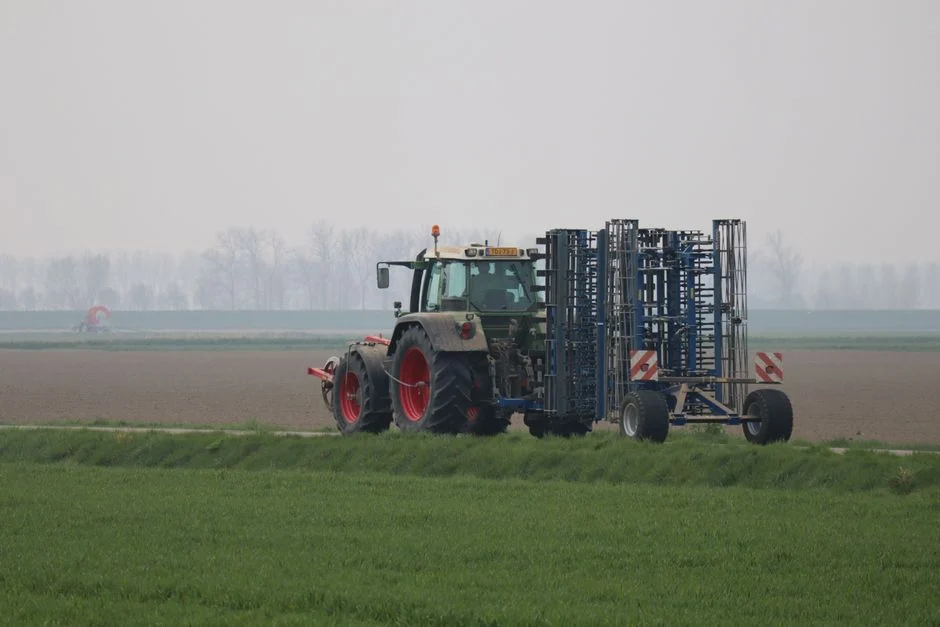
In a standard radial, No-Till Farmer reports that compressed air carries about 80% of the load and the casing about 20%. IF and VF casings take a bigger share, so the air can drop.
Less pressure means a softer sidewall and a longer, wider footprint. The same weight spreads over more ground. The soil packs less, more lugs bite and the tractor slips less. Yokohama puts the compaction cut at 20 to 40% in that same article. Michelin, which invented the technology, reports yield gains of up to 4.31% and fuel savings of up to 10% from its own studies. Treat those as manufacturer numbers, not promises for your field.
Here’s our one opinion. The benefit only shows up if you actually run the lower pressure. An IF tire left at standard pressure is a standard tire with a bigger bill.
VF is the next step up from IF, and both have a speed limit
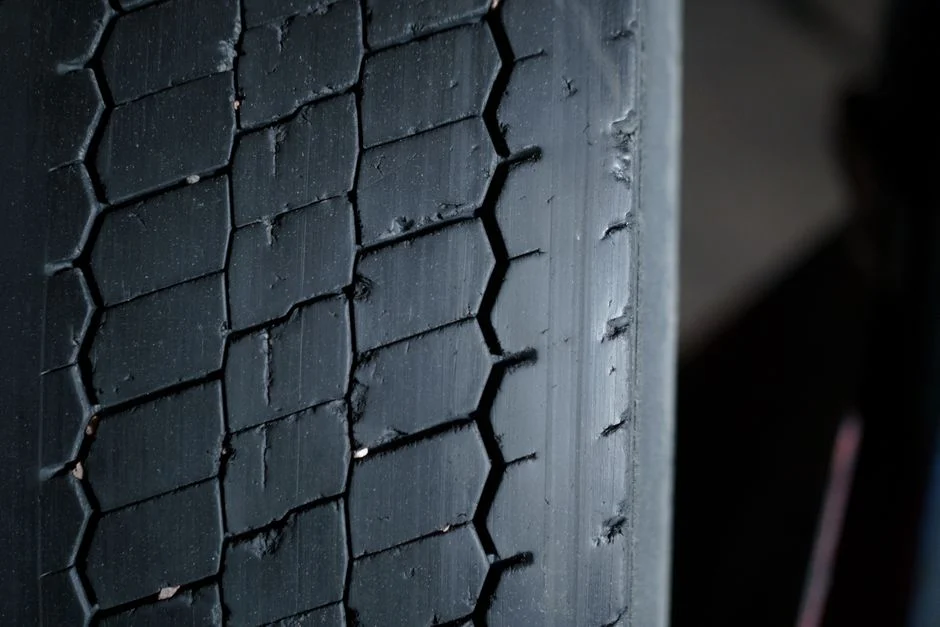
VF is the evolution of IF, according to a BKT USA quote in Modern Tire Dealer. The same article notes that most VF and IF tires carry a D speed rating (40 mph, 65 km/h), and some models an E rating (45 mph, 72 km/h). Check the symbol before you plan on road work. Our load index and speed rating tool decodes the rest of the sidewall.
A real example from No-Till Farmer: a 710/70R42 carrying 17,090 lbs (7,752 kg) at 25 mph (40 km/h) needs 46 psi (3.2 bar) as a standard tire. As an IF tire, it needs 35 psi (2.4 bar). That’s a 24% drop, a bit better than the “about 20%” label, because actual tables vary by size.
What pressure do IF and VF tires run, and what goes wrong when it is off?
There is no single number, because pressure follows load, speed and size. As a rough guide, the AG Tire Talk benefits article quotes field pressures of about 16 to 20 psi (1.1 to 1.4 bar) for front-wheel-assist and 4WD tractors, about 25 psi (1.7 bar) for combines, and above 60 psi (4.1 bar) for self-propelled sprayers. Those are examples, not a table. Your tire maker’s load and inflation table for your size is the only number that counts.
Getting it wrong costs money in both directions. NTS lists power hop and road lope (the tractor bouncing on the road) among the results of the wrong pressure. Too high and you lose the footprint you paid for. Too low and you wear the shoulders and flex the sidewall. That article also points out that road speed matters: most tractors run at least 30 mph (48 km/h) and most sprayers around 40 mph (64 km/h), so check the speed symbol against how you drive. Our tractor tire pressure guide shows how to set pressure from the table.
IF or VF pays off on heavy machines and sensitive soil
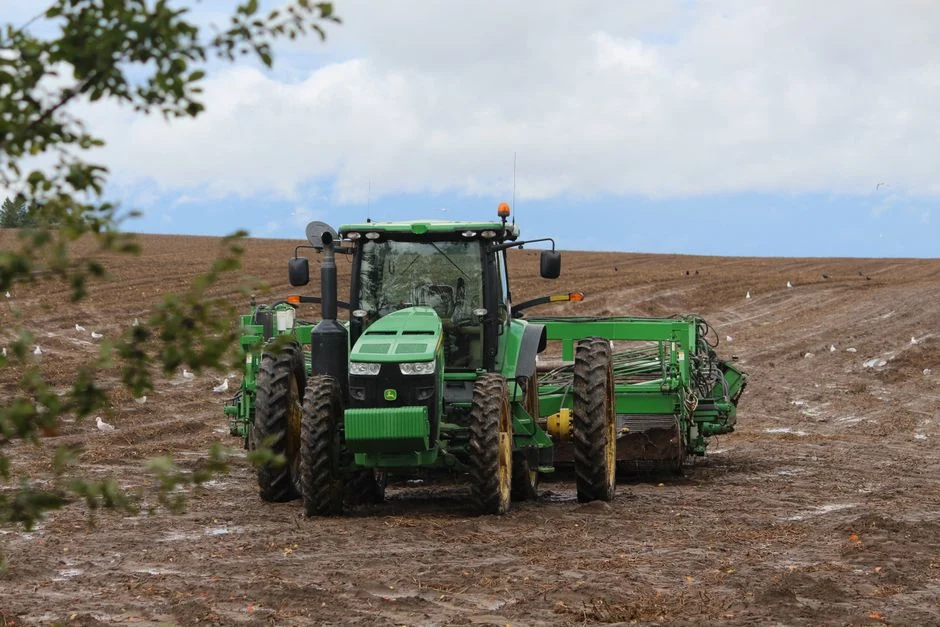
- High-horsepower tractors pulling heavy tillage tools, where wheel slip costs fuel and time.
- Combines, grain carts and sprayers that carry heavy loads across the field.
- Fields where compaction from heavy equipment is hurting yields.
- Machines that move between heavy field work and road travel, since the tire carries more load at a given pressure and you adjust less.
Soil and terrain matter too. Axon Tire notes that sandy soil compacts less, so the benefit is smaller there, while loamy soil shows more. It also warns that steep slopes can reduce stability with low-pressure tires.
Popular sizes that come in IF or VF include 710/70R42, 650/65R38 and 600/65R28. For the really big ones, see our big tractor tires guide.
CFO ratings let harvest machines carry extra at low speed
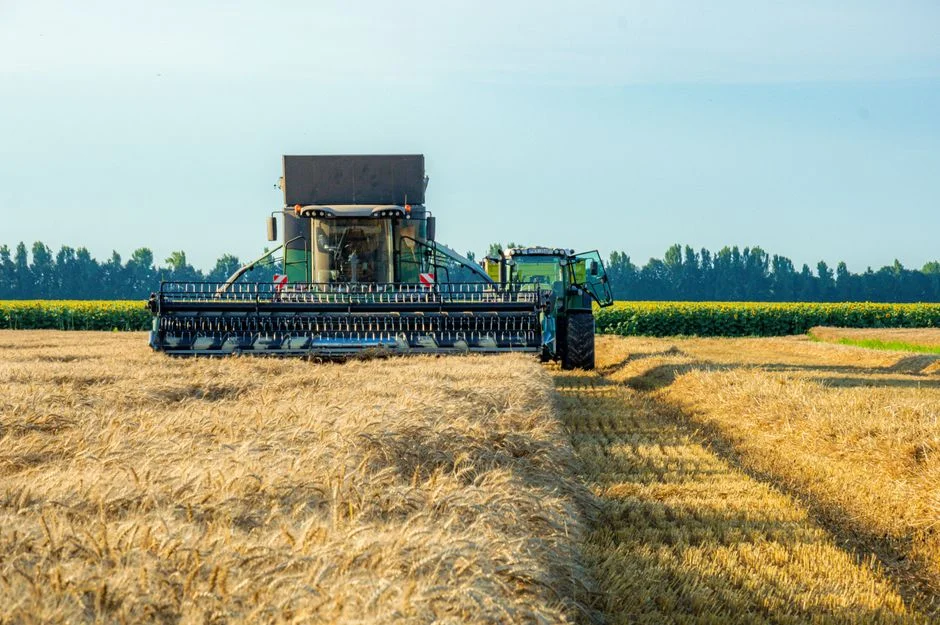
Many combine and grain cart tires, often IF or VF, also carry a CFO (cyclic field operation) rating. Farm Progress describes it as the load pattern of a machine that is sometimes full and sometimes empty. At low speed, the rating allows extra load. Farm Progress cites 55% over the IF rating below 10 mph (16 km/h). No-Till Farmer lists the bonus at 55% for IF-CFO and 35.5% for VF-CFO, with limits: it applies only to cyclic work, the machine has to unload within 1 mile (1.6 km), and road travel goes back to the standard load and pressure. The No-Till Farmer example is an IF800/70R38 CFO at 23 psi (1.6 bar): it carries 17,060 lbs (7,738 kg) at 25 mph (40 km/h) but 26,460 lbs (12,002 kg) at 9 mph (14 km/h). Same tire, same air, very different job.
The AG Tire Talk benefits article gives the load bonus at each speed, quoting one tire engineer. Treat the numbers as a sketch:
| Cyclic speed limit | IF-CFO extra load | VF-CFO extra load |
|---|---|---|
| Up to 5 mph (8 km/h) | 70% | 48.5% |
| Up to 10 mph (16 km/h) | 55% | 35.5% |
| Up to 20 mph (32 km/h) | 35% | 13.5% |
A second engineer in the same article gives 30% for IF at 20 mph, so the sources differ by five points. That is a good reason to read the number off your own tire’s table. Restrictions apply: the machine must cycle between full and empty, stay under the designated speed (usually 10 mph, 16 km/h), unload within one mile (1.6 km) and drop back to normal load on the road.
If your machine works this way, ask for the CFO row in the maker’s table. If it doesn’t, ignore this section. Your tractor is not a grain cart, whatever it thinks.
Check the wheel, the axle and the table before you switch
None of the top pages we compared covers wheel approval, and it’s where switching goes wrong.
- Check the wheel. The rim width must be approved for the tire, and the wheel must be rated for the load. Low pressure puts more work on the bead and the wheel.
- Use the right table. IF and VF tires have their own load and inflation tables. Start with our tractor tire pressure guide for the basics.
- Keep axles matched. Don’t mix IF, VF and standard tires on one axle. On front-wheel-assist tractors, keep the front-to-rear rolling diameter ratio your tractor maker specifies. Our lead-lag calculator checks it.
- Get a decent gauge. At 20 to 40% lower pressure, a few psi of error is a bigger share of the number.
New to radials? Start with radial vs bias. Want wide, low-pressure options that aren’t IF or VF? See flotation tires.
Which IF and VF tires do we list?
Honest answer: not many are marked that way, and we won’t pad the list. One model in our catalog is a true VF tire, the Bridgestone VT-Tractor, in 600/65R28, 650/65R38 and 710/70R42. The listed VF rows carry the 169D/166E and 179D/176E codes, where the D is the 40 mph (65 km/h) speed symbol. Two other lines mention the technology in their descriptions: the Maxam AgriXtra 85 (VF and CFO versions are offered by the maker) and the Goodyear Optitrac (some IF/VF-width sizes). Availability changes by size, so tell us the size and the machine and we’ll confirm which version is on offer.
When you don’t need IF or VF tires
Honest answer: plenty of tractors don’t.
- Utility and loader tractors, and lighter field work.
- Machines that rarely carry heavy loads in the field.
- Operations that never push a standard radial to its limit. Modern Tire Dealer lists light equipment and modest loads as the cases where IF and VF don’t make sense.
- Tight budgets. The lower pressure pays back only with enough hours and weight.
More tractor tire guides from us:
- How to Measure Tractor Tire Size: Width, Diameter and Circumference
- R14 Tractor Tires: Hybrid Tread, Sizes and R4 vs R14
- R1 Tractor Tires: What They Are and Where They Work
- Garden Tractor Tires: Sizes, Tread and How to Choose
- Lawn Tractor Tires: Sizes, Tread and How to Choose
- R4 Tractor Tires: What They Are and When to Use Them
- Firestone Tractor Tire Size Chart: Every Size by Model
- Farm Equipment Tires: Which Type Fits Which Machine
- Rear Tractor Tires: Sizes, Tread and How to Pick a Pair
- Goodyear Tractor Tires: Who Makes Them and What Changed
- Titan Tires: Who Owns Titan, Where It Makes Them and Are They Good
- Front Tractor Tires: Which Tread, Size and Pair to Buy
- Who Makes BKT Tires? Owner, Factories and Where They're Made
- Big Tractor Tires: How Big They Get, What They Fit and Cost
- How Much Does a Tractor Tire Cost? Real Prices by Size
- Tractor Tire Pressure: How to Set It for Load and Speed
- How to Inspect Used Tractor Tires Before You Buy
- R1 vs R1W Tractor Tires: What Is the Difference?
- Radial vs. Bias-Ply Tractor Tires: Which Should You Choose?
- Tractor Tire Size Guide: How to Read Every Number on the Sidewall
- Tractor Tire Types Explained: R1 vs R2 vs R3 vs R4
If your current tires are fine and run at the right pressure, keep them. If a standard radial is what you need, we’ll say so, even if it costs us the upgrade. If you do want IF or VF, browse our tractor tires or ask for a quote. Send us your size on WhatsApp and we’ll check the options for it. We’ll probably make a tread joke too. Consider it free.
Questions
What does IF mean on a tractor tire?
IF stands for increased flexion (some makers say improved flexion). An IF radial carries about 20% more load than a standard radial at the same pressure, or the same load at about 20% lower pressure.
What does VF mean on a tractor tire?
VF stands for very high flexion. A VF radial carries about 40% more load than a standard radial at the same pressure, or the same load at about 40% lower pressure.
What is the difference between IF and VF tires?
The size of the benefit. IF gives about 20% more load or 20% less pressure, VF about 40%. VF is the evolution of IF, with a more flexible casing and a higher price.
Are VF tires worth the extra cost?
On heavy, high-horsepower tractors, combines and grain carts that work many hours, usually yes, because of less compaction and slip. On utility tractors and light work, a standard radial is usually the better value.
Can I run IF or VF tires at standard pressure?
You can, but you lose most of the benefit. Set the pressure from the IF or VF load and inflation table for your load and speed.
What does CFO mean on an IF or VF tire?
CFO is cyclic field operation. It allows extra load at low speed on machines that cycle between full and empty, like combines and grain carts. Road travel returns to the standard load and pressure.
How fast can IF and VF tires go?
Most carry a D speed rating (40 mph, 65 km/h) and some an E rating (45 mph, 72 km/h). Check the speed symbol on your tire's sidewall.
Can I mix IF, VF and standard tires on one axle?
No. Keep the same tire type on each axle. On front-wheel-assist tractors, also keep the front-to-rear rolling diameter ratio your tractor maker specifies.
What pressure should IF and VF tires run?
It depends on load, speed and size, so use the maker table for your tire. As a rough guide, field pressures of about 16 to 20 psi (1.1 to 1.4 bar) are quoted for front-wheel-assist and 4WD tractors. Wrong pressure causes power hop, road lope and uneven wear.
How much compaction do IF and VF tires save?
Manufacturers put the cut in compaction force at 20 to 40% against a standard radial, because the larger footprint spreads the weight. The saving depends on soil and pressure. Loamy soil shows more benefit than sandy soil, and the tire only helps if you run the lower pressure.