
Tire Sizing & Fitment
How to Measure Tractor Tire Size: Width, Diameter and Circumference
To measure tractor tire size, take the weight off the tire and inflate it to its rated pressure. Measure the section width at the widest point of the sidewall, divide the string circumference by 3.14 for the diameter, and read the rim diameter. Then match the three numbers to a size in a data book.
Knowing how to measure tractor tire size is the one job where a tape measure gets to be the hero. All you need is the tape, a piece of string and a helper who does not wander off. (Helpers wander. It is in their nature.)
To measure tractor tire size, take the weight off the tire and set it to its rated pressure. Then measure three things: the section width at the widest point of the sidewall, the diameter (or circumference), and the rim diameter. Match them to a size in a data book. Bridgestone’s measuring guide uses the same steps.
What do you need before you start measuring?
Less than a trip to the farm store. Grab a tape measure with inches and millimeters, a length of string, two straight boards (2x4s work) and a tire gauge. Wide calipers are nicer than boards, but few of us own a pair. (We own a tape measure that has seen things.)
Next, prep the tire. Take all the weight off it and inflate it to its rated pressure, as Bridgestone advises. A soft tire bulges and sags, and it hands you a wrong answer with great confidence. Not sure of the rated pressure? Our tractor tire pressure guide shows how to find it. We need to have a pressurized conversation first.
How do you measure the section width?
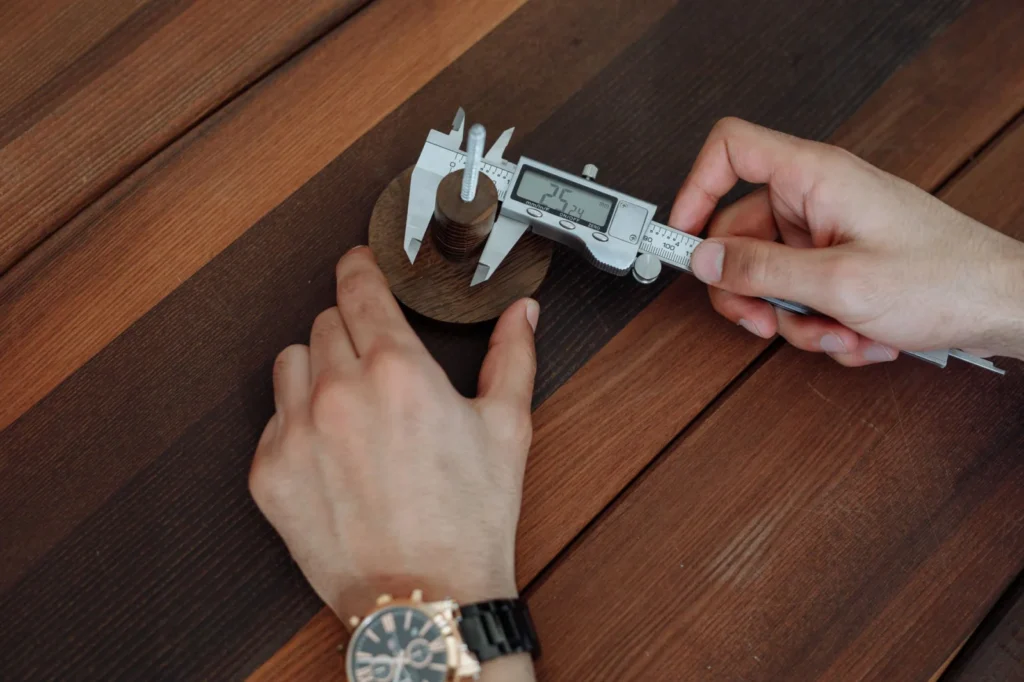
Measure the widest point of the sidewall, not the tread. Bridgestone says wide calipers run down the sidewall give the most accurate reading.
No calipers? Have your helper hold the two boards upright against each side of the tire, past the tread, then measure the gap between them with the tape. Metric sizes lead with this number in millimeters. Inch sizes lead with it in inches. To convert, multiply inches by 25.4: 18.4 in is 467 mm.

How do you measure overall diameter and rolling circumference?
Wrap the string around the centerline of the tire. Mark where the ends overlap, lay the string flat and measure it. That length is the circumference. Divide it by 3.14 and you have the diameter, per Bridgestone. A string that reads 155 in (3,937 mm) gives 49.4 in (1,254 mm). No strings attached, and no calipers either.
You can also stand the tire up and measure from the ground to the top. Expect a slightly smaller number, because a loaded tire sags.
Rolling circumference is how far the tire travels in one full turn. The formal test is ISO 11795, which measures new drive wheel tires under load. Your string is a shop-floor check, not a lab result. If you would rather skip the string, our tire diameter and rolling circumference calculator works it out from the size. It takes the long way round so you do not have to.
How do you find the rim diameter?
Read it off the sidewall. The rim diameter is the last number in the size, in inches. A 380/85R24 fits a 24 in (610 mm) rim, and Maple Lane Farm Service reads the last number the same way. The tire has to match the rim it mounts on.
If the sidewall is unreadable, measure the wheel itself. Run the tape across the rim from one bead seat to the other, straight through the center. The bead seat is the flat step where the tire bead sits. Rim sizes are listed in inches, so convert if your tape reads in millimeters: 610 mm is 24 in.

How do you turn your measurements into a tire size?
Use the aspect ratio. Section height equals width times the aspect ratio. For a 380/85R24, that is 380 mm x 0.85 = 323 mm. Overall diameter is the rim plus two section heights: 610 mm + 646 mm = 1,256 mm (49.4 in). Multiply by 3.14 for the circumference.
Inch sizes carry no aspect ratio on the sidewall, so we use the common 85% rule, the same one in our tractor tire size guide. This table shows what it gives for six sizes in our catalog. Every number is nominal.
| Size | Section width | Overall diameter | Circumference |
|---|---|---|---|
| 12.4-28 | 12.4 in (315 mm) | 49.1 in (1,247 mm) | 154 in (3,914 mm) |
| 14.9-24 | 14.9 in (378 mm) | 49.3 in (1,253 mm) | 155 in (3,934 mm) |
| 380/85R24 | 15.0 in (380 mm) | 49.4 in (1,256 mm) | 155 in (3,943 mm) |
| 16.9-30 | 16.9 in (429 mm) | 58.7 in (1,492 mm) | 184 in (4,684 mm) |
| 18.4-38 | 18.4 in (467 mm) | 69.3 in (1,760 mm) | 218 in (5,525 mm) |
| 520/85R38 | 20.5 in (520 mm) | 72.8 in (1,849 mm) | 229 in (5,806 mm) |
Makers publish their own figures, so treat this table as a cross-check and the data book as the final word. Need to swap between inch and metric names? The tire size converter does it.
Our opinion: trust the tape over the nickname. A 14.9-24 works out to 49.3 in (1,253 mm) and a 380/85R24 to 49.4 in (1,256 mm), which is 3 mm apart. A 20.8-38 works out to 73.4 in (1,863 mm) and a 520/85R38 to 72.8 in (1,849 mm), which is 14 mm apart. Match overall diameter, not the equivalent name, because on a front-wheel-assist tractor a small difference can fight the drivetrain. The lead-lag calculator checks your front and rear pair.

What if the sidewall is worn off or the tire is used?
Measure the width, the rim and the circumference, then compare them with a data book. A worn tire is shorter than a new one, so a used tire’s numbers may not match a new size exactly. Bridgestone warns about the same thing. Pick the closest size and check the width and rim first, since the rim does not change with wear.
Buying used? Our guide to inspecting used tractor tires covers what else to check. Then send us a photo of the sidewall with your three measurements. We match them to a size on our tire size list, which has 85 sizes. Measure twice, buy once. (It works for tape. It also works for tires.)
When you don’t need to measure anything
Skip the string, and the quote, in these cases.
- The sidewall is readable. Read the size, then check it against your manual. Our size guide explains every number.
- The tire is soft, not the wrong size. A tire that looks flat needs a gauge, not a purchase.
- The tire holds air and wears evenly. Keep running it.
- You are replacing a tire you can still read. Order the same size, then confirm the front and rear pair on four-wheel drive.
Need a tire? Browse tractor tires or start a quote with your three numbers and your tractor model.
More tractor tire guides from us:
- R14 Tractor Tires: Hybrid Tread, Sizes and R4 vs R14
- R1 Tractor Tires: What They Are and Where They Work
- Garden Tractor Tires: Sizes, Tread and How to Choose
- Lawn Tractor Tires: Sizes, Tread and How to Choose
- R4 Tractor Tires: What They Are and When to Use Them
- Firestone Tractor Tire Size Chart: Every Size by Model
- Farm Equipment Tires: Which Type Fits Which Machine
- Rear Tractor Tires: Sizes, Tread and How to Pick a Pair
- Goodyear Tractor Tires: Who Makes Them and What Changed
- Titan Tires: Who Owns Titan, Where It Makes Them and Are They Good
- Front Tractor Tires: Which Tread, Size and Pair to Buy
- Who Makes BKT Tires? Owner, Factories and Where They’re Made
- Big Tractor Tires: How Big They Get, What They Fit and Cost
- How Much Does a Tractor Tire Cost? Real Prices by Size
- IF vs VF Tires: What They Mean and When to Choose Them
- Tractor Tire Pressure: How to Set It for Load and Speed
- How to Inspect Used Tractor Tires Before You Buy
- R1 vs R1W Tractor Tires: What Is the Difference?
- Radial vs. Bias-Ply Tractor Tires: Which Should You Choose?
- Tractor Tire Size Guide: How to Read Every Number on the Sidewall
- Tractor Tire Types Explained: R1 vs R2 vs R3 vs R4
Send us your three numbers on WhatsApp. We’ll find the tire. We’ll probably also make a tape joke. The joke is free, and it comes in exactly the right length.
Questions
How do you measure tractor tire size?
Inflate the tire to its rated pressure with no load on it. Measure the section width at the widest point of the sidewall, find the diameter from the string circumference divided by 3.14, and read the rim diameter on the sidewall. Then compare the three numbers with a data book.
How do you measure tractor tire circumference?
Wrap a string around the centerline of the tire, mark the overlap and measure the string. Divide by 3.14 to get the diameter. The formal rolling circumference is measured on new tires under load, under ISO 11795.
How do you calculate tractor tire diameter?
Overall diameter is the rim diameter plus twice the section height. Section height is the width times the aspect ratio. A 380/85R24 gives 610 mm + 2 x 323 mm = 1,256 mm (49.4 in).
How do you measure a tractor tire without calipers?
Hold two straight boards, such as 2x4s, against each side of the tire, past the tread. Measure the gap between them with a tape measure. That gap is the section width.
What is rolling circumference?
It is the distance a tire travels in one full turn. The formal figure is measured on new tires under load, so a string around the tire is a check, not an exact match.
How do you find the rim size of a tractor tire?
Read the last number in the size on the sidewall. It is the rim diameter in inches, so 380/85R24 fits a 24 in (610 mm) rim. If the sidewall is gone, measure across the wheel from one bead seat to the other.
How do you convert tractor tire width from inches to millimeters?
Multiply inches by 25.4. A tire 18.4 in wide is 467 mm. To go the other way, divide millimeters by 25.4.
What if the sidewall is worn off?
Measure the width, the rim and the circumference, then compare them with a data book. A used tire may not match a new size exactly, so send us a photo and your three measurements and we will find the closest size.