
Buying Guides
Firestone Tractor Tires: Who Makes Them and Which Line Fits
Firestone tractor tires are made by Firestone Ag, a business of Bridgestone Americas, mostly at a plant in Des Moines, Iowa. The company began in Akron, Ohio in 1900, and Bridgestone bought it in 1988. The main farm lines are Maxi Traction, Radial All Traction and Performer Evo. We list four Firestone models.
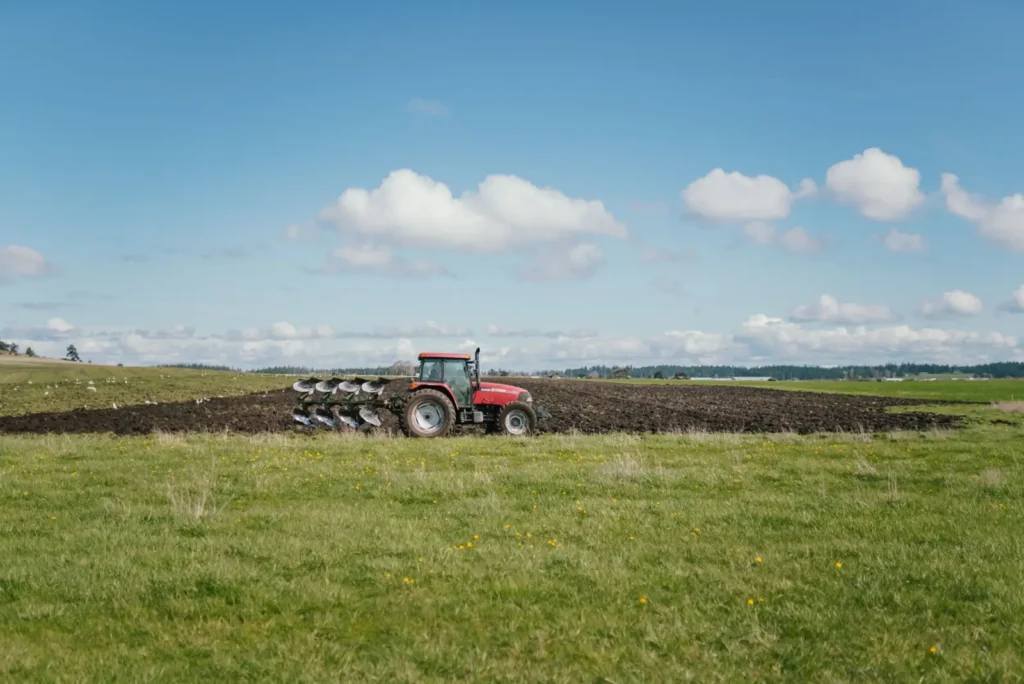
Firestone tractor tires have been rolling across farms since before most tractors had a cab, a radio or a cup holder. (The cup holder is still optional.) They are also one of the most searched names in farm tires, so plenty of people want one clear answer.
Here is the short answer. Firestone Ag is a business of Bridgestone Americas, and Bridgestone has owned the Firestone name since 1988. The main farm lines are Maxi Traction, Radial All Traction and Performer Evo. We read two NTS Tire Supply write-ups (a detailed look and what farmers should know), the OEM Off-Highway company page and an Ohio State history of rubber tractor tires, and kept what they agree on.
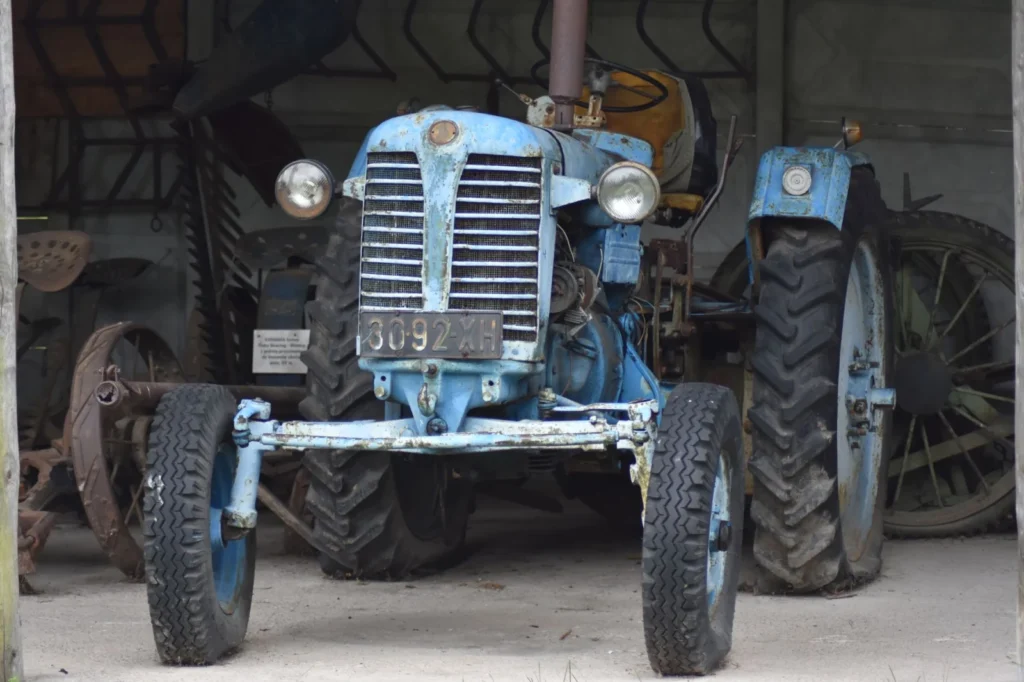
Who makes Firestone tractor tires, and how did it start?
Firestone Ag, a business of Bridgestone Americas, makes them. The company began in Akron, Ohio in 1900, and Bridgestone bought it in 1988. NTS Tire Supply says about 90% of Firestone’s ag tires come from a plant in Des Moines, Iowa, which has run since 1945 and employs about 1,300 people. Bridgestone-branded farm tires also reached U.S. dealers in August 2024, according to the same source. Plants and sourcing change, so ask about the exact tire you are buying.
The history is the fun part. In the early 1930s more than one million steel-wheeled tractors were at work, and the vibration left drivers sore and worn out. In spring 1932 Harvey Firestone and his son Leonard combined a low-pressure balloon tire, a wide footprint and a chevron tread into a rubber tractor tire that worked. Ohio State’s history says rubber was on 42% of new U.S. tractors by 1937 and 85% by 1939. (Nobody misses steel wheels. Neither do their fillings.)
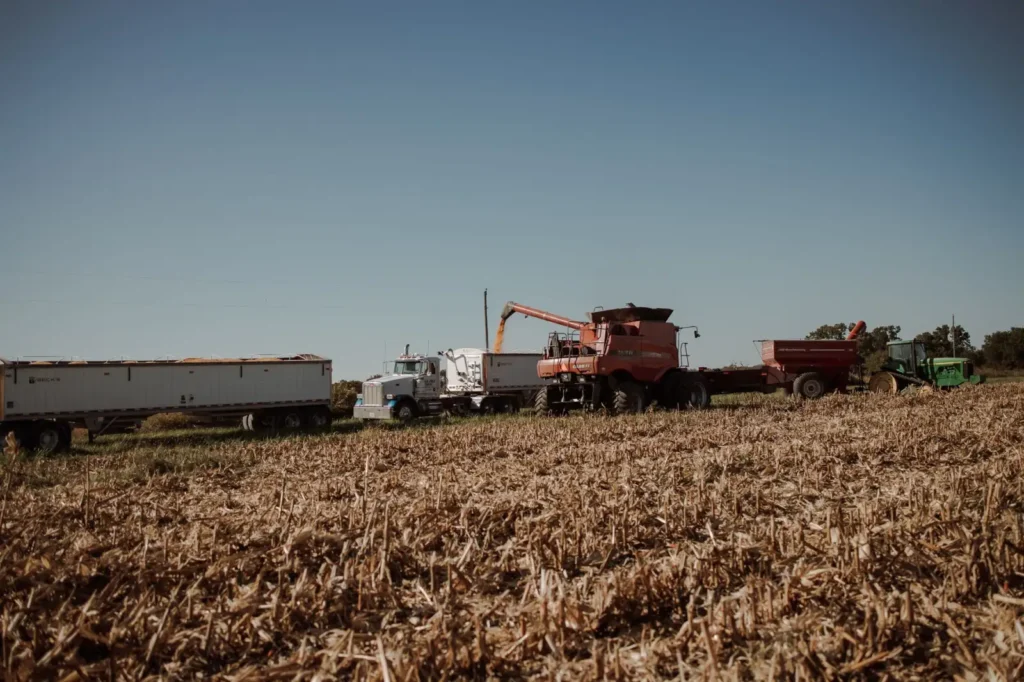
Which Firestone tractor tire lines should a farmer know?
Firestone sells farm tires by segment first and size second, says NTS Tire Supply. The table follows that order. Tread classes and uses come from the NTS write-ups, and lines get renamed, so check the current range with a dealer before you order.
| Line | Tread | Built for |
|---|---|---|
| Maxi Traction | R-1W, 45° dual-angle lugs | High-horsepower tractors and combines; standard, IF and VF |
| Radial Deep Tread 23° | R-1W, extra-wide tread | Heavy pulling; often original equipment on John Deere row-crop tractors |
| Radial All Traction 23° | R-1 depth | Basic radial work such as combining and ditch mowing |
| Radial All Traction FWD | Front tire | Front axle of mechanical front-wheel-drive tractors |
| Radial All Traction DT | 45° bar | Combines, in IF and VF |
| Radial All Traction RC | R-1W, VF | Sprayers |
| Performer Evo | R-1W, 45° bar | Entry-level radial for chore and secondary tractors |
| Destination Farm and Turf | Rib and lug | Wide, flat VF implement tires |
| Regency Ag 4-Rib Front Plus | Bias front | Front axle; formerly the Champion Guide Grip 4-Rib |
IF and VF come from what Firestone calls AD2 technology. An IF tire carries a standard radial’s load at about 20% lower pressure, and a VF tire at about 40% lower. Our IF vs VF guide explains when that pays. R-1W bars are at least 20% taller than R-1 bars, and our R1 vs R1W guide shows when the extra depth earns its keep.
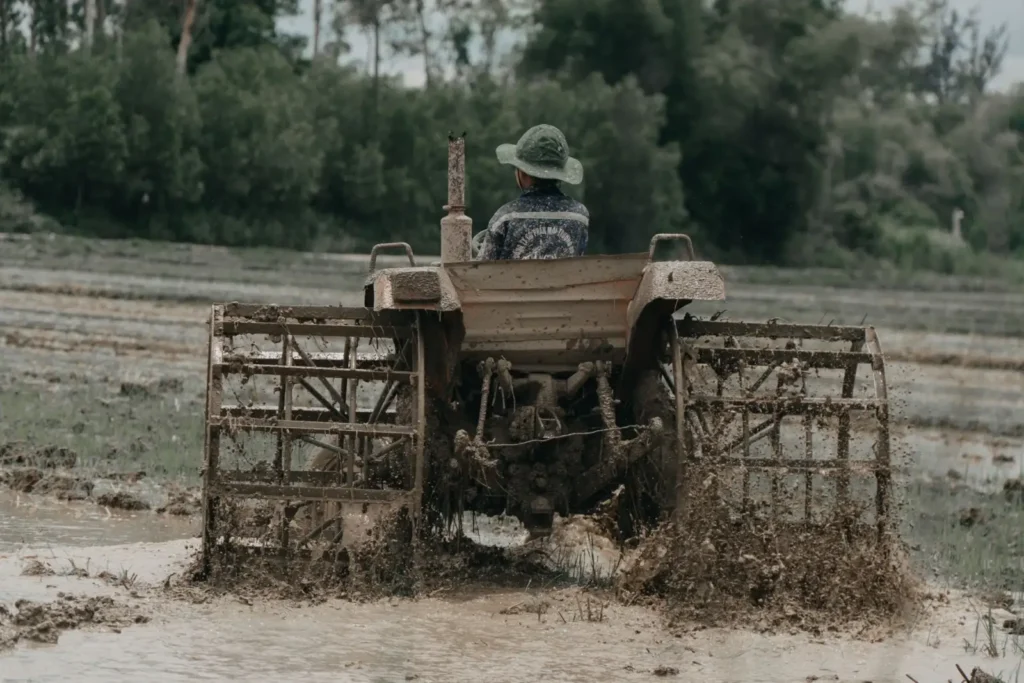
Is the 23-degree bar better than the 45-degree bar?
Neither wins everywhere. Firestone developed the 23° bar in 1950 after extensive testing, and it still pulls well in moderate to dry soil. It wears faster on the road and cleans out less well in soggy fields. The 45° bar is the common farm standard, and NTS Tire Supply rates it better for wear and for steep or muddy ground. (This is not a bar fight. It is a bar angle debate. Different thing.)
| 23° bar | 45° bar | |
|---|---|---|
| Best ground | Moderate to dry soil | Steep or muddy ground |
| In-field pulling | Strong | Good |
| Road wear | Faster | Slower |
| Cleaning in wet soil | Less well | Better |
| Firestone examples | Radial Deep Tread 23°, Radial All Traction 23° | Maxi Traction, Performer Evo, Radial All Traction DT |
Rule of thumb: dry ground and hard pulling points to 23°, and mixed ground with road miles points to 45°. Still unsure? Our tread type picker will argue with you politely.
Which Firestone tractor tires do we list?
We list four Firestone models in our catalog, two bias and two radial. The sizes below are the sizes on those listings, shown as a catalog snapshot and not as a fitment list. Send us the size you need and we will tell you what we can source. The same goes for a Firestone tire that is not on the list.
| Model | Tread and build | Sizes listed |
|---|---|---|
| Super All Traction II 23° | R-1, bias | 11.2-24, 12.4-24, 12.4-28, 13.6-24, 13.6-28, 14.9-24, 14.9-28, 16.9-28, 16.9-30, 18.4-30, 18.4-34, 18.4-38, 20.8-38 |
| Radial All Traction 23° | R-1, radial | 520/85R38 |
| Performer Evo | R-1W, radial | 340/85R24, 380/85R24, 420/85R28, 460/85R30 |
| Champion Guide Grip 3-Rib | F-2, bias front | 6.00-16, 10.00-16, 11L-15 |
For widths, rims and ply ratings model by model, use our Firestone tractor tire size chart. We also list two Bridgestone models, the VT-Tractor and the VX-Tractor, on our Bridgestone page. If you are comparing brands, our Goodyear tractor tires guide tells a similar ownership story. For the full range of brands and treads, see our tractor tires page.
What does the Firestone warranty cover?
NTS Tire Supply reports that most Firestone radials carry a 9-year warranty. The first two years are full coverage if wear is under 25%, then prorated. The Performer Evo has a 6-year prorated warranty, with full coverage in year one if wear is 10% or less. NTS also lists stubble damage cover for 3 years and field hazard cover for 2 years, both prorated from day one.
That write-up mixes 2020 and 2024 details, and we have not confirmed Firestone’s current terms. Read the maker’s warranty before you buy. For what we cover on our side, read our returns policy.
When you don’t need to buy a Firestone tire
We would like to sell you a tire. We would also like you to buy the right one, or none. Skip the purchase if:
- Your tires hold air and the lugs are still tall. Check the pressure first. Most “bad tire” problems start with a gauge, not a quote.
- You are buying a name. Size, tread and load rating do the work. A same-size, same-tread tire from another maker pulls the same field.
- The damage is a repairable puncture. Get it fixed locally.
- The tire is old. Check the DOT date before you check the tread. The last four digits give the week and year of manufacture (0308 means week 3 of 2008), says NHTSA. Deep lugs on an old, cracked tire are still on an old, cracked tire. Our used tire inspection guide has the full checklist, and the DOT tractor tires guide shows how to read the date code.
If you do need one, send us the size and the tread you run now. We will tell you what we can source. Start a quote any time.
More tractor tire guides from us:
- DOT Tractor Tires: How to Read the Date Code and Tire Age
- Snow Tires for Tractors: Do You Need Them or Chains?
- 23×8.50-12 Tires: Size, Rim Width, Ply and What They Fit
- R2 Tractor Tires: What R-2 Rice and Cane Tread Is For
- R3 Tires: What They Are, Where They Work and When They Don't
- Trelleborg Tires: Who Owns Them, What They Make and Sizes We List
- 10-16.5 Tractor Tire: Size, Ply Ratings and What It Fits
- Tires for Compact Tractors: R1, R3 or R4 Tread?
- How to Measure Tractor Tire Size: Width, Diameter and Circumference
- R14 Tractor Tires: Hybrid Tread, Sizes and R4 vs R14
- R1 Tractor Tires: What They Are and Where They Work
- Garden Tractor Tires: Sizes, Tread and How to Choose
- Lawn Tractor Tires: Sizes, Tread and How to Choose
- R4 Tractor Tires: What They Are and When to Use Them
- Firestone Tractor Tire Size Chart: Every Size by Model
- Farm Equipment Tires: Which Type Fits Which Machine
- Rear Tractor Tires: Sizes, Tread and How to Pick a Pair
- Goodyear Tractor Tires: Who Makes Them and What Changed
- Titan Tires: Who Owns Titan, Where It Makes Them and Are They Good
- Front Tractor Tires: Which Tread, Size and Pair to Buy
- Who Makes BKT Tires? Owner, Factories and Where They're Made
- Big Tractor Tires: How Big They Get, What They Fit and Cost
- How Much Does a Tractor Tire Cost? Real Prices by Size
- IF vs VF Tires: What They Mean and When to Choose Them
- Tractor Tire Pressure: How to Set It for Load and Speed
- How to Inspect Used Tractor Tires Before You Buy
- R1 vs R1W Tractor Tires: What Is the Difference?
- Radial vs. Bias-Ply Tractor Tires: Which Should You Choose?
- Tractor Tire Size Guide: How to Read Every Number on the Sidewall
- Tractor Tire Types Explained: R1 vs R2 vs R3 vs R4
Send us your size and a photo of the sidewall on WhatsApp. We’ll find the tire. We’ll probably make a tread joke too. The joke is free, and it never wears out.
Questions
Who makes Firestone tractor tires?
Firestone Ag, a business of Bridgestone Americas, makes them. NTS Tire Supply says about 90% of Firestone ag tires come from its plant in Des Moines, Iowa. Ask about the exact tire you are buying, because sourcing can change.
Is Firestone owned by Bridgestone?
Yes. Firestone began in Akron, Ohio in 1900, and Bridgestone bought it in 1988. Bridgestone has kept the Firestone name on its farm tires.
Are Firestone tractor tires made in the USA?
NTS Tire Supply says most Firestone ag tires are made at the Des Moines, Iowa plant. That is a dealer source, not a promise about every tire. Check the sidewall and ask the seller about the specific tire.
What is the difference between Maxi Traction and Radial All Traction?
Maxi Traction is an R-1W radial with 45 degree dual-angle lugs, made for high-horsepower tractors and combines. Radial All Traction 23 degree has R-1 depth and a 23 degree bar, and it suits basic radial work such as combining and ditch mowing.
What does AD2 mean on a Firestone tire?
AD2 is the name Firestone uses for its IF and VF technology. An IF tire carries a standard radial load at about 20% lower pressure. A VF tire does it at about 40% lower.
Which Firestone tractor tire is best?
It depends on the job, not a ranking. Maxi Traction suits big tractors, the 23 degree radials suit dry ground and hard pulling, and the Performer Evo suits chore tractors. Match size, tread and load rating first.
How long is the Firestone tractor tire warranty?
NTS Tire Supply reports 9 years on most radials and 6 years prorated on the Performer Evo. We have not confirmed current terms, so read the maker warranty before you buy.
Does Tractor Tires sell Firestone tractor tires?
We list four Firestone models: Super All Traction II 23 degree, Radial All Traction 23 degree, Performer Evo and Champion Guide Grip 3-Rib. Send us your size and we will tell you what we can source.